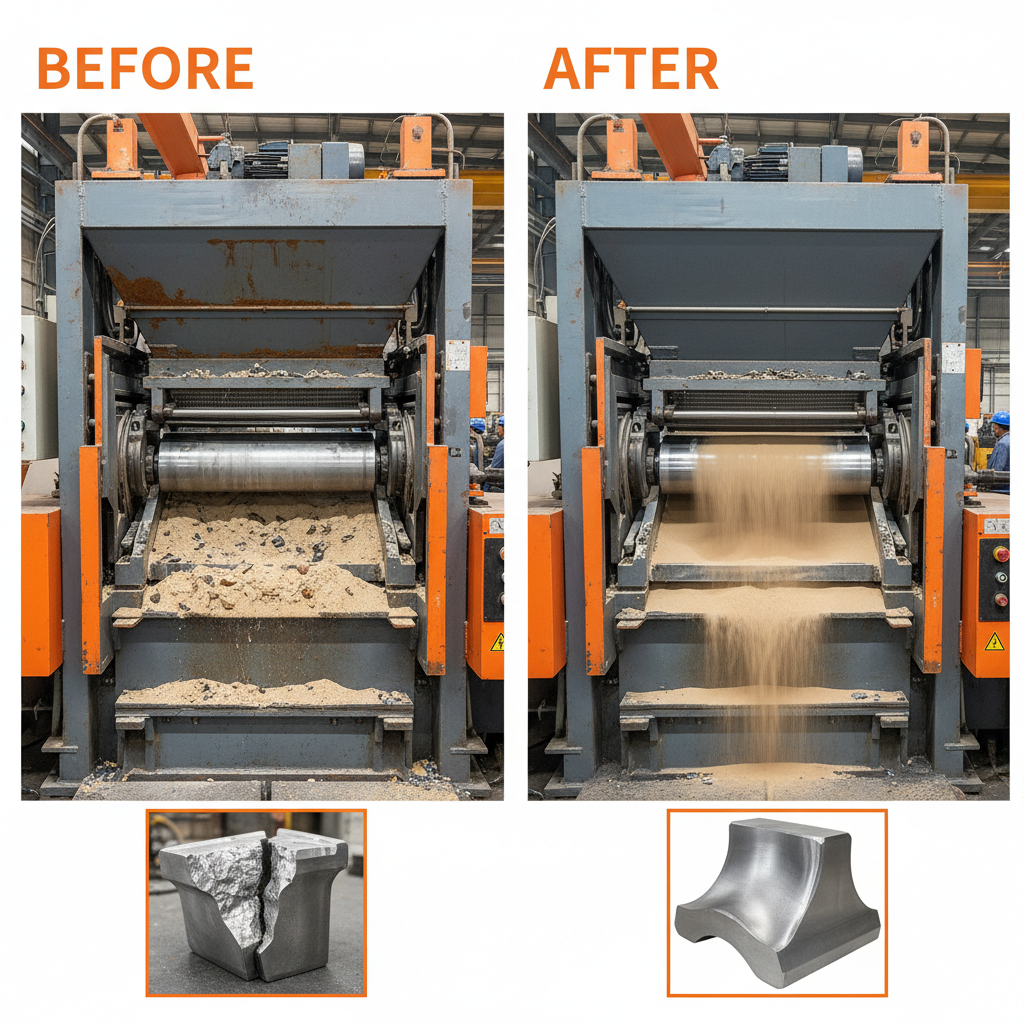
Investment casting sand, a critical component in the precision casting process, plays a pivotal role in modern manufacturing across diverse industries globally. Its unique properties enable the creation of intricate metal parts with exceptional accuracy and surface finish, essential for sectors like aerospace, automotive, medical, and energy. Understanding the nuances of investment casting sand – its composition, characteristics, and applications – is crucial for engineers, manufacturers, and researchers aiming to optimize casting processes and enhance product quality.
The global demand for investment casting is steadily increasing, driven by the need for lightweight, high-strength components in various applications. According to a report by Grand View Research, the global investment casting market size was valued at USD 24.86 billion in 2022 and is expected to grow at a compound annual growth rate (CAGR) of 6.5% from 2023 to 2030. This growth underscores the importance of high-quality investment casting sand in meeting the evolving demands of modern industries. Challenges such as increasing material costs and environmental regulations are pushing innovations in sand formulations and recycling techniques.
Investment casting sand isn’t simply “sand” in the traditional sense. It’s a precisely engineered refractory material used to create molds for metal casting. This process, also known as lost-wax casting, provides exceptional dimensional accuracy, intricate detail, and a superior surface finish compared to other casting methods. This makes it an invaluable material in creating components where precision and reliability are paramount, directly impacting the functionality and longevity of final products.
Introduction: Global or Industry Context
Investment casting sand's importance is directly tied to the growth of industries demanding high-precision metal components. The aerospace sector, for example, relies heavily on investment casting for turbine blades and structural parts, where exacting specifications are critical for safety and performance. Similarly, the medical implant industry benefits from the ability to create complex, biocompatible components through this process. The increasing demand for lighter, stronger materials in automotive engineering is another significant driver for investment casting sand applications.
The production and supply chain of investment casting sand are becoming increasingly globalized, with key suppliers located in countries like China, India, and the United States. This global landscape presents both opportunities and challenges, including fluctuating raw material prices, logistical complexities, and the need for stringent quality control. The ISO 9001 standard is widely adopted by investment casting sand manufacturers to ensure consistent product quality and customer satisfaction.
Definition & Meaning
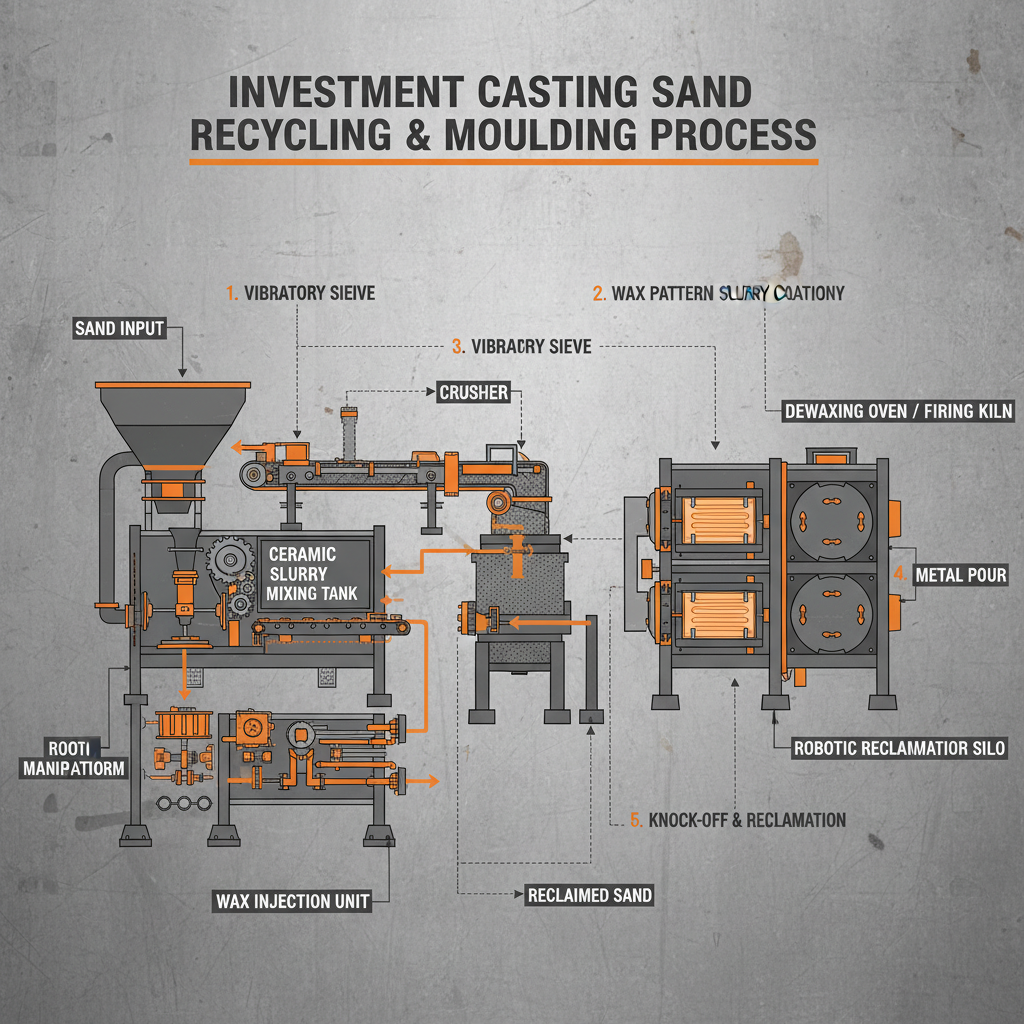
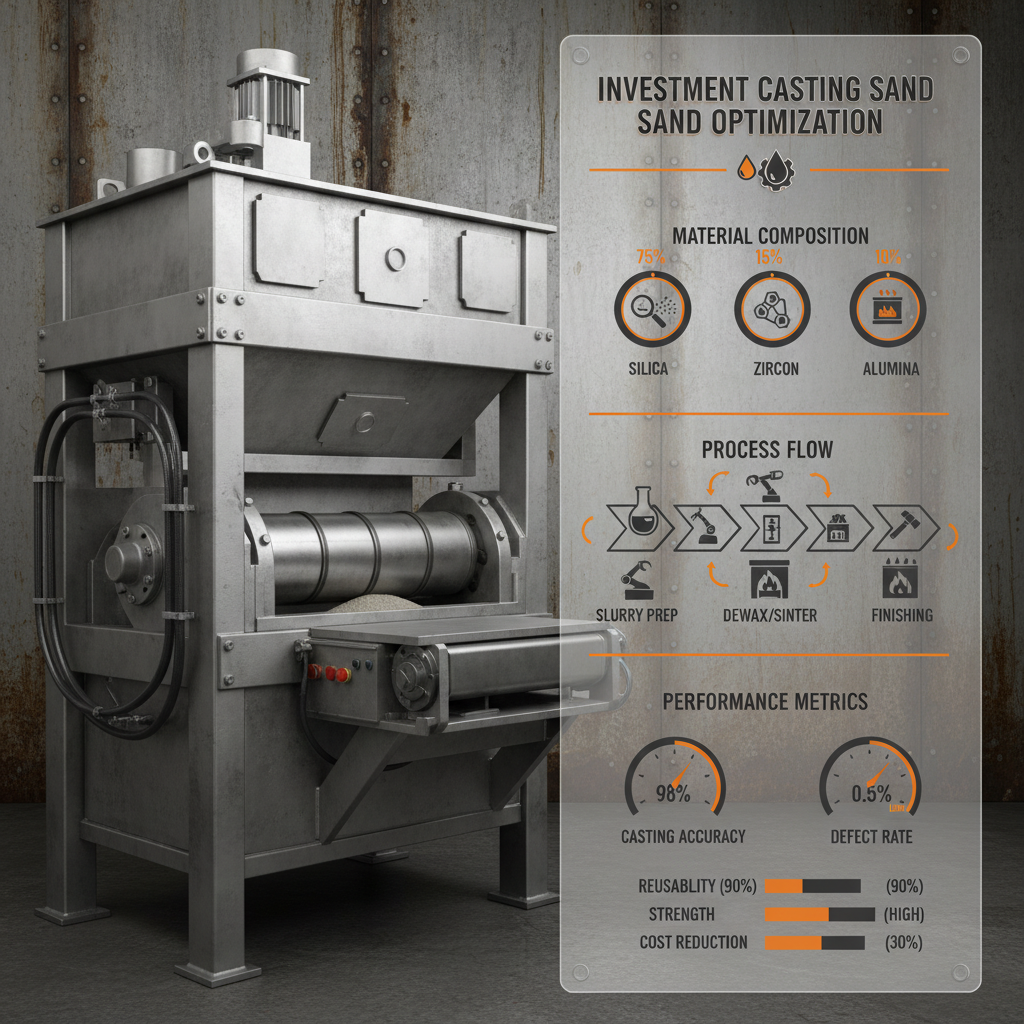
Investment casting sand, in its simplest form, is a ceramic material – typically a mixture of silica, zircon, or alumina – formulated to create a highly accurate mold for metal casting. Unlike traditional sand casting, investment casting employs a ‘lost-wax’ or ‘lost-pattern’ process. A wax pattern, meticulously crafted to the desired shape of the final component, is coated repeatedly with layers of investment casting sand slurry, forming a shell. The wax is then melted out (lost), leaving a hollow ceramic mold ready for molten metal.
This process directly connects investment casting sand to the advancement of modern industry. Without it, producing the intricate geometries found in jet engine components, surgical instruments, or complex automotive parts would be significantly more difficult and expensive. It enables the creation of parts with exceptional surface finishes, minimizing the need for post-casting machining and reducing material waste.
Furthermore, investment casting sand facilitates the use of a wider range of alloys, including those that are difficult to machine. This directly supports innovation in materials science and allows engineers to design components with improved performance characteristics. It’s a vital link in translating design concepts into functional, real-world products.
Key Factors or Core Components
Several key characteristics define the quality and suitability of investment casting sand. Particle Size Distribution is paramount; a consistent and controlled grain size ensures uniform shell build-up and minimizes defects. The specific distribution depends on the alloy being cast and the desired surface finish. Another critical factor is Refractoriness, referring to the sand’s ability to withstand high temperatures without breaking down or reacting with the molten metal.
Permeability is equally important, allowing gases generated during the pouring process to escape, preventing porosity in the casting. Insufficient permeability can lead to defects that compromise the structural integrity of the component. Bonding Strength refers to how well the sand particles adhere to each other and to the wax pattern, ensuring the mold maintains its shape during metal pouring.
Chemical Composition dictates the sand's compatibility with different alloys. Silica sand is cost-effective for lower-temperature alloys, while zircon and alumina sands are preferred for higher-temperature applications and reactive metals. Finally, Green Strength refers to the mold's ability to retain its shape before it's dried and fired; adequate green strength is crucial for handling and transportation. These factors collectively determine the success of the investment casting process and the quality of the final product.
Understanding these components and their interactions is vital for material selection and process optimization. For instance, choosing the wrong sand composition for a specific alloy can lead to chemical reactions that degrade the mold and introduce impurities into the casting. Proper control of these factors ensures the production of high-quality, dimensionally accurate components.
Global Applications & Use Cases
Investment casting sand finds widespread application in industries requiring high-precision metal parts. In the Aerospace Industry, it’s indispensable for manufacturing turbine blades, nozzles, and structural components for jet engines, where intricate designs and demanding performance requirements necessitate exceptional accuracy. The Automotive Industry leverages investment casting sand to produce engine valves, turbocharger impellers, and transmission parts, contributing to improved fuel efficiency and vehicle performance.
The Medical Device Industry relies heavily on investment casting sand to create surgical instruments, implants (like hip and knee replacements), and dental prosthetics, ensuring biocompatibility, precision, and longevity. In Industrial Applications, it's used to manufacture pump components, valve bodies, and firearm parts, demanding durability and resistance to harsh environments.
In remote industrial zones like those in Southeast Asia, investment casting facilities utilize locally sourced and imported investment casting sand to support regional manufacturing needs, particularly in the electronics and automotive sectors. Post-disaster relief operations often require rapid production of specialized tools and components, and investment casting with appropriate sand formulations can facilitate this swift response.
Investment Casting Sand Performance Comparison
Advantages & Long-Term Value
The primary advantage of using investment casting sand lies in its ability to produce parts with exceptional dimensional accuracy, intricate details, and superior surface finishes. This translates into reduced machining costs, minimized material waste, and improved product performance. The process also allows for the casting of complex geometries that are difficult or impossible to achieve with other methods.
From a long-term value perspective, investment casting sand supports innovation in materials science and engineering. Its compatibility with a wide range of alloys enables the development of lighter, stronger, and more durable components. This is particularly crucial in industries like aerospace and automotive, where weight reduction and performance enhancement are paramount.
Future Trends & Innovations
The future of investment casting sand is intertwined with advancements in materials science and manufacturing technologies. Research is underway to develop more sustainable and environmentally friendly sand formulations, utilizing recycled materials and reducing reliance on virgin resources. Automation and robotic process control are also gaining traction, improving process efficiency and reducing labor costs.
Digitalization, including the use of 3D printing for wax pattern creation, is revolutionizing the investment casting process, allowing for faster prototyping and customized production runs. Moreover, the integration of artificial intelligence (AI) and machine learning (ML) is optimizing sand slurry formulations and process parameters, leading to improved casting quality and reduced defects.
Challenges & Solutions
Despite its numerous advantages, investment casting sand faces several challenges. The cost of high-quality sand materials can be significant, impacting the overall cost of the casting process. Environmental regulations regarding silica dust exposure also pose a concern, requiring manufacturers to implement robust safety measures and explore alternative sand compositions.
Solutions to these challenges include exploring alternative sand materials like zircon and alumina, which offer superior performance and reduced environmental impact. Investing in advanced dust collection systems and employee training programs can mitigate silica dust exposure risks. Furthermore, optimizing sand slurry formulations and recycling programs can help reduce material costs and minimize waste.
The development of closed-loop systems for sand recovery and reuse is crucial for promoting sustainability and reducing the environmental footprint of investment casting operations. Collaborative research efforts between industry and academia are essential for driving innovation and addressing these challenges effectively.
Summary of Investment Casting Sand Challenges and Solutions
| Challenge |
Impact on Process |
Potential Solution |
Implementation Cost (1-10) |
| High Material Costs |
Increased overall casting expenses |
Sand Recycling Programs |
6 |
| Silica Dust Exposure |
Health and Safety Concerns |
Advanced Dust Collection Systems |
8 |
| Process Complexity |
Requires Skilled Labor |
Automation & Robotic Control |
9 |
| Environmental Regulations |
Restricted Waste Disposal |
Sustainable Sand Formulations |
7 |
| Mold Cracking |
Defective Castings |
Optimized Binder Systems |
5 |
| Gas Porosity |
Weakened Casting Structure |
Improved Permeability Control |
4 |
FAQS
Investment casting sand is a far more refined ceramic material, boasting superior refractoriness, permeability, and particle size control compared to traditional sand casting sand. This allows for the creation of much more intricate and precise molds, resulting in castings with smoother surfaces and tighter tolerances. Traditional sand casting utilizes coarser sand and relies on simpler molding techniques, making it unsuitable for complex geometries and high-precision applications.
The type of investment casting sand directly influences properties like surface finish, dimensional accuracy, and resistance to hot cracking. Silica sand is cost-effective but may not be suitable for high-temperature alloys. Zircon and alumina sands offer superior performance for reactive metals and demanding applications. Proper sand selection, coupled with optimized slurry formulations, is crucial for achieving desired casting quality and minimizing defects.
Silica dust exposure during handling and processing is a primary environmental concern. Implementing robust dust collection systems and providing appropriate respiratory protection for workers is essential. Additionally, promoting sand recycling and exploring sustainable sand formulations can reduce waste and minimize the environmental impact of investment casting operations. Responsible waste management practices are also critical.
The lifespan of an investment casting sand mold varies depending on the alloy being cast, the pouring temperature, and the mold's complexity. Typically, molds are designed for single-use, as they are destroyed during the casting removal process. However, some manufacturers are exploring techniques for mold regeneration and reuse, particularly for simpler geometries and lower-temperature alloys, to reduce waste and costs.
Automation is transforming investment casting sand handling and processing. Automated slurry mixing, mold coating, and wax pattern assembly systems enhance process control, reduce labor costs, and improve product consistency. Robotic systems can also assist with sand reclamation and recycling, minimizing waste and promoting sustainability. This integration streamlines the entire process and improves efficiency.
While zircon and alumina offer superior performance, their higher cost can be a limiting factor. Silica sand remains a cost-effective option for lower-temperature alloys and less demanding applications. Researchers are also investigating composite sand formulations that combine silica with smaller percentages of zircon or alumina to achieve a balance between performance and cost. Careful material selection based on application requirements is key.
Conclusion
Investment casting sand remains a cornerstone of precision manufacturing, enabling the creation of complex metal components across a wide range of industries. Its unique properties – high refractoriness, permeability, and dimensional accuracy – are essential for achieving superior casting quality and performance. Ongoing innovations in materials science, automation, and sustainability are poised to further enhance the capabilities and efficiency of investment casting processes.
Looking ahead, the development of eco-friendly sand formulations, coupled with advancements in recycling technologies, will be crucial for minimizing the environmental impact of investment casting. Continued research and collaboration between industry and academia are vital for addressing existing challenges and unlocking the full potential of this versatile material. Visit our website at www.sinoceramsite.com to learn more about our comprehensive range of investment casting sand products and solutions.