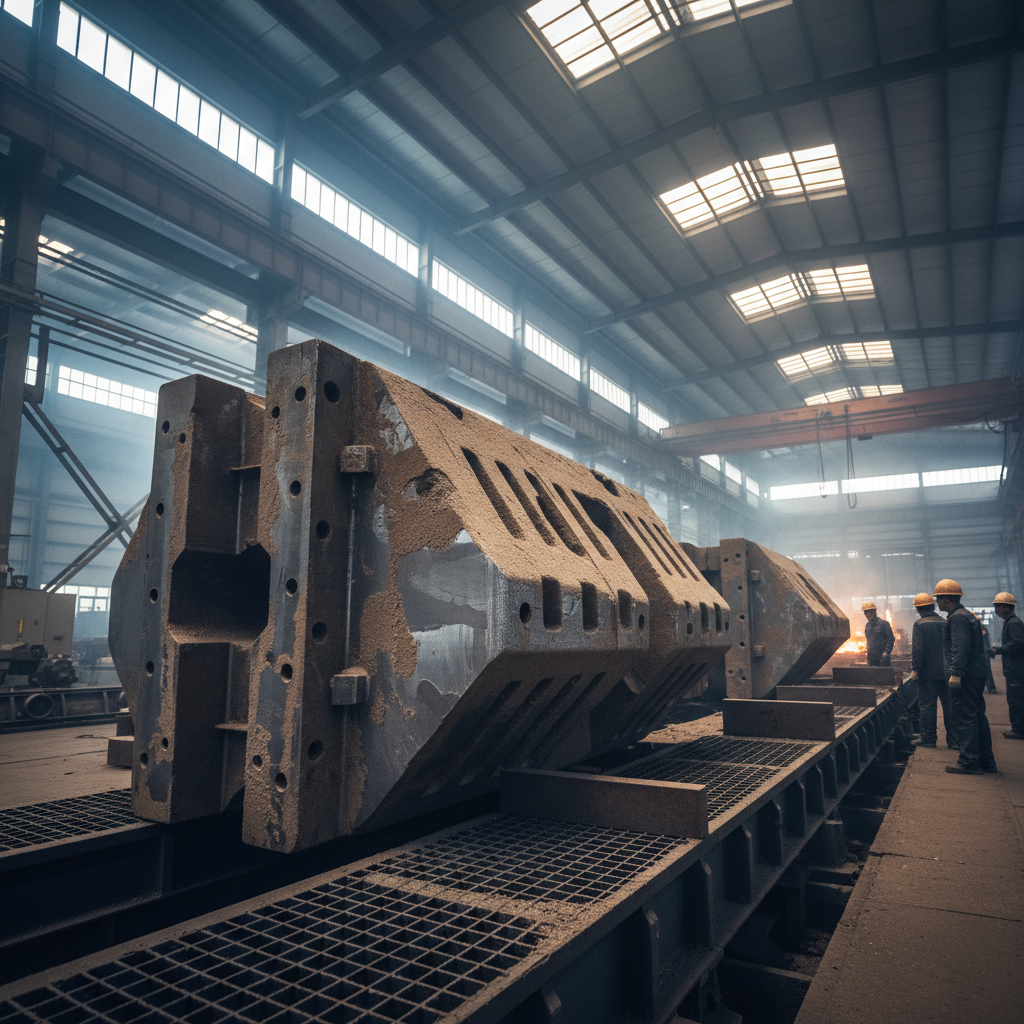
low pressure sand casting is a sophisticated metal casting process garnering increasing global attention due to its ability to produce high-quality, intricate components with excellent mechanical properties. It’s becoming a cornerstone in industries demanding precision and reliability, bridging the gap between traditional sand casting and more complex, expensive methods like die casting. Understanding its nuances is critical for engineers, manufacturers, and those involved in supply chains across diverse sectors.
The relevance of low pressure sand casting extends far beyond merely producing parts. According to industry reports, the global metal casting market is projected to reach \$65.3 billion by 2027, with a substantial portion attributable to advanced techniques like this. This growth is fueled by demands from the automotive, aerospace, and energy sectors. A key challenge lies in optimizing casting processes for sustainability and cost-effectiveness, and low pressure casting offers a viable path forward.
Furthermore, the adaptability of low pressure sand casting allows for the creation of complex geometries with minimal defects, impacting everything from engine performance to structural integrity in critical applications. This positions it as a vital technology in driving innovation and improving product quality worldwide.
The Fundamentals of low pressure sand casting
At its core, low pressure sand casting involves injecting molten metal into a sand mold under controlled, low-pressure conditions. This technique contrasts with gravity casting where metal relies solely on its weight to fill the mold, resulting in a more consistent and refined casting process. The controlled pressure minimizes turbulence and air entrapment, resulting in higher density castings.
This process is particularly valuable for producing complex shapes and large components with minimal porosity. The ability to precisely control the filling rate and pressure leads to castings with superior mechanical properties and dimensional accuracy compared to traditional methods. This control directly translates to improved product performance and reliability.
The Global Landscape of low pressure sand casting
The application of low pressure sand casting is globally widespread, with significant concentrations in industrialized nations like China, Germany, the United States, and Japan. These countries boast robust automotive, aerospace, and industrial machinery sectors, all of which heavily utilize this casting method. The Asian market, particularly China, is witnessing rapid growth in demand due to increasing manufacturing activity and infrastructure development.
According to market research, the automotive industry accounts for over 40% of the demand for low pressure sand casting globally, driven by the need for lightweight, high-strength engine components. The aerospace industry also represents a significant market share, leveraging the process to produce turbine blades and other critical parts requiring exceptional precision and durability.
However, adoption rates vary considerably based on regional manufacturing capabilities and the cost-effectiveness of alternative casting technologies. Emerging economies are increasingly embracing this process as they strive to enhance their manufacturing competitiveness.
Defining low pressure sand casting: A Core Process
low pressure sand casting is a metal casting process that utilizes gas pressure to force molten metal into a sand mold. Unlike gravity or die casting, the pressure is carefully regulated and maintained throughout the filling process. This control is key to achieving consistent results and minimizing defects.
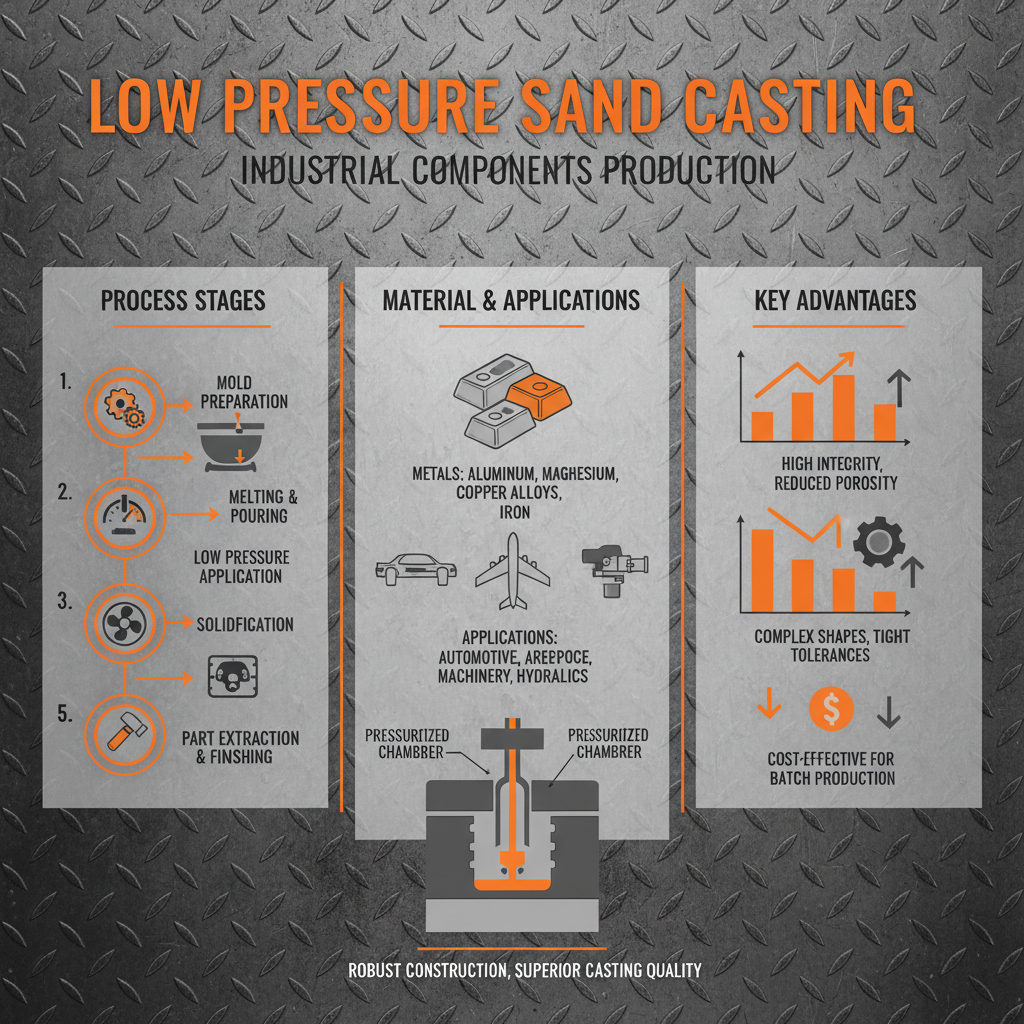
The process begins with creating a sand mold, typically using a mixture of sand, binder, and additives. The mold is then sealed and connected to a pressure vessel containing the molten metal. Once the mold is ready, pressurized gas (usually dry air or nitrogen) is applied to the metal surface, forcing it into the mold cavity. The pressure is maintained until the casting solidifies.
This method connects directly to the needs of modern industry by offering a balance between the cost-effectiveness of sand casting and the precision of die casting. It's crucial for creating components with complex geometries and high structural integrity, vital in sectors like automotive and aerospace, impacting the quality and reliability of products we rely on daily.
Key Attributes of low pressure sand casting
The success of low pressure sand casting rests on several defining attributes. Firstly, its dimensional accuracy is significantly higher than traditional sand casting, thanks to the controlled filling process. Secondly, the mechanical properties of the castings are enhanced due to reduced porosity and improved density.
Another critical aspect is its versatility in handling a wide range of metal alloys, including aluminum, iron, and magnesium. This allows manufacturers to tailor the process to their specific material requirements. Furthermore, the complexity of shapes that can be created is impressive, enabling the production of intricate components with minimal draft angles.
Applications of low pressure sand casting Across Industries
In the automotive sector, low pressure sand casting is extensively used for producing engine blocks, cylinder heads, and transmission housings, components requiring high strength and precise dimensions. The aerospace industry leverages the process for creating turbine blades, structural components, and other critical parts where reliability is paramount.
Beyond these core industries, low pressure sand casting finds applications in the manufacturing of industrial machinery, pumps, valves, and agricultural equipment. Even in specialized fields like medical device manufacturing, the process is employed to create intricate components with strict quality control requirements.
The Advantages and Value Proposition of low pressure sand casting
The primary advantage of low pressure sand casting lies in its cost-effectiveness compared to die casting, particularly for medium to large production volumes. The tooling costs are significantly lower, making it an attractive option for manufacturers who require flexibility and avoid large upfront investments. This allows smaller businesses to compete effectively.
Furthermore, the process is inherently more sustainable, as it generates less scrap metal and requires less energy than other casting methods. The enhanced mechanical properties and dimensional accuracy translate to improved product reliability, reducing warranty claims and enhancing customer satisfaction, ultimately building trust in the brand.
The process also enhances worker safety by minimizing exposure to molten metal and reducing the risk of accidents associated with traditional casting methods. This positive impact contributes to a more responsible and ethical manufacturing environment.
Future Outlook and Challenges in low pressure sand casting
The future of low pressure sand casting is intertwined with advancements in automation, digitalization, and sustainable manufacturing practices. The integration of robotic systems and AI-powered process control will further enhance precision, reduce cycle times, and minimize waste. Research into new binder materials and mold designs will also play a crucial role.
However, several challenges remain. Maintaining consistent gas pressure and mold permeability can be difficult, requiring skilled operators and robust quality control procedures. The need for efficient metal recovery and recycling is also paramount to minimize environmental impact and optimize resource utilization.
Addressing these challenges through innovation and investment will unlock the full potential of low pressure sand casting, solidifying its position as a vital technology for the future of manufacturing.
Key Challenges and Potential Solutions in low pressure sand casting
| Challenge Area |
Impact on Process |
Potential Solution |
Implementation Difficulty (1-10) |
| Gas Pressure Control |
Inconsistent filling, porosity |
Automated pressure regulation systems |
6 |
| Mold Permeability |
Gas venting issues, casting defects |
Optimized sand mix formulations |
5 |
| Metal Temperature Management |
Solidification issues, shrinkage |
Precise temperature control systems |
7 |
| Metal Recovery |
Waste generation, cost increases |
Efficient filtration and recycling systems |
4 |
| Operator Skill Level |
Process variability, quality issues |
Enhanced training programs and automation |
8 |
| Mold Material Costs |
Increased production expenses |
Exploring alternative, cost-effective binders |
3 |
FAQS
The primary difference lies in how the molten metal fills the mold. Gravity casting relies on the weight of the metal, leading to potential turbulence and porosity. Low pressure casting utilizes controlled gas pressure, resulting in a denser, more uniform casting with reduced defects. This translates to superior mechanical properties and dimensional accuracy for low pressure sand casting. The tooling costs are also generally lower for low pressure sand casting, making it more economical for medium production volumes.
A wide range of metal alloys can be successfully cast using this process, including aluminum, iron (grey, ductile, and compacted graphite), magnesium, and certain copper alloys. The suitability depends on the specific alloy's melting point, fluidity, and reactivity with the mold material. low pressure sand casting provides more control over the solidification process, allowing for greater flexibility in alloy selection compared to some other casting techniques.
Due to the controlled filling and solidification process, low pressure sand casting generally results in castings with improved mechanical properties, including higher tensile strength, yield strength, and elongation. The reduced porosity and finer grain structure contribute to these enhancements. This makes the process ideal for applications requiring high-performance components.
Cycle times vary depending on the size and complexity of the casting, the alloy used, and the specific equipment employed. Generally, cycle times range from several minutes to upwards of 30 minutes per casting. While it might be slower than die casting, the improved quality and lower tooling costs often make it a more economical choice for medium production volumes.
The main cost factors include tooling (mold creation), raw materials (metal alloy and sand), labor, energy consumption, and maintenance. While tooling costs are lower than die casting, they still represent a significant investment. Efficient energy management and optimized material usage are crucial for minimizing production costs. low pressure sand casting offers a good balance between initial investment and per-piece cost for many applications.
Rigorous quality control measures are essential throughout the entire low pressure sand casting process. These include visual inspection for surface defects, dimensional measurements using coordinate measuring machines (CMMs), radiographic testing to detect internal porosity, and mechanical testing to verify material properties. Process monitoring and statistical process control (SPC) are also used to ensure consistent quality.
Conclusion
In conclusion, low pressure sand casting stands as a versatile and increasingly vital metal casting technique. Its ability to produce high-quality, intricate components with superior mechanical properties, coupled with its cost-effectiveness and adaptability, makes it a compelling choice for a wide range of industries. From automotive and aerospace to industrial machinery and beyond, this process is driving innovation and improving product performance.
Looking ahead, continued advancements in automation, digitalization, and sustainable manufacturing practices will further enhance the capabilities and efficiency of low pressure sand casting. By embracing these innovations, manufacturers can unlock its full potential and secure a competitive advantage in the global marketplace. To learn more about our low pressure sand casting solutions, visit our website: www.sinoceramsite.com