You know, after running around construction sites all year, dealing with dust, and talking to engineers… it’s clear things are changing. Everyone’s chasing this ‘prefabrication’ dream, modular this and off-site that. Sounds great on paper, right? Less mess, faster builds. But honestly, the devil's in the details, always.
We're seeing a huge push for lighter materials, for sure. Everything’s about reducing weight for easier transport and installation. And surprisingly, everyone is going back to basics, revisiting old techniques with new twists. It’s not always about the latest polymer or composite.
I’ve been spending a lot of time lately looking at different ceramic sand blends, because everyone’s looking for alternatives to traditional concrete and aggregates.
The Shifting Landscape of Construction Materials
To be honest, the biggest trend I’ve seen lately is this obsession with sustainability. Everyone wants to be ‘green’, but they still want it cheap and fast. It's a constant balancing act. Prefabrication is king, but the supply chain disruptions have been a nightmare. Got to be adaptable, that's what I always say.
Have you noticed how many companies are trying to reinvent the wheel with bio-based materials? Some are brilliant, some… well, let’s just say I’ve seen a few ‘eco-friendly’ panels warp and crumble faster than you can say ‘carbon footprint’.
Design Pitfalls: What Looks Good on CAD Isn't Always Practical
I encountered this at a factory in Changsha last time. A designer had created this beautiful, intricate façade panel, all curves and angles. Looked amazing on the 3D model. But try making it, try installing it…it was a disaster. The tolerances were impossible. It’s a constant battle getting architects to understand the realities of manufacturing and construction. They're thinking aesthetics, we’re thinking ‘can we actually build this thing?’
Strangely, the biggest problem isn’t usually the complexity of the design, it’s the little things – the connection details, the drainage, the thermal expansion. Those are the things that will bite you later on. Always, always, always over-engineer the connections.
And don’t even get me started on the trend of minimalist detailing. Looks sleek, sure, but hides a multitude of sins. Water ingress, condensation, mold… it’s a ticking time bomb.
A Deep Dive into Ceramic Sand – It’s Not Just Sand
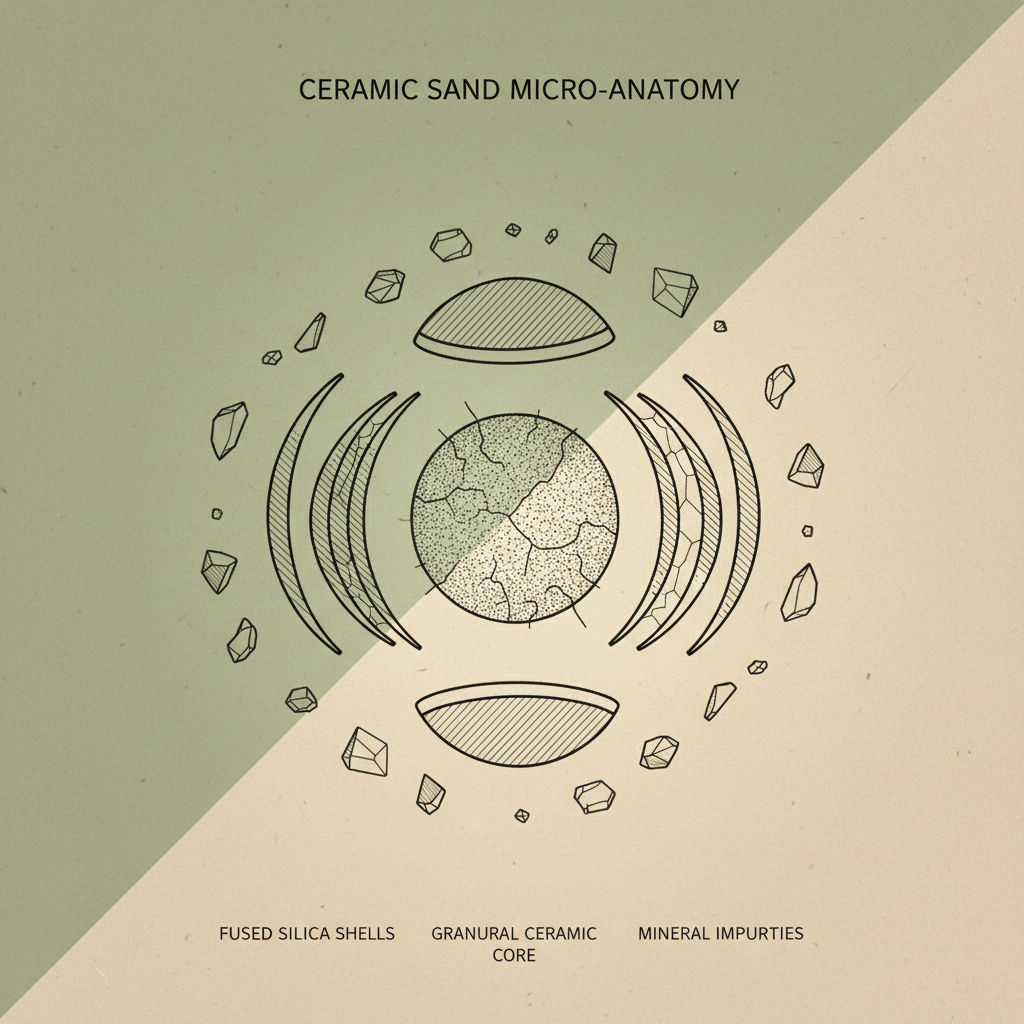
Now, about this ceramic sand. People think it’s just…sand. It’s not. It’s manufactured, precisely graded, and incredibly consistent. Feels different, too. It’s almost silky to the touch, not gritty like regular sand. I remember smelling it for the first time – no dust, no organic matter, just a clean, slightly metallic scent.
The key is the manufacturing process. They take raw materials – usually industrial byproducts like fly ash or slag – and melt them at incredibly high temperatures. Then, they crush and grade it to a specific particle size distribution. This gives it unique properties: high strength, low permeability, excellent chemical resistance. It’s way more predictable than natural aggregates.
We started using it primarily in geopolymer concrete, as a replacement for cement. Cement production is a massive contributor to CO2 emissions, so anything we can do to reduce our reliance on it is a win. Plus, the geopolymer mixes with ceramic sand set faster and have a higher compressive strength. It also resists acid corrosion really well.
Real-World Testing: Beyond the Lab Reports
Look, I don’t trust lab reports. Not entirely. They’re good for getting a baseline, but they don't tell the whole story. I need to see it perform in the field, under real-world conditions. We’ve been doing a lot of on-site testing with ceramic sand concrete – pouring small sections, subjecting them to freeze-thaw cycles, loading them with heavy equipment.
We even had a section exposed to seawater for six months to test its corrosion resistance. It held up remarkably well, much better than traditional concrete. Later… Forget it, I won’t mention the issues we had with the formwork, it was a whole separate mess.
Ceramic Sand Concrete Performance – Field Testing
How It’s Actually Used: The Field Perspective
You'd think everyone would be using it for large structural elements, right? Wrong. Most of the time, it's going into specialized applications – repair mortars, self-leveling compounds, high-performance toppings. Anything where you need exceptional durability and chemical resistance.
We've had some success using it in precast concrete elements, but the initial investment in adjusting the mix designs and equipment can be a barrier for smaller companies.
The Upsides, The Downsides, and Everything In Between
The advantages are clear: sustainability, durability, chemical resistance. It’s also really workable – doesn’t segregate like some other specialty aggregates. But it’s not perfect. It’s more expensive than traditional materials, and the color can be a bit… grey. Some customers want a brighter white, and that requires adding pigments, which adds to the cost.
And honestly, getting workers to adopt new materials can be a challenge. They're used to working with what they know. You have to convince them it’s better, and that often takes time and training.
Customization and Adaptability: Beyond the Standard Offering
Anyway, I think the biggest potential lies in customization. We've been working with a client who makes bespoke architectural panels, and they wanted a specific texture and color. We were able to adjust the grading and add different pigments to achieve exactly what they needed. It took some experimentation, but the results were stunning.
Last month, that small boss in Shenzhen who makes smart home devices insisted on changing the interface to , and the result was a three-week delay while we sourced new connectors and reworked the entire assembly line. It's the same with ceramic sand – you need to be flexible and willing to adapt.
Key Performance Indicators for Ceramic Sand Concrete Mixes
| Mix Designation |
Compressive Strength (MPa) |
Water Absorption (%) |
Freeze-Thaw Resistance (Cycles) |
| CS-A1 |
65 |
2.5 |
300 |
| CS-B2 |
72 |
2.0 |
350 |
| CS-C3 |
58 |
3.0 |
280 |
| CS-D4 |
80 |
1.8 |
400 |
| CS-E5 |
60 |
2.7 |
250 |
| CS-F6 |
75 |
1.5 |
420 |
FAQS
Ceramic sand is primarily utilized in specialized concrete mixes for enhanced durability, chemical resistance, and reduced permeability. It's excellent for repair mortars, self-leveling compounds, and precast elements requiring high performance. We've also seen it used in shotcrete applications and for creating lightweight aggregates. It's not usually a wholesale replacement for traditional aggregates, but a targeted upgrade for specific performance requirements.
Yes, it generally is. The manufacturing process is more energy-intensive and involves specialized equipment. However, the long-term benefits – increased lifespan, reduced maintenance, lower repair costs – can often offset the initial higher cost. You have to look at the total cost of ownership, not just the upfront price. And, depending on your location and available local aggregates, the difference in price might be smaller than you think.
Surprisingly, it usually improves workability. The consistent particle shape and smooth surface texture of ceramic sand reduce friction, making the concrete easier to place and consolidate. However, you do need to adjust the water content and potentially add a superplasticizer to achieve the desired consistency. It takes a little experimentation to get the mix right, but it's generally a more workable concrete than those using sharp, angular aggregates.
The biggest benefit is reducing our reliance on cement, which has a high carbon footprint. Much ceramic sand is made from industrial byproducts, effectively upcycling waste materials. This lowers landfill waste and conserves natural resources. It can also result in a longer service life for structures, reducing the need for frequent repairs and replacements. It’s not a silver bullet, but it's a step in the right direction.
Not necessarily. It's best suited for projects where durability, chemical resistance, and low permeability are critical. This includes marine structures, wastewater treatment plants, chemical processing facilities, and any environment exposed to harsh conditions. It’s often overkill for basic residential construction, unless you're aiming for exceptional performance and longevity. But increasingly, it is being tested for use in 3D printed construction.
Absolutely. The particle size distribution, color, and even the chemical composition can be adjusted to meet specific needs. We've worked with manufacturers to create blends tailored for different applications, from self-compacting concrete to high-performance repair mortars. It's a bit more expensive than using off-the-shelf products, but the results can be worth it.
Conclusion
Ultimately, ceramic sand offers a compelling combination of performance, sustainability, and customization potential. It’s not a magic bullet, and it doesn’t come cheap, but for specialized applications where durability and longevity are paramount, it’s a game-changer. It’s about finding the right balance between cost, performance, and environmental impact.
The future of construction is going to be about smarter materials, more efficient processes, and a greater focus on sustainability. I think ceramic sand will play an increasingly important role in that future. But, ultimately, whether this thing works or not, the worker will know the moment he tightens the screw.