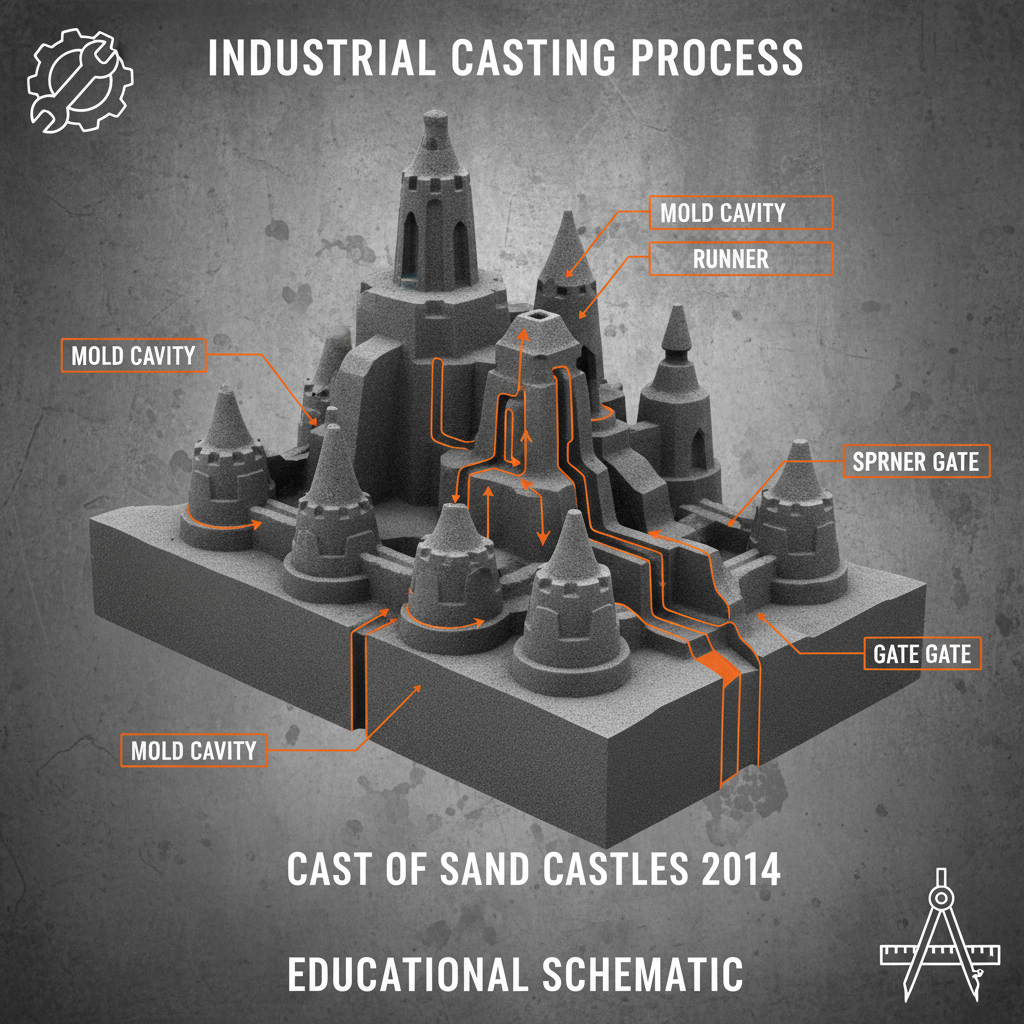
Understanding what products are made from sand casting is essential for engineers and procurement specialists seeking a versatile, scalable method for producing complex metal components. From massive engine blocks to intricate artistic sculptures, sand casting remains the backbone of the global foundry industry due to its ability to handle virtually any alloy and size.
The primary challenge in sand casting often lies in achieving high precision and reducing defects like veins, pores, or fractures, especially in complex geometries. Selecting the right molding material, such as advanced sintered ceramic sands, can significantly reduce resin consumption and improve the structural integrity of the final casting.
This analysis provides a comprehensive overview of common sand-cast products, the technical impact of molding material selection, and a decision framework for optimizing casting quality in heavy industrial applications.

Common Industrial Products Made via Sand Casting

Sand casting is widely used across various sectors because it accommodates a broad range of metals, including cast iron, cast steel, aluminum, copper, and stainless steel. The process is particularly favored for large-scale components that would be prohibitively expensive to machine or produce via die casting. Typical products include heavy machinery frames, pump housings, valve bodies, and large automotive structural parts.
Beyond heavy industry, sand casting is utilized for custom tooling, prototype development, and architectural elements. Its flexibility allows manufacturers to create internal cavities through the use of sand cores, making it the primary choice for hollow components like manifolds and cylinder heads.
The Role of Core Materials in Complex Castings
The quality of a sand-cast product is heavily dependent on the properties of the sand used, especially for cores that define internal geometries. Traditional silica sand is common, but high-performance applications often require alternatives like sintered ceramic sand to manage thermal expansion and improve surface finish. Sintered ceramic sand, composed of Mullite and Corundum, offers a refractoriness of ≥1800℃, ensuring stability under extreme molten metal temperatures.
By optimizing the grain shape—specifically aiming for a spherical angular coefficient of ≤1.1—foundries can improve flowability and packing density. This reduces the amount of resin binder required, which in turn lowers gas evolution during pouring and decreases the likelihood of porosity in the finished product.
Technical Challenges in Diesel Engine Components
Diesel engine castings, such as cylinder blocks and intake/exhaust pipes, represent some of the most challenging products made from sand casting. These components often feature complex core shapes and narrow cross-sectional areas, making them susceptible to "false shots" (incomplete filling) and fractures. Additionally, the high thermal expansion of standard silica sand frequently leads to the appearance of veins in the casting surface.
To combat these issues, many foundries are transitioning to ceramic sand or a customized blend of ceramic and silica sand. This approach significantly reduces the occurrence of sticky sand and pores, while improving the collapsibility of the core. Better collapsibility simplifies the cleaning process, reducing the manual workload required to remove sand from intricate internal passages.
Comparative Performance of Molding Sands
The choice of raw sand directly impacts the tensile strength and gas evolution of the mold. In cold box processes, where resin is hardened instantaneously by gas, the interaction between the sand grain and the phenolic-urethane resin is critical. Sintered ceramic sand typically demonstrates higher tensile strength with lower gas evolution compared to scrubbed or baked silica sands.
This illustrative data highlights the relative tensile strength (MPa) of different sand types at a constant 1.5% resin addition. Higher strength correlates to better mold stability, while lower gas evolution indicates a reduced risk of blowholes and surface defects in the final casting.
The Cold Box Process and Production Efficiency
The cold box method is a high-efficiency resin sand forming process catalyzed by blowing gas, such as triethylamine. This allows for instantaneous hardening at room temperature, drastically shortening mold-drawing time and increasing overall production throughput. It is particularly effective for the rapid production of diesel engine components where energy consumption must be kept low.
Integrating sintered ceramic sand into the cold box process allows foundries to reduce resin additives by 20-30%. This not only lowers raw material costs but also improves the environmental footprint of the foundry by reducing the chemical load in the waste sand.
Critical Defect Analysis and Mitigation
Defect rates in sand casting are often categorized by veins, core breakage, sintering, and choke. Scrubbed sand often exhibits high vein rates (up to 28%) due to thermal expansion. By replacing a portion of the silica sand with ceramic sand, foundries can reduce these defects significantly. For instance, utilizing pure sintered ceramic sand can potentially bring the vein defect rate down to 0%.
Beyond surface veins, the "choke" effect—where the mold fails to allow gas to escape—is mitigated by the lower gas evolution properties of specialized ceramic sands. This ensures a cleaner internal finish for high-pressure components like cylinder heads and exhaust manifolds.
Material Selection Framework for Foundry Buyers
When determining the best sand for a specific product, buyers must balance cost, refractoriness, and required precision. While silica sand is economical, the total cost of ownership (TCO) may be higher due to increased scrap rates and cleaning labor. Sintered ceramic sand offers a high-performance alternative that reduces resin costs and casting defects.
| Sand Type | Thermal Expansion | Defect Risk | Best Application |
|---|---|---|---|
| Sintered Ceramic | Very Low | Minimal | Complex Engine Parts |
| Scrubbed Silica | High | High (Veins) | Simple Large Casts |
| Baked Silica | Medium-High | Moderate | General Industrial |
| Chromite Sand | Low | Low (Metal) | Heavy Section Steel |
| Ceramic Blend | Low-Medium | Low | Balanced Cost/Quality |
| Zircon Sand | Very Low | Very Low | Ultra-High Precision |
Choosing the correct particle size distribution (AFS) is also vital. Whether utilizing a 40/70 or 100/200 mesh, the distribution should be tailored to the specific wall thickness and surface finish requirements of the cast product.
Frequently Asked Questions
Common products include automotive engine blocks, cylinder heads, pump housings, valve bodies, heavy machinery frames, and various custom industrial components made from iron, steel, aluminum, or copper.
Veins are typically caused by the high thermal expansion of silica sand during the pouring of molten metal, which creates stress and cracks in the mold surface that the metal then fills.
It provides higher refractoriness (≥1800℃), lower thermal expansion, and lower gas evolution, which reduces defects like veins and pores while improving surface finish.
It is a resin sand forming process where the mixture is hardened instantaneously at room temperature by blowing a catalyst gas, such as triethylamine, ensuring high production efficiency.
Yes, by reducing resin addition by 20-30% and significantly lowering the scrap rate due to defects, the total operational cost per part is often reduced.
Sand casting is applicable to almost all casting alloys, including cast iron, cast steel, stainless steel, aluminum, and copper alloys.
Conclusion
Sand casting remains an indispensable manufacturing process for producing a vast array of industrial products, from massive structural frames to complex engine internals. The key to maximizing the value of these products lies in the strategic selection of molding materials. By moving from traditional silica sands to high-performance sintered ceramic sands, manufacturers can drastically reduce defects, lower resin costs, and improve overall production efficiency.
For foundries evaluating high-performance sand solutions to optimize their casting outcomes, detailed technical specifications and customized grain distributions are available at www.sinoceramsite.com.