
In the evolving world of advanced metal casting, understanding the different types of foundry sand is crucial for enhanced process control, product quality, and cost optimization. This in-depth guide explores sand types, foundry sand composition, technical parameters, industry trends, manufacturer comparisons, and hands-on solutions for ceramsite foundry sand, including application scenarios and authoritative industry data.
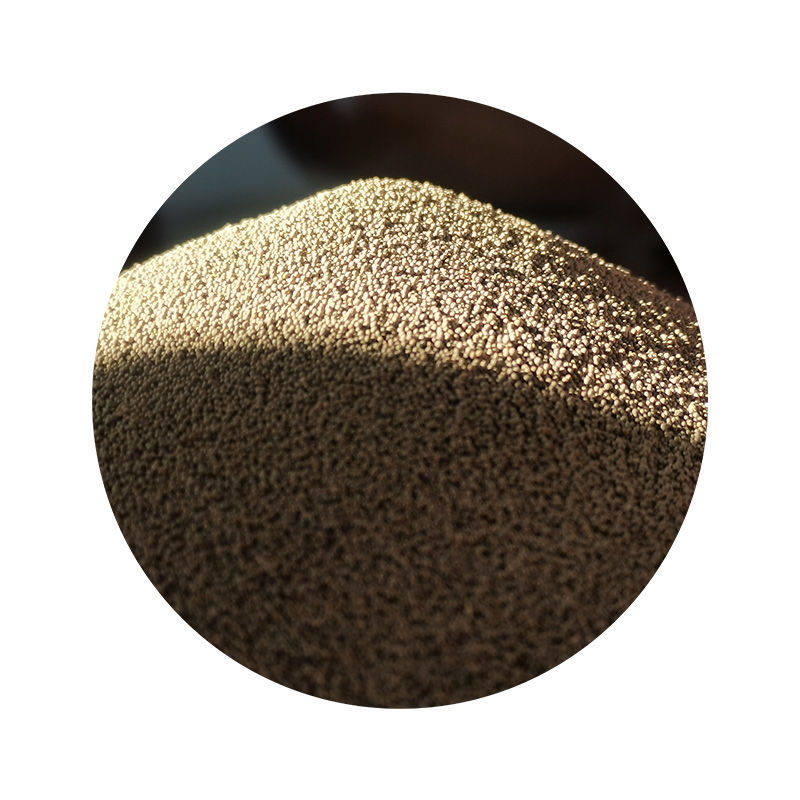
1. Market Trends: The Evolution of Different Types of Foundry Sand
The global metal casting sector, valued at over $150 billion in 2023 (GrandViewResearch), is experiencing a shift toward next-generation foundry sands driven by demands for higher precision, greater corrosion resistance, sustainability, and energy savings.
- Silica sand: Traditional, available, low cost. But has limitations in high-temperature steel applications.
- Ceramsite foundry sand: Engineered from calcined bauxite or clay minerals; offers high thermal stability, superior recyclability, and remarkable surface finish.
- Chromite, Olivine, Zircon sands: Specialty use for refractoriness and low thermal expansion in aerospace and stainless steel sand casting foundries.
Industry research (Metal Casting Journal, 2023) indicates ceramsite foundry sands are growing by 15% annually in adoption in stainless steel and high-alloy casting operations. Their unique spherical grain structure, high refractoriness, and extremely low thermal expansion enable reduced sand consumption by up to 40% per ton of casting.
2. Different Types of Foundry Sand: Parameter Comparison Table
| Sand Type | SiO2 (%) | Bulk Density (g/cm3) | Refractoriness (°C) | Thermal Expansion (×10-6/K) | Ash Content (%) | Recycle Cycles | Common Industry Use |
|---|---|---|---|---|---|---|---|
| Silica Sand | ≈97–99 | 1.55–1.70 | ~1600 | 15–22 | 0.7–1.2 | 5–8 | General Ferrous/Non-ferrous Casting |
| Ceramsite Sand | 60–70 | 1.95–2.05 | 1800–1850 | 0.8–1.1 | <0.1 | 20–30 | Steel Casting, Stainless Steel |
| Chromite Sand | <1 | 2.60–2.80 | 1800–1900 | ~0.4 | <0.1 | 15–18 | Heavy Alloy Steel & Corrosive Castings |
| Zircon Sand | <1 | 3.85–4.10 | 2100 | ~0.4 | <0.1 | 10–14 | Turbine, Aerospace |
| Olivine Sand | <1 | 3.25–3.40 | 1750 | ~1.1 | <0.5 | 10–15 | Specialty & Low-reaction Cast |
3. Manufacturing Process: Different Types of Foundry Sand Production Explained
(Bauxite/Clay/Ores)
(Crushing, Washing, Screening)
(Spherical Shaping)
(In Rotary Kiln @ 1400–1700°C)
(Size Sorting)
(ISO/ANSI Testing)
Every stage is thoroughly monitored to ensure strict adherence to standard testing protocols such as ISO 11126, ANSI AFS, and customer-specific corporate requirements.
Main Flowchart Highlights:
- Raw Material Selection: For ceramsite foundry sand, high-purity bauxite is chosen for its optimal alumina content, resulting in exceptional thermal stability and minimal impurity content (SiO2, Fe2O3).
- Calcination Process: Advanced rotary kiln technology ensures every grain achieves a uniform high-temperature phase, eliminating weak points and improving mechanical strength—key for robust sand for metal casting applications.
- Screening & Grading: Precision vibratory sieves sort sands into custom grain size bands (50 mesh, 70 mesh, 100 mesh, etc.), tailored as per the application (investment, shell, resin, or green sand system).
- Lab Testing: Each batch undergoes ISO, ANSI-certified mechanical, chemical, and performance tests: refractoriness, sieve analysis, angle of repose, AFS clay content, iron contamination, and reusability index.
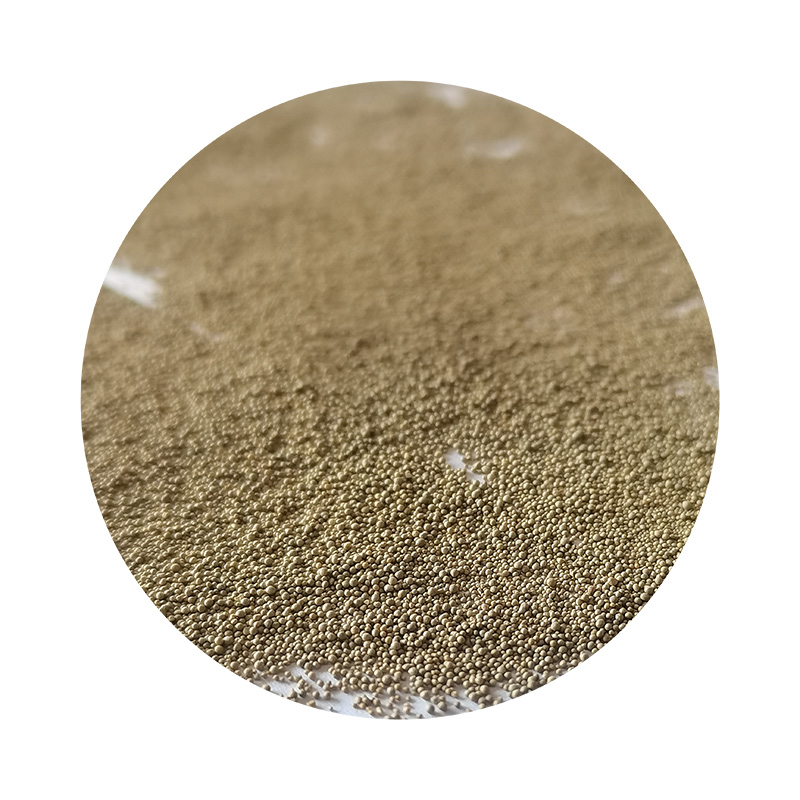
4. In-depth Product Profile: High Refreactoriness Ceramsite Foundry Sand For Steel Casting
High Refreactoriness Ceramsite Foundry Sand For Steel Casting is meticulously engineered for critical sand casting stainless steel and high-alloy steel operations demanding the utmost dimensional accuracy, casting surface quality, and resistance to sand contamination.
- Material: Spherical calcined ceramsite (≥98% crystallinity; main phase: mullite).
- Size Distribution: Customizable (0.20–2.5 mm, most commonly 0.85–1.7 mm); D50: 1.08mm.
- Purity: Fe2O3<0.03%, Alkali & Acid Resistance >98%.
- Thermal Expansion: ≤0.98×10⁻⁶/K (vs silica >15).
- Refractoriness: 1800–1850°C—well above steel pouring temperature.
- Compatibility: Empirically proven on all major binder systems—resin, green sand, shell, sodium silicate.
- Standards: Full compliance with ISO 11126, AFS, and customer OEM/ANSI requirements.
Technical Parameter Comparison (Ceramsite vs Silica):
5. Product Specification Table
| Parameter | Test Method | Specification Value | Typical Competitor A | Typical Competitor B |
|---|---|---|---|---|
| Grain Shape | ISO 13503 | Spherical (> 0.95 Sphericity) | Semi-Rounded | Irregular-Rounded |
| Bulk Density (g/cm3) | ISO 661 | 1.95–2.05 | 1.88–1.92 | 1.72–1.80 |
| Refractoriness (°C) | ISO 20005 | 1800–1850 | 1550–1700 | 1550–1600 |
| Thermal Expansion (10⁻⁶/K) | AFS 6702 | 0.8–1.1 | 14.6–15.8 | 14.5–20.2 |
| AFS Clay Content (%) | AFS 211-87 | <0.2 | 0.6–1.5 | 0.9–2.2 |
| Error/Defect Rate (%) | Field data | <0.2 | 0.86 | 0.93 |
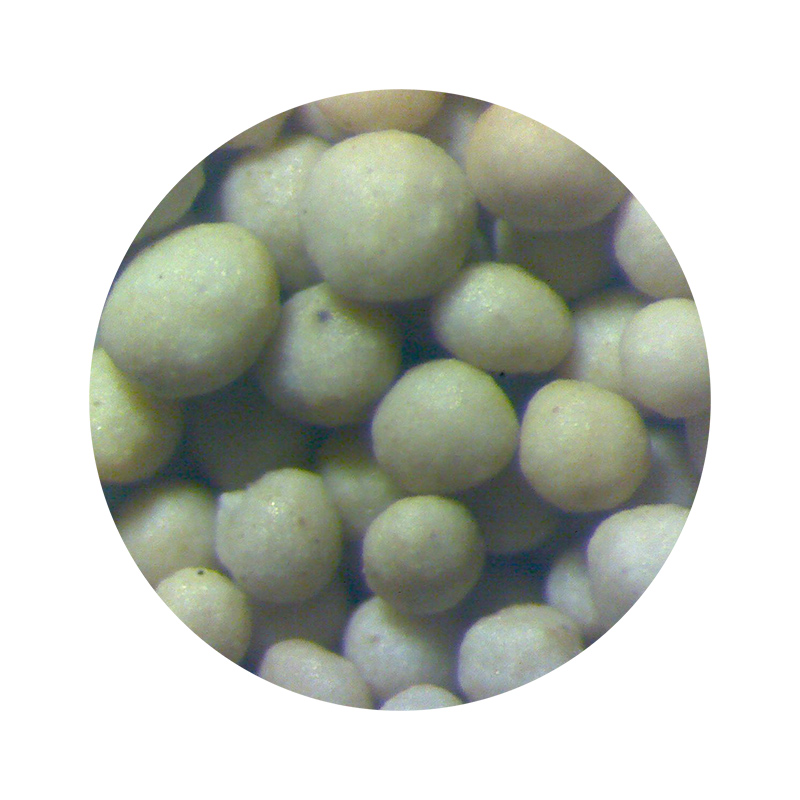
6. Application Scenarios & Case Analysis
-
Stainless Steel Sand Casting Foundry (Europe):
After switching to ceramsite sand, a German supplier cut surface defect rates by 62%, and reduced total sand costs by 28% via extended sand life (recycle cycles increased from ~8 to 26). -
Petrochemical Equipment Manufacturer:
For large steel valve body castings, ceramsite sand enabled 49% reduction in post-casting grinding hours and eliminated micro-porosity from gas entrapment—crucial for pressure-retaining components. -
Water Infrastructure (Green Sand System):
Custom-graded ceramsite sand, with foundry sand composition tailored to the project, facilitated long-term anti-corrosion and structural durability.
Real-use case feedback points to significant operational, economic, and environmental benefits: reduced energy in sand reclamation, minimized foundry sand contamination due to inert surface chemistry, and superior dimensional repeatability with ISO/AFS-standardized sand sizing.
Pie Chart: Application Distribution of Ceramsite Foundry Sand
7. Manufacturer Comparison: Sourcing the Best Foundry Sand for Metal Casting
| Brand/Source | Main Composition | Compliance | Key Feature | Factory Direct (Y/N) | ISO Certified | Service Years |
|---|---|---|---|---|---|---|
| Sinoceramsite | Alumina-Mullite Ceramsite | ISO/ANSI/AFS | Best sphericity, highest thermal stability | Yes | Yes | 20+ |
| Industry Brand A | Natural Silica | AFS, Partial ISO | Economical for non-ferrous | No | Partial | 15 |
| Brand C (Imports) | Bauxite Ceramsite | ISO, AFS | Good spheroidicity, higher price | Yes | Yes | 10 |
Sinoceramsite stands at the forefront of stainless steel sand casting foundry supplies as an ISO-certified, independently audited supplier serving projects on five continents. Our strategic partnerships include multinational casting corporations and OEMs; all certified project references are available upon request.
8. Custom Solutions & Key Technical Services
-
Custom Grain Size Distribution:
We tailor sand gradation curves for optimized mold permeability and casting finish; our expert team runs pre-production simulation to predict best way to sand stainless steel tolerances and minimize post-processing costs. -
Free Lab Trials & Sample Support:
Complimentary lab-scale sand performance testing—AFS number, LOI, friability, chromite/zircon blends, direct integration into your resin or shell molding lines. -
Batch Traceability:
Each shipment is digitally traceable to production lot, test certificate, and raw material source. -
Reclaim Technology Consulting:
Turnkey recommendations to maximize reuse cycles, reduce total cost, and fight foundry sand contamination via best-practice sand cleaning, magnetic separation, and fluidized bed reclamation. -
Full Regulatory Support:
All products provided with REACH, RoHS statements of compliance, plus FDA/international food-contact grades upon request.
9. Typical Client Feedback & Use Case Experiences
- Indian Industrial Valve Manufacturer: "The transition to high-refractoriness ceramsite sand reduced downstream grinding by 43%. Our resin system sand burnout issues are eliminated."
- European Stainless Steel Foundry: "Defect rates in large pump housings fell below 0.23%. Customer returns dropped to an all-time low."
- China Metallurgy Group: "With Sinoceramsite, we achieved stable casting shrinkage and dramatically improved surface finish even after 20+ sand cycles."
10. FAQ: Advanced Different Types of Foundry Sand Query Center
- 1. What is the typical foundry sand composition of ceramsite sand?
- Ceramsite sand is primarily alumina (Al2O3 60–70%), with silica (20–30%), a small amount of mullite crystals, and <0.03% metallic impurities, resulting in high purity and inertness.
- 2. Are your sands compatible with all sand for metal casting processes?
- Yes. Ceramsite foundry sand works seamlessly in resin, shell, sodium silicate, and green sand molding. Pin-point gradation ensures adaptability across all major steel, iron, and nonferrous alloys.
- 3. How do you address foundry sand contamination control?
- Every batch is magnetically, chemically, and mechanically tested for contaminants. Inert ceramsite surface reacts minimally, so the risk of hydrogen pickup, silica/acid "beach" is orders of magnitude lower than in legacy sands.
- 4. What makes ceramsite sand ideal for sand casting stainless steel?
- Its extremely low thermal expansion (≤1.0×10⁻⁶/K) and high refractoriness (>1800°C) prevent sticking, promote exceptional finish, and minimize shrinkage/cold shunt defects common in stainless steel grades.
- 5. What are the available grades and sizes?
- Standard: 0.2–2.5 mm (AFS 50, 70, 100, 140, 200 mesh); Custom cut-to-size on request. All sizes undergo ISO/AFS sieving and shape/roundness analysis.
- 6. What is the typical delivery lead time?
- Ex-works shipment 5–10 days after order confirmation; for repeated orders, 3–5 days. Full export support and global door-to-door logistics.
- 7. What is your product warranty?
- 18-month performance guarantee for all batches; each shipment delivered with ISO-compliant test certificate and insurance for transport losses.
11. Order Fulfillment, Certification & Customer Support
- Delivery: Ex-works storage in China, global shipment by FCL/LCL, and prompt order tracking.
- Certification: ISO 9001, ISO 14001, SGS, AFS test certificates, and various regional regulatory compliance.
- Support: 24/7 technical hotline, on-site troubleshooting, free trial sand and process audit for new clients.
- Warranty: Each batch comes with ISO/SGS tested quality certificates, 18-month warranty, and hassle-free claim policy.
12. References & Further Reading
- [1] Metal Casting Industry Report, 2023. Grandview Research
- [2] ISO 11126 Foundry Sand Specification: Read the ISO Standard
- [3] "Recent Advances in Non-Silica Foundry Sands", Metal Casting Forum 2023: AFS Metal Casting Forum
- [4] "Ceramsite Sand Market & Application Review", Foundry Engineering, Springer
Next:High Quality Resin Coated Sand for Casting & Frac Applications