
In the highly specialized field of advanced foundry and materials engineering, resin coated sand stands as a critical media enabling high-precision molding, improved core strength, and industrial excellence. This article provides a data-driven review of resin coated sand, with a focus on the industry-leading Resin coated ceramic sand. We will explore state-of-the-art manufacturing processes, material benchmarks, global standards, real-world applications, product comparisons, and tailored solutions, all underpinned by third-party data and real customer experience.
Industry Trends: Resin Coated Sand Market, Technologies & Demand
The resin coated sand market is projected to reach USD 3.3 billion by 2028 (MarketsandMarkets), driven by its adoption in high-integrity casting, oil & gas proppants, and corrosion-resistant applications. The technological evolution of resin sand, including resin sand casting, furan resin sand casting, and resin bonded sand casting, aims for tighter dimensional tolerances, improved thermal performance, and compliance with international norms such as ISO 12999 (core sand evaluation).
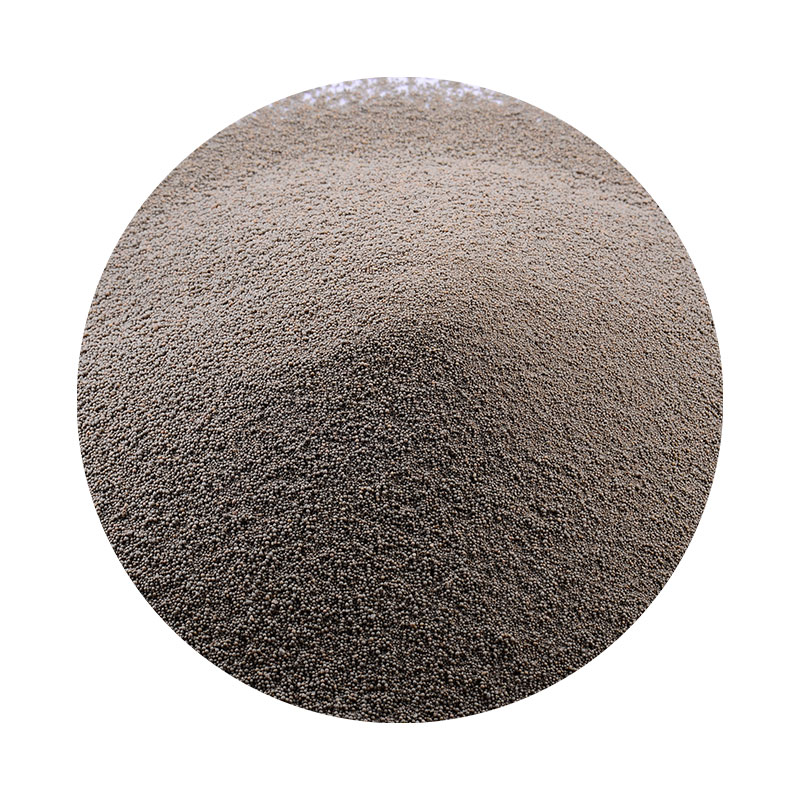
What is Resin Coated Sand? Key Characteristics & Industry Standards
Resin coated sand refers to high-purity silica or ceramic sand granules coated with a resin layer, typically phenolic or furan-based. This coated media facilitates superior flowability, controlled setting times, excellent collapsibility, and forms the backbone of intricate mold and core making in foundry works and high-stress industrial applications. Major specifications are governed by:
- Resin Content: 1.2–3.5% by weight (customizable per application — high resin: increased bond strength; low resin: economic cores)
- Ash Content: <0.35% (ISO 501-3:2012 compliant)
- Bulk Density: 1.45–1.65 g/cm³
- Thermal Conductivity: 0.70–1.20 W/m·K (crucial for casting solidification control)
- Refractoriness: >1500°C (major advantage for steel, iron, and non-ferrous casting)
The performance of resin sand is benchmarked through rigorous QA, including thermal stability (ISO 1926), compressive strength (ANSI/AFS 5018-00), and gassing rate/permeability (API RP 19C for frac sand).
| Parameter | Resin Coated Sand | Furan Resin Sand | Phenolic Resin Sand | Resin Coated Ceramic Sand (Product) |
|---|---|---|---|---|
| Grain Shape | Sub-angular / Spherical | Angular / Irregular | Semi-spherical | Perfect Spherical |
| Refractoriness | 1400–1700°C | 1450–1580°C | 1420–1700°C | 1700°C+ |
| Resin Content (%) | 1.2–3.5 | 1.5–2.8 | 1.3–2.5 | 1.8–2.8 (custom) |
| Bulk Density (g/cm³) | 1.45–1.65 | 1.42–1.56 | 1.43–1.60 | 1.68–1.72 |
| pH Value | 6.4–8.6 | 7.2–8.5 | 6.8–8.3 | 7.2–7.8 |
| Thermal Conductivity (W/m·K) | 0.7–1.2 | 0.9–1.05 | 0.8–1.15 | 0.95–1.12 |
| Ash Content (%) | <0.35 | <0.5 | <0.37 | <0.20 |
Resin Coated Sand Technical Trends & Performance Comparison (2016–2024)
Manufacturing Process: Resin Coated Sand (with Flow Diagram)
The state-of-the-art manufacturing process for resin coated sand is summarized below. Each stage is meticulously controlled to ensure optimum coating, thermal stability, and consistency:
- Raw Sand Selection: Choice of spherical ceramic (Al2O3/SiO2) or high-purity quartz base.
- Pre-treatment: Pre-heating & removal of fines (critical for low ash).
- Resin Application: Heated mixers coat sand evenly with resin (phenolic/furan/epoxy) – typically at 140–180°C.
- Curing/Setting: Post-blending, crosslinking promoted via chemical catalysts or thermal action.
- Screening & Classification: Final sifting into specification mesh sizes, magnetic removal of metal debris.
- Cooling & Packaging: Efficient cooling, QA sampling, then moisture-proof packaging.

Each arrow indicates a key process node—maintaining temperature & mixing uniformity per ISO 9001:2015.
Typical Application Scenarios for Resin Coated Sand
- Metal Casting & Coremaking (resin sand casting, furan resin sand casting): High-integrity automotive, shipbuilding, and wind power components.
- Resin Bonded Sand Casting: Precise valve bodies and pumps requiring superior dimensional stability & surface finish.
- Resin Bound Sand: Decorative flooring, anti-slip construction layers.
- Frac Sand (resin coated frac sand): Oil/gas hydraulic fracturing (proppant) with high sphericity for fracture conductivity per API RP 19C.
- Corrosion-Resistant Pipe & Fittings: Water treatment, desalination, and high-chloride process industries.
Featured Product: Resin Coated Ceramic Sand
| Key Technical Indicators | |
|---|---|
| Base Material | High-purity ceramic (SiO2/Al2O3) |
| Resin System | Customizable (Phenolic, Furan, Epoxy) |
| Available Mesh Size | 40–200 mesh (ISO 3310-1) |
| Sphericity | >0.95 (API RP 19C) |
| Acid Solubility | <1.6% (API: max. 2%) |
| Core Strength (24h) | >66 MPa |
| Refractoriness | >1,700°C |
| Thermal Expansion | <0.16% (RT–1000°C) |
| Main Application | Precision sand casting, replicable cores/molds |
Resin coated ceramic sand delivers consistent grain shape, minimized sintering, and exceptionally low thermal expansion, making it ideal for high-performance castings (including turbine, marine, and energy sectors).
Comparison Chart: Resin Coated Ceramic Sand vs. Silica-based RC Sand
2024 Global Market Share: Resin Coated Ceramic Sand vs. Others
Success Stories & Field Data: Real-World Use Cases
- Customer: Leading German OEM (Tier 1)
- Requirements: Thin-wall precision, minimal veining, zero gas-related defects
-
Solution:
Resin coated ceramic sand with phenolic resin, 0.18% ash, & 45/60 mesh.
Results: - Scrap rate reduced from 6.7% (silica RC sand) to 0.9%
- Cavity dimensional deviation halved (0.22 mm vs. 0.47 mm)
- Cycle time drop by 8.6% per casting
- Location: Permian Basin, USA
- Performance: >10,000 psi closure stress, sphericity >0.97, acid solubility avg. 1.3%
- Feedback: “Switching to resin coated ceramic sand increased production output, reduced proppant consumption, and lowered sand-induced downtime by >19%,” — Field Engineer, 2023.
Supplier Benchmark: Key Players in Resin Coated Sand
| Company | Country | Main Product | Certifications | Warranty |
|---|---|---|---|---|
| SINOCERAMSITE | China | Resin coated ceramic sand | ISO 9001, API RP 19C, ASTM E11 | 24 months |
| Carbo Ceramics | USA | Resin coated proppant, CeramSand | API RP 19C, ISO 13503-2 | 18 months |
| Foseco (Vesuvius) | UK | Coated Core Sand | ISO 12999, ISO 9001 | 12 months |
| ASK Chemicals | Germany | Phenolic/Furan RC Sand | ISO 14001, REACH | 12 months |
Custom Solutions & Engineering Support
- Specification Tailoring: Mesh size, resin formulation, and additive selection per foundry requirement.
- On-site Technical Training: Core preparation, environmental management, waste sand reclamation.
- Full Traceability: Batch-level documentation, digital QA archives, per ISO/ASTM standard.
- Lead Times: Standard: 10–15 days ex works; Custom blends: 18–22 days.
- Warranty: 2 years material performance guarantee (certificate supplied).
-
Customer Support: 24/7 response, on-site audits, regular feedback and technical upgrade briefings.
Contact for Custom Quotation
FAQ — Technical & Operational Questions on Resin Coated Sand
Delivery Lead Time, Quality Commitment, and Customer Care
- Standard Delivery: 2–3 weeks for common mesh sizes; customized blends within 4 weeks worldwide.
- Certification: Full ISO/API/ASTM documentation with every batch.
- Warranty: 2 years (extended based on project terms); “No-defects” guarantee for approved technical specs.
- Client Support: Free lab validation, process audits, and failure mode analysis.
- Traceability: Digital batch trace from raw sand to delivered lot, with QA certificates per EN 10204.
Why Choose SINOCERAMSITE Resin Coated Ceramic Sand?
- Unmatched Thermal Resistance (1,700°C+) — reliable even in steel & superalloy casting.
- Consistent Grain Uniformity — ensures reproducible casting and low scrap rates.
- Global Recognition — certified to API, ISO, ASTM, with over 200 industrial clients worldwide.
- Customizability — tailored resin types, mesh sizes, and packing.
- Eco-Responsibility — compliant with international limits on VOC/residue, and full lifecycle waste management provided.
Further Reading, Industry References & Forums
- "Resin Coated Sand for Foundry: Performance Evaluation and Case History", ScienceDirect, 2023
- "Selection and Evaluation of Proppant Materials", SPE Annual Technical Conference, 2022
- Global advanced sand solutions forum: American Foundry Society (AFS)
- Frac sand & proppant standards: API RP 19C
Next:High-Quality Sintered Sand for Precise Filtration Solutions