
Resin Coated Ceramic Sand: What’s Moving the Foundry Needle Right Now
Everywhere I go—core rooms, melt decks, even procurement calls—people are asking about resin coated sand. To be honest, the shift is not just hype. As silica constraints tighten and casting tolerances get unforgiving, ceramic-based systems are stepping in. The product I’ve been following, Resin Coated Ceramic Sand from Shanghai (origin: No.669 of Xinmiao Sanlu, Xinqiao Town, Songjiang Dist, Shanghai), is built on SHXK’s sintered spherical ceramic base—high refractoriness (>1800°C), extremely low angularity, and crisp collapsibility. Surprisingly clean too.
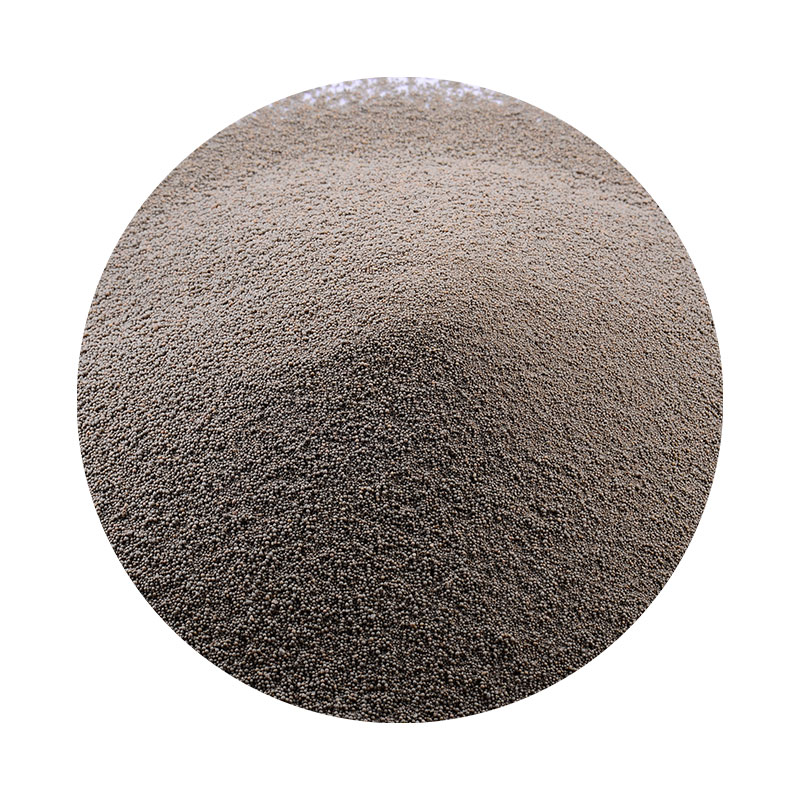
Why foundries are switching
In fact, the market trend is pretty clear: tighter emissions rules, silica exposure limits, and the need to cut veining/scrap are pushing foundries to resin coated sand with ceramic cores. Many customers say they get slimmer binder dosages and far fewer burn-on issues—especially for steel, ductile iron, and high-temp alloy jobs.
Technical snapshot (specs that matter)
| Parameter | Typical Value (≈, real-world use may vary) | Test/Reference |
|---|---|---|
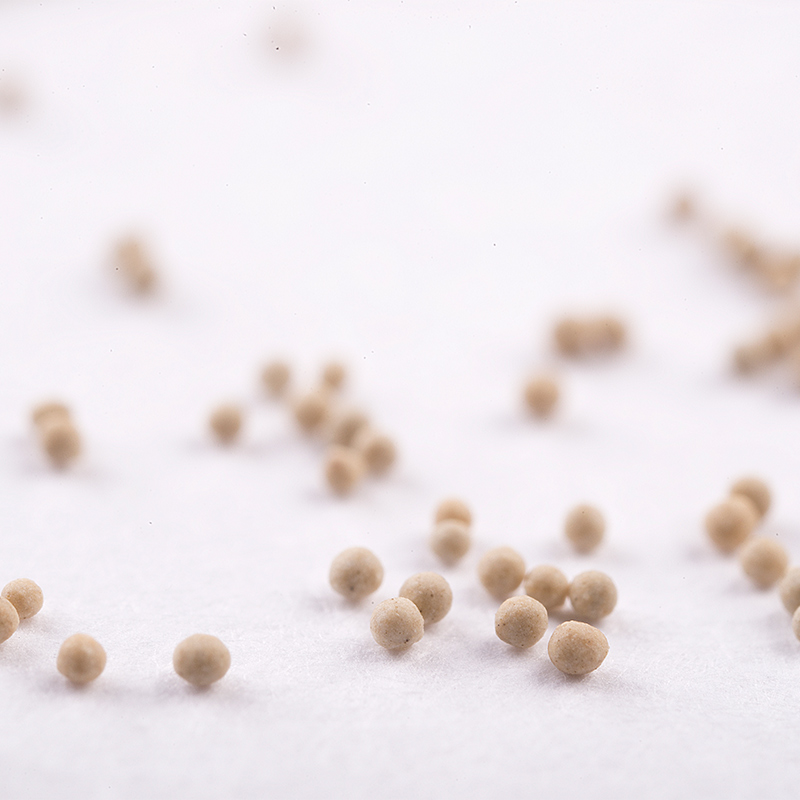
| Base grain | Sintered spherical ceramic (SHXK) | — |
| Refractoriness | > 1800°C | Manufacturer data |
| GFN / PSD | AFS 45–70 (custom 30–110) | ASTM E11 sieve; AFS methods |
| Thermal expansion @1000°C | ≈0.10–0.15% | ASTM E228 dilatometry |
| Bulk density | ≈1.6–1.8 g/cm³ | Lab determination |
| LOI | <0.10% | AFS LOI method |
| Acid Demand Value (ADV) | Low (≈0–2 mL/100 g) | AFS ADV |
| Resin content | ≈1.2–3.0% (phenolic/novolac) | Process setpoint |
Process flow, testing, and life
Materials: sintered ceramic base, phenolic/novolac resin, hexamine/latent catalysts. Method: hot-coating in a jacketed mixer, controlled curing, cooling, sieving (per ASTM E11), and dust control. QC: GFN, LOI, resin %, flowability, thermal expansion (ASTM E228). Service life: mechanical/thermal reclamation cycles ≈5–8 before topping up—depends on alloy and burnout.
Where it shines
Applications: complex cores for automotive blocks/heads, turbo housings, pump/valve bodies, steel castings, and heat-resistant components. Advantages I’ve seen: tighter dimensional control, fewer penetrations, lower veining risk, and cleaner shakeout. With resin coated sand, collapsibility is predictable, which operators love on Monday mornings.
Vendor landscape (my quick take)
| Vendor | Base Sand | Refract. | Thermal Exp. @1000°C | Resin % | Reclaim Cycles | Certs | Lead Time |
|---|---|---|---|---|---|---|---|
| Shanghai Ceramic RCS | Ceramic (spherical) | >1800°C | ≈0.10–0.15% | 1.5–2.5% | 5–8 | ISO 9001; IATF 16949 (on request) | 2–4 weeks |
| Imported Ceramic RCS | Ceramic | >1800°C | ≈0.12–0.18% | 1.8–3.0% | 5–7 | ISO 9001 | 6–10 weeks |
| Local Silica RCS | Silica | ≈1600–1700°C | ≈0.35–0.50% | 2.5–3.5% | 2–4 | Varies | 1–2 weeks |
Customization and feedback
Customization: mesh bands (30/50, 40/70, 50/100), resin level tuning for shell-core vs. cold-box, and anti-veining additives for steel. One buyer told me their yield ticked up ≈2–4% after switching to resin coated sand, mainly by cutting scrap from finning and penetration. Another noted smoother shakeout and less shot-blast time.
Two quick case notes
- Automotive cylinder head core: defect rate dropped from 6.2% to 2.1%; binder trimmed by ≈15% after PSD tweak.
- High-Mn steel pump body: eliminated veining with ceramic RCS + low-expansion curve; cycle time unchanged.
Industries: automotive, energy, pump/valve, general engineering, and—honestly—any shop chasing stable cores at elevated pours.
Standards, documentation
Suppliers typically provide ISO 9001 QMS, PPAP for auto programs, and routine COAs: GFN, LOI, resin %, moisture, sieve curves. Ask for thermal expansion curves and ADV—those two decide a lot more than we admit.
Citations
- AFS Mold & Core Test Handbook, American Foundry Society.
- ASTM E11 Standard Specification for Woven Wire Test Sieve Cloth and Test Sieves.
- ASTM E228 Standard Test Method for Linear Thermal Expansion of Solid Materials.
- OSHA Respirable Crystalline Silica Standard, 29 CFR 1910.1053.
- International Journal of Metalcasting: Advances in Ceramic Foundry Sands for Steel and Iron (various issues).
Next:Sintering Sand for Ceramics - High-Purity, Low-Dust Finish