
The foundation of high-quality metal casting lies in selecting the right different types of foundry sand. From silica sand to zircon sand, each variant offers unique properties tailored to specific applications. Silica sand, the most widely used, provides excellent thermal stability for general-purpose castings. However, stainless steel sand casting foundry operations often require advanced sands like chromite or olivine due to their superior heat resistance and low thermal expansion. These sands minimize mold cracking when pouring high-temperature stainless steel alloys. Meanwhile, facing sand in foundry—a specialized layer applied to mold surfaces—enhances finish quality by resisting metal penetration. Innovations like core-making with high refractoriness ceramsite sand further revolutionize complex geometries, as ceramsite’s spherical grains ensure uniform compaction and exceptional dimensional accuracy. By understanding these materials, foundries achieve tighter tolerances and reduce post-casting machining costs.
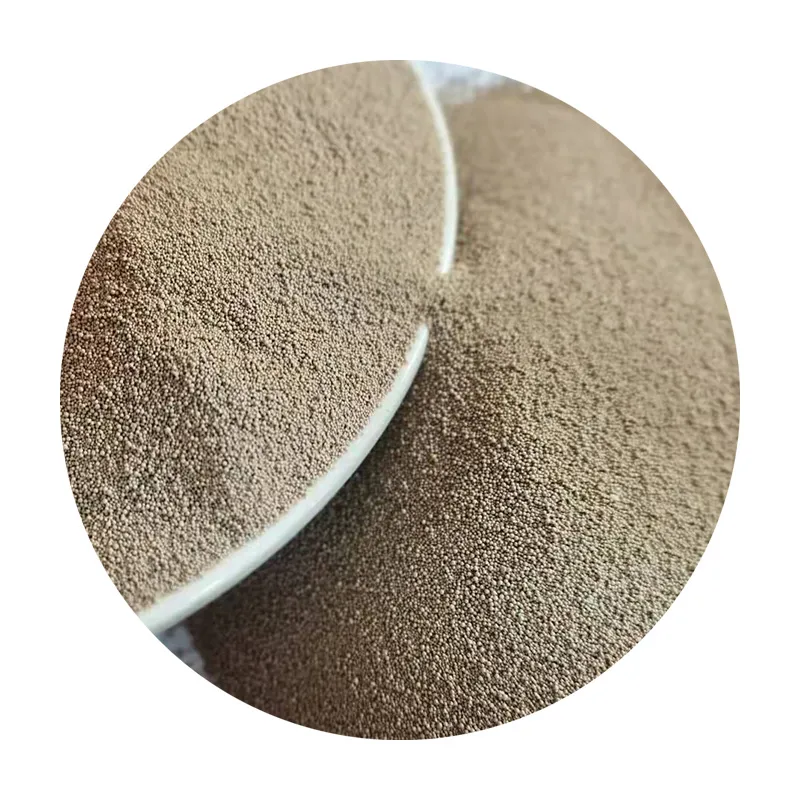
Stainless Steel Sand Casting Foundry: Where Durability Meets Precision
Sand casting stainless steel demands a meticulous balance between mold integrity and alloy behavior. Stainless steel’s high melting point (exceeding 1400°C) necessitates sands with extreme refractoriness. Here, high refractoriness ceramsite sand shines. Its alumina-rich composition withstands thermal shock, while its low binder requirements reduce gas defects in castings. Foundries specializing in stainless steel sand casting foundry workflows also prioritize permeability—achieved through controlled grain size distribution—to vent gases during pouring. Additionally, facing sand in foundry molds for stainless steel often incorporates zirconia-coated sands to create a barrier against metal oxidation, preserving surface finish. These techniques enable the production of corrosion-resistant pump components, valve bodies, and aerospace parts with microstructural homogeneity, meeting ASTM A743 standards effortlessly.
The Science Behind Foundry Sand Testing for Consistent Quality
Foundry sand testing is the unsung hero of defect-free castings. Key parameters like moisture content, clay percentage, and compressive strength are rigorously evaluated. For instance, the methylene blue test quantifies active clay in green sand, ensuring optimal plasticity for mold formation. In core-making with high refractoriness ceramsite sand, permeability tests verify that gases escape without causing blowholes. Advanced foundries employ X-ray fluorescence (XRF) to detect trace elements in sands that could react with stainless steel alloys. Thermal reclamation systems further extend sand lifespan by removing burnt binders and fines, critical for sustainable stainless steel sand casting foundry operations. By adhering to ISO 13586 testing protocols, manufacturers guarantee batch-to-batch consistency, reducing scrap rates by up to 40% and reinforcing client trust.
Core-Making with High Refractoriness Ceramsite Sand: Redefining Complexity
Core-making with high refractoriness ceramsite sand unlocks possibilities for intricate internal channels in castings. Unlike traditional silica cores, ceramsite’s spherical grains enable dense packing without brittleness, crucial for thin-walled stainless steel parts. The sand’s high refractoriness (over 1700°C) ensures cores retain shape during prolonged exposure to molten metal. Combined with phenolic urethane binders, ceramsite cores exhibit excellent collapsibility post-casting, simplifying removal from complex geometries. Automotive manufacturers leverage this technology for turbocharger housings, while the energy sector uses it for impellers in corrosive environments. Furthermore, ceramsite’s low thermal expansion aligns with sand casting stainless steel needs, minimizing core deformation and ensuring dimensional fidelity. This innovation positions ceramsite as a game-changer for high-precision, high-volume foundries.
FAQs: Foundry Sand Selection and Application
What sand is best for stainless steel casting?
High refractoriness ceramsite sand and chromite sand are ideal for sand casting stainless steel due to their extreme heat resistance and low reactivity with alloys.
How often should foundry sand be tested?
Routine foundry sand testing is recommended after every reclamation cycle. Key tests include moisture analysis, AFS clay content checks, and permeability assessments to maintain mold quality.
Can ceramsite sand reduce casting defects?
Yes. Core-making with high refractoriness ceramsite sand minimizes veining and metal penetration defects, especially in stainless steel sand casting foundry applications, due to its uniform thermal behavior.
What is facing sand’s role in casting?
Facing sand in foundry molds creates a smooth interface between the mold and molten metal, enhancing surface finish and reducing cleaning costs for precision components.
Is reclaimed sand suitable for critical castings?
After proper foundry sand testing and reconditioning, reclaimed sand can be reused for non-critical parts. However, virgin sands are preferred for high-integrity stainless steel castings.
Elevate Your Casting Capabilities Today
Unlock unmatched precision with our premium high refractoriness ceramsite sand and rigorously tested foundry solutions. Designed for stainless steel sand casting foundry excellence, our products ensure reduced defects, longer tool life, and superior surface finishes. Visit [Your Website] to explore our range and place your order. Transform your foundry operations—where innovation meets reliability.
Next:Essential Guide to Golden Sand for Sand Molding Castings for Beginners