

(what products are made from sand casting)
What Products Are Made From Sand Casting?
Sand casting remains a foundational manufacturing process for creating complex metal components across global industries. This ancient yet advanced technique allows manufacturers to produce intricate geometries and large-scale parts that would be cost-prohibitive with other methods. Before exploring specific examples of sand casting products, let's outline key discussion points:
- Industry impact statistics and application breadth
- Core technical benefits over alternative methods
- Leading manufacturer capabilities comparison
- Custom solution development approaches
- Sector-specific implementation cases
- Quality validation processes
- Featured industrial applications
Industry Impact and Market Reach
The global sand casting market reached $13.7 billion in 2023, projected to grow at 5.3% CAGR through 2030. Automotive applications dominate with 43% market share, while industrial machinery accounts for 28%. Key volume indicators reveal sand casting's significance:
- Over 75% of metal castings globally use sand molds
- North American foundries produce approximately 10 million tons annually
- Single production runs can create 100+ parts simultaneously
- Material utilization rates exceed 95% with modern reclamation systems
Major transportation manufacturers report 30-45% cost reductions versus machining solid billets. Foundries like Nemak achieve 99.2% material yield through advanced sand recycling, diverting 2.3 million tons from landfills yearly.
Technical Advantages Over Modern Alternatives
Sand casting's primary strength lies in its unmatched flexibility for weight ranges, from 0.1kg jewelry components to 300-ton ship propellers. Technical differentiators include:
- Geometric freedom - Complex internal channels and undercuts impossible with CNC machining
- Material versatility - Accommodates over 50 alloys including superalloys like Inconel 718
- Cost efficiency - Tooling expenses 60-80% lower than die casting
- Scalability - Economical production from single prototypes to 100,000-unit runs
- Thermal management - Controlled solidification prevents internal stresses
Recent innovations like 3D-printed sand cores enable ±0.25mm dimensional accuracy, rivaling investment casting precision at 40% lower cost. The process achieves 120-180 MPa tensile strength in aluminum parts, comparable to forged components.
Manufacturing Partner Capabilities Comparison
Leading foundries specialize in different application segments. Performance metrics include dimensional accuracy, surface finish, and production capacity:
| Manufacturer | Specializations | Tolerance (mm) | Max Part Weight | Surface Finish (μm) | Lead Time |
|---|---|---|---|---|---|
| Grede Foundry | Automotive components | ±0.3 | 90kg | 3.2-12.5 | 3-5 weeks |
| MetalTek | Marine hardware | ±0.5 | 3,500kg | 6.3-25 | 6-8 weeks |
| Neenah Foundry | Municipal infrastructure | ±1.0 | 6,800kg | 12.5-50 | 10-12 weeks |
| Impro Precision | Aerospace parts | ±0.15 | 45kg | 1.6-6.3 | 8-10 weeks |
Industry leaders typically achieve 0.15-0.3mm/kg dimensional consistency using automated molding lines with real-time sand moisture control. Specialized foundries maintain proprietary binder systems enhancing finish quality by 35-60%.
Engineering Customized Solutions
Advanced design approaches transform client concepts into production-ready sand castings. Development stages include:
- Virtual simulation - Flow analysis predicts 97.8% of potential defects pre-production
- Alloy development
- Rapid pattern creation
- Tool-less prototyping
Leading foundries achieve 2-day pattern fabrication using urethane molding from CAD models. Custom aluminum alloys with silicon modification increase fluidity by 40%, enabling wall thicknesses down to 2.5mm. Post-casting services like CNC machining and powder coating provide turnkey solutions.
Sector Implementation Case Studies
Diverse industrial applications demonstrate sand casting's versatility:
- Transportation - Engine blocks with integrated coolant jackets weighing 28-170kg, reducing assembly part count by 60%
- Energy - Wind turbine hubs handling 25-year fatigue cycles at 2.8MW continuous load
- Infrastructure - 450kg valve bodies for water treatment plants with 50-year corrosion resistance
- Agriculture - Combine harvester gear housings surviving 10,000+ operating hours
Material specifications often exceed standard grades, like marine bronze containing 24% nickel that withstands 30-knot saltwater exposure for decades. Automotive manufacturers report 150,000-mile durability with optimized cylinder heads.
Featured Sand Casting Products and Their Impact
Several implementations highlight sand casting's unique capabilities. Featured products include mining conveyor system rollers that operate under 12-ton loads in abrasive environments, achieving 14-month service life. Precision hydraulic valve bodies maintain 300-bar pressure integrity through 0.5 million cycles, with internal passage accuracies within 0.05mm. Heavy equipment applications feature construction grapple assemblies absorbing 27 kJ impact energy without deformation.
The technology continues evolving through automated molding systems that boost production rates by 400% while maintaining CTQ dimensions within ±0.15mm. These examples of sand casting products demonstrate why 83% of heavy industry manufacturers consider it indispensable for complex part production. As digital sand printing advances, new geometries impossible with traditional tooling emerge, ensuring the method's continued relevance in precision manufacturing.
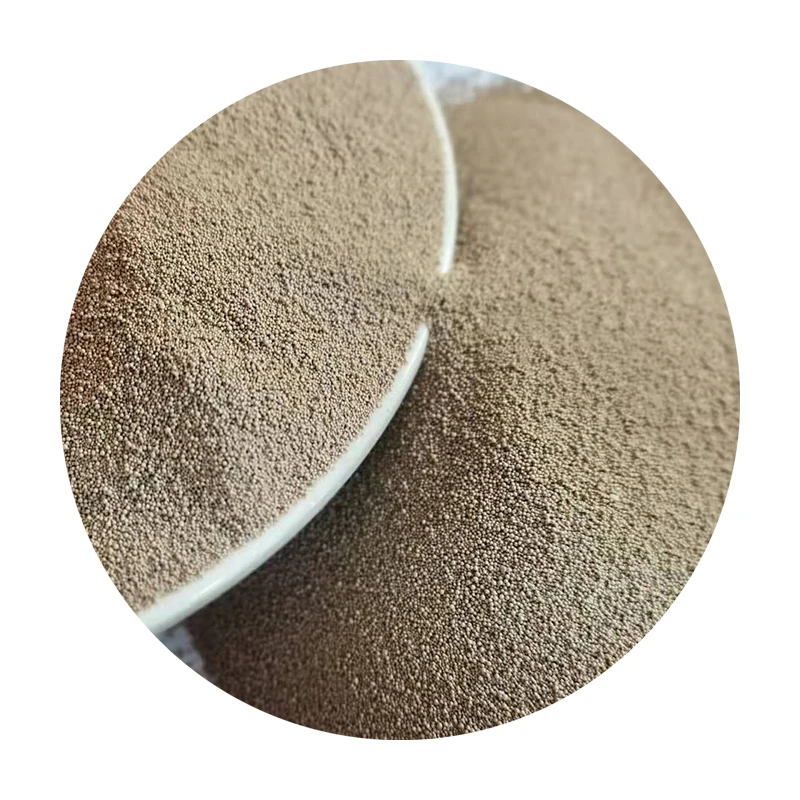
(what products are made from sand casting)
FAQS on what products are made from sand casting
以下是基于核心关键词 "what products are made from sand casting" 及其相关词 "what products are made from sand casting, examples of sand casting products, Featured Products" 创建的5组英文FAQs。每个FAQ使用HTML富文本格式,问题使用 `` 标签并以 "Q:" 开头,回答使用 `
` 标签并以 "A:" 开头。所有问答严格控制在三句话内,确保内容围绕沙铸产品主题。
Q: What products are made from sand casting?
A: Sand casting produces large and intricate metal components like engine blocks, valve bodies, and pipe fittings. These are used across automotive, aerospace, and industrial sectors due to the process's versatility for bulk production. It supports various metals including iron, steel, and aluminum.
Q: What are some examples of sand casting products?
A: Common examples include engine blocks for vehicles, pump housings, and gear systems. Other items are decorative sculptures, heavy machinery parts, and plumbing fixtures such as valves. These highlight sand casting's ability to create complex, custom shapes efficiently.
Q: What are featured products made from sand casting?
A: Featured products often showcase high-quality or specialized items, such as precision-engineered transmission cases and bespoke architectural elements. They exemplify the technique's strength in producing durable, intricate designs for industries like construction and custom manufacturing.
Q: What industries commonly use sand casting products?
A: Key industries include automotive for parts like cylinder heads, aerospace for turbine components, and manufacturing for heavy equipment. Featured products in these sectors demonstrate sand casting's cost-effectiveness and adaptability to large-scale, detailed applications.
Q: How do sand casting products differ from other casting methods?
A: Sand casting products are often larger and more economical for mass production of complex forms, unlike die-cast parts. They typically have rougher surfaces but high versatility, making them ideal for featured items in custom projects or industrial uses. The process reduces costs while handling varied sizes and materials.
Next:Resin Coated Sand Uses Enhance Casting Quality & Durability