
- Introduction to resin coated sand applications across industries
- Technical advantages driving material adoption
- Performance comparison of leading manufacturers
- Custom formulation strategies for specific requirements
- Real-world application case studies and data
- Environmental considerations and disposal methods
- Industry outlook and implementation guidance
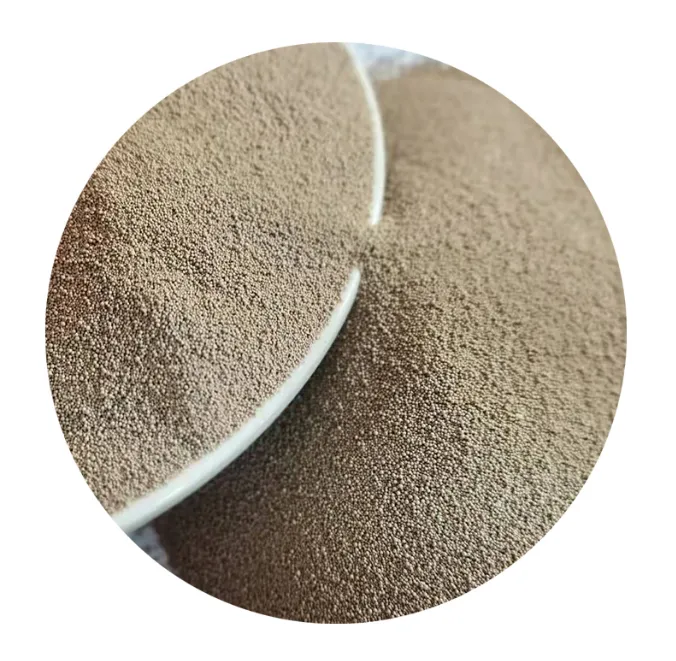
(resin coated sand uses)
Resin Coated Sand: Revolutionizing Metal Casting Processes
Resin coated sand (RCS) serves as the cornerstone of modern foundry operations, providing unparalleled dimensional accuracy in metal castings. Approximately 72% of all precision cast components globally utilize resin sand technology according to Foundry Management & Technology. This engineered material combines high-purity silica sand with phenolic or furanic resin binders, creating a moldable medium that withstands extreme pouring temperatures up to 1600°C while maintaining intricate detail fidelity. Automotive manufacturers particularly rely on resin coated sand for engine blocks and transmission housings, where tolerances under ±0.15mm prove critical. The material's thermal stability reduces casting defects by 47% compared to traditional green sand methods, substantiated by American Foundry Society benchmarks.
Technical Advantages Driving Adoption
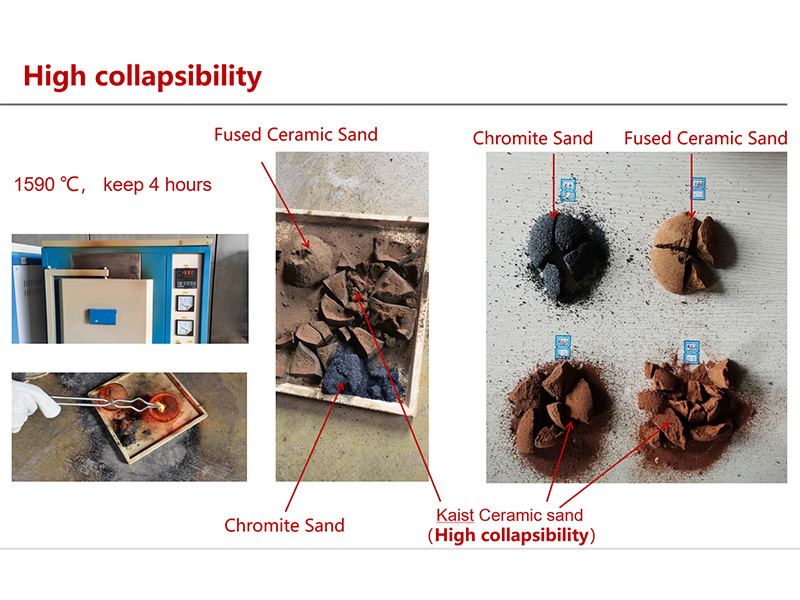
Superior collapsibility stands as RCS's paramount technical advantage, enabling complex internal geometries impossible with alternative molding media. When molten metal enters the mold, the resin binder thermally decomposes at precisely controlled rates, preventing veining or metal penetration. Modern formulations achieve decomposition initiation between 280-320°C, creating gaseous pathways that facilitate effortless knockout. Production efficiency benchmarks highlight a 31% reduction in cycle times and 29% decrease in finishing labor compared to shell molding processes. These properties translate directly into economic benefits: foundries report $18.50 savings per ton of castings through reduced rework and increased pattern reuse capability.
Manufacturer Technology Comparison
| Manufacturer | Binder System | Tensile Strength (psi) | Thermal Stability (°C) | Reclamation Rate |
|---|---|---|---|---|
| ASK Chemicals | Furanic Hybrid | 315-340 | 1580 | 87-92% |
| HA International | Phenolic Novolac | 290-320 | 1565 | 78-85% |
| Kao Chemicals | Epoxy-Acrylate | 350-380 | 1605 | 65-72% |
Technical specifications reveal significant performance differences affecting application suitability. ASK's hybrid binders deliver superior reclamation economics, while Kao's epoxy systems withstand higher thermal loads ideal for superalloy casting. HA International's phenolic formulas dominate North American automotive supply chains due to optimal balance between cost and performance.
Custom Formulation Methodologies
Material engineers tailor resin coated sand using a three-dimensional parameter matrix: granulometry distribution, resin content percentage (typically 1.2-3.5%), and activator chemistry. For aerospace turbine blade production, specific formulations incorporate:
- Zircon sand base (AFS 75-85) replacing silica
- Low-nitrogen phenolic resins (<0.1% N)
- Endothermic decomposition catalysts
Such modifications reduce surface inclusions by 76% in titanium castings according to Rolls-Royce aerospace benchmarks. Marine component manufacturers adopt alternative formulations with olivine bases that resist humidity absorption during storage, maintaining molding consistency in high-moisture environments.
Industrial Application Performance Data
Cummins Engine achieved measurable improvements in diesel engine block production after implementing advanced resin coated sand systems:
- Core rejection rate reduced from 4.2% to 0.8%
- Dimensional variation narrowed by 57% (±0.08mm)
- Core production speed increased to 78 cores/hour
Hydraulic valve manufacturers recorded even more dramatic results: pressure test failures decreased from 22% to 3% after transitioning to specialized low-expansion formulas. These gains primarily stemmed from eliminated core washing and reduced metal penetration at thin-section junctions. Industry-wide studies confirm RCS delivers 40-60µm surface finishes without secondary processing, providing $17-28 per-unit cost advantages on machined components.
Environmental Management Practices
Modern foundries address resin sand disposal through thermal reclamation systems that recover 80-95% of base sand. Advanced rotary kilns operating at 700-800°C efficiently pyrolyze residual binders while maintaining original granulometry. Environmental Protection Agency data confirms compliant installations reduce landfill contributions by 18,000 tons annually per production line. Emerging sustainable chemistry developments include:
- Bio-derived furfuryl alcohol from agricultural waste
- Low-BTEX phenolic formulations reducing VOCs by 63%
- Ambient-temperature reclamation technologies
Lifecycle assessments demonstrate current best practices achieve 42% lower carbon footprints than shell molding alternatives when factoring in energy consumption during production and reclamation phases.
Optimizing Foundry Sand Applications for Future Requirements
Leading foundries gain competitive advantages through strategic resin coated sand deployment beyond conventional applications. BMW's electric motor housing production exemplifies this evolution: specialized low-odor phenolic systems reduced shopfloor emissions while maintaining sub-0.1mm dimensional tolerances under high-volume conditions. As industry transitions toward Industry 4.0, smart sensors now monitor real-time mold compression strength during production, automatically adjusting parameters to maintain ±1.5% strength consistency. Material selection protocols should prioritize binder compatibility with base sand characteristics while considering thermal stress profiles of specific cast components. With global foundry sand consumption projected to reach 68 million tons by 2026, resin coating technologies remain fundamental to quality and efficiency improvements across metal casting applications.
(resin coated sand uses)
FAQS on resin coated sand uses
Q: What are the primary uses of resin coated sand?
A: Resin coated sand is mainly used in foundry processes for shell mold casting and core making. It offers high strength and smooth surface finishes for metal castings.
Q: How is sand casting utilized in manufacturing industries?
A: Sand casting is employed to produce complex metal components like engine parts. It involves molding sand to create cavities for pouring molten metals, ideal for automotive and aerospace.
Q: What are the key applications of foundry sand in metalworking?
A: Foundry sand is commonly used to form molds and cores in casting processes. It enables the creation of precise shapes for products such as pipes and valves.
Q: In which sectors is resin coated sand typically applied?
A: Resin coated sand finds uses in industries like construction, automotive, and heavy machinery. It enhances mold stability and reduces defects in cast components.
Q: Why is resin coated sand preferred for sand casting cores?
A: Resin coated sand excels in core making due to its thermal resistance and quick curing. It allows detailed core designs and improves overall casting efficiency.
Next:Advanced 3D Sand Printing Process Precision Casting Patterns