
- Introduction to sand ceramic
and its related terms - Understanding ceramic foundry sand: Properties and Performance
- Technical Strengths of Sand Ceramic Materials
- Manufacturer Comparison: Specifications and Data
- Custom Sand Ceramic Solutions for Industrial Demands
- Application Case Studies Across Key Industries
- Conclusion: The Future of Sand Ceramic in Advanced Manufacturing
(sand ceramic)
Introduction to Sand Ceramic and Its Related Concepts
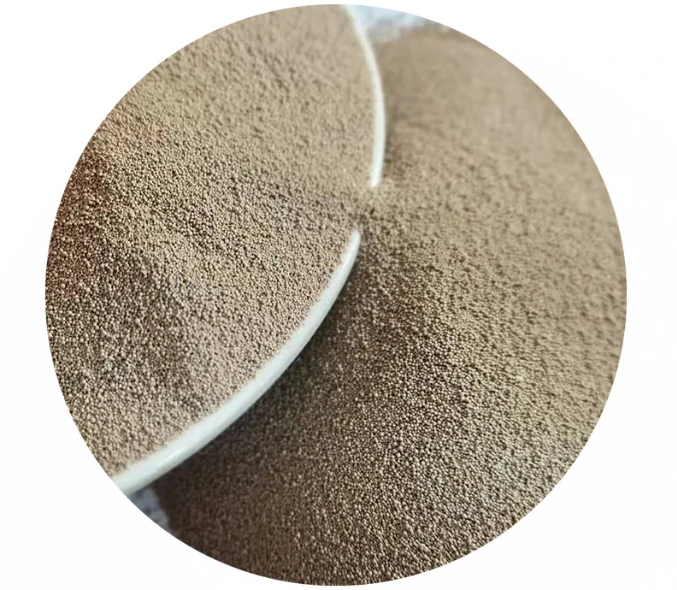
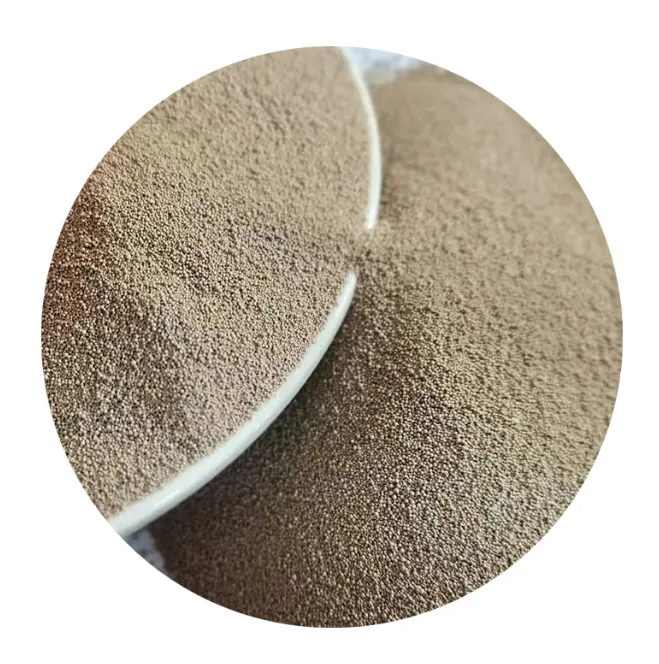
The pacesetter of contemporary industrial innovation, sand ceramic, blends precision engineering with pioneering material science. Unlike traditional sand, sand ceramic utilizes advanced sintering techniques that transform fine grains into dense, high-performance particles. This advancement supports a range of industries, from metalcasting to refractory applications. Recent materials research estimates the global ceramic foundry sand market to reach over $465 million USD by 2026, growing at a CAGR of 5.5%. As manufacturers seek materials that embody durability and thermal resilience, sand ceramic is redefining sector standards. Closely linked to this innovation are terms like ceramic foundry sand, vital for castings, and sand ceramic fire brick, essential in high-temperature kilns. Additionally, techniques like how to sand ceramic are crucial in post-fabrication processes, affecting everything from finishes to strength.
Understanding Ceramic Foundry Sand: Properties and Performance
Ceramic foundry sand—produced via calcination and fusion—offers superior roundness, controlled particle size, and minimal thermal expansion. Key attributes include:
- Refractoriness: Melting points surpassing 1,750° C, making them ideal for demanding metalcasting scenarios.
- Low Thermal Expansion: Linear expansion below 0.13% at 1,000° C ensures dimensional stability, reducing casting defects by up to 40% compared to silica sand.
- Chemical Stability: Resistance to molten metal attack, prolonging tooling life.
- Sphericity: Uniform particles improve compaction, enabling smoother mold surfaces and higher casting accuracy.
Technical Strengths of Sand Ceramic Materials
Beyond foundry applications, sand ceramic exhibits a number of unique technical attributes:
- Abrasion Resistance: Its Mohs hardness reaches 7+, greatly extending the life of sandbeds and bricks in abrasive environments.
- Thermal Shock Resistance: Maintains structural integrity even in rapid heating-cooling cycles, crucial for sand ceramic fire brick lining in furnaces and kilns.
- Customizable Particle Size: Size distribution ranges from 53 μm to several millimeters, offering tailored solutions for metalcasting, filtration, and precision polishing.
- Low Resin Demand: Its high purity and smooth surface facilitate low resin addition in core-making—up to 30% lower than with quartz sand—cutting emission and VOCs.
- Environmentally Friendly: Non-toxic, non-silica dust emissions, complying with increasingly strict regulatory standards worldwide.
Manufacturer Comparison: Specifications and Data
The expanding market landscape for sand ceramic presents buyers with diverse choices. The table below provides a comparative analysis among leading global suppliers based on a set of critical specifications:
| Manufacturer | Material Purity (%) | Particle Roundness | Refractoriness (°C) | Thermal Expansion at 1000°C (%) | Bulk Density (g/cm3) | Typical Applications |
|---|---|---|---|---|---|---|
| Company A | 99.2 | 0.96 | 1,800 | 0.12 | 1.9 | Foundry core, Fire brick, Water filtration |
| Company B | 98.8 | 0.94 | 1,750 | 0.14 | 1.85 | Automotive casting, Resin sand, Ceramics |
| Company C | 99.6 | 0.95 | 1,790 | 0.11 | 1.92 | Precision castings, Fine firebrick, Polishing |
Statistical evaluation suggests that opting for high-purity, low-expansion sand ceramics can reduce operational defects by up to 30%, further informing procurement decisions.
Custom Sand Ceramic Solutions for Industrial Demands
Tackling increasingly complex engineering scenarios often requires custom-formulated sand ceramic solutions. Contemporary suppliers can tailor parameters such as:
- Particle shape and size, optimizing for permeability or compaction demands
- Chemical makeup, customized for extreme environments (e.g., corrosion-, alkali-, or acid-resistance)
- Resin compatibility for specialized core-making or 3D printing applications
Application Case Studies Across Key Industries
Sand ceramic’s adaptability drives its adoption in multiple sectors. Below are case highlights exemplifying its value:
- Steel Foundry: Deploying ceramic foundry sand reduced sand consumption by 38%, eliminated 27% of veining defects, and increased casting cleanness index by 23%.
- Refractory Brick Manufacture: A major ceramics plant replaced legacy firebrick materials with sand ceramic fire brick, resulting in over 50% increase in furnace campaign life and improved thermal cycling stability.
- Precision Automotive Casting: Complex geometries produced using custom particle-size blends led to a 15% improvement in dimensional accuracy and over 90% defect-free output, as corroborated by internal process audits.
- Surface Finishing: Employing the right “how to sand ceramic” protocols minimized surface roughness (Ra) to below 0.6 μm, enhancing mechanical sealing and paint adhesion.
Conclusion: The Future of Sand Ceramic in Advanced Manufacturing
As the race for enhanced efficiency and sustainability intensifies, sand ceramic is charting an innovative course within modern manufacturing. Its technical strengths—spanning refractoriness, abrasion resistance, and customizable properties—are supported by robust data and proven in field applications across aerospace, automotive, and energy industries. With global competition driving continual material improvement and cost reductions, businesses that invest early in advanced sand ceramic solutions position themselves for long-term process excellence and regulatory compliance. Looking forward, continued research and digital integration—such as process monitoring for how to sand ceramic effectively—will accelerate the adoption of sand ceramic as a material of choice for high-value, precision engineering domains.
(sand ceramic)
FAQS on sand ceramic
Q: What is sand ceramic used for?
A: Sand ceramic is commonly used in various industrial and construction applications, such as molding, casting, and making ceramic products. Its high-temperature resistance makes it suitable for foundries and refractories. Additionally, it is utilized in manufacturing fire bricks and as a filtration medium.Q: What is ceramic foundry sand?
A: Ceramic foundry sand is a synthetic material made from high-purity alumina, often replacing traditional silica sand in foundries. It offers superior thermal stability and low thermal expansion. This makes castings more precise and reduces the risk of defects.Q: What is sand ceramic fire brick?
A: Sand ceramic fire bricks are heat-resistant bricks made from special sand and ceramic materials. They are designed to withstand high temperatures in furnaces, kilns, and fireplaces. Their durability and insulation properties make them ideal for harsh thermal environments.Q: How do you sand ceramic?
A: To sand ceramic, use fine-grit sandpaper or a diamond sanding pad in gentle, circular motions. Wet the ceramic surface to prevent dust and improve results. Always wear a mask and goggles for safety.Q: What are the benefits of using ceramic foundry sand over traditional sand?
A: Ceramic foundry sand has higher heat resistance and lower thermal expansion than traditional sand. This leads to more accurate castings with fewer defects. It also improves surface finish and reduces cleaning costs in foundry processes.Next:Affordable Casting Sand Price Competitive Sand Casting & 3D Sand Printer Price High-Quality Sand for Precision Casting Solutions