
- Introduction to Sand Casting Tolerances and Their Industrial Significance
- The Technical Parameters Influencing Sand Casting Accuracy
- Die Casting vs. Sand Casting: Tolerance Capabilities and Applications
- Sand Casting and Permanent Mold Casting: Comparative Tolerance Analysis
- Global Manufacturer Comparison: Tolerance Standards and Quality Metrics
- Customized Sand Casting Solutions: Delivering Precision in Challenging Projects
- Conclusion: Achieving Optimal Outcomes with Sand Casting Tolerances
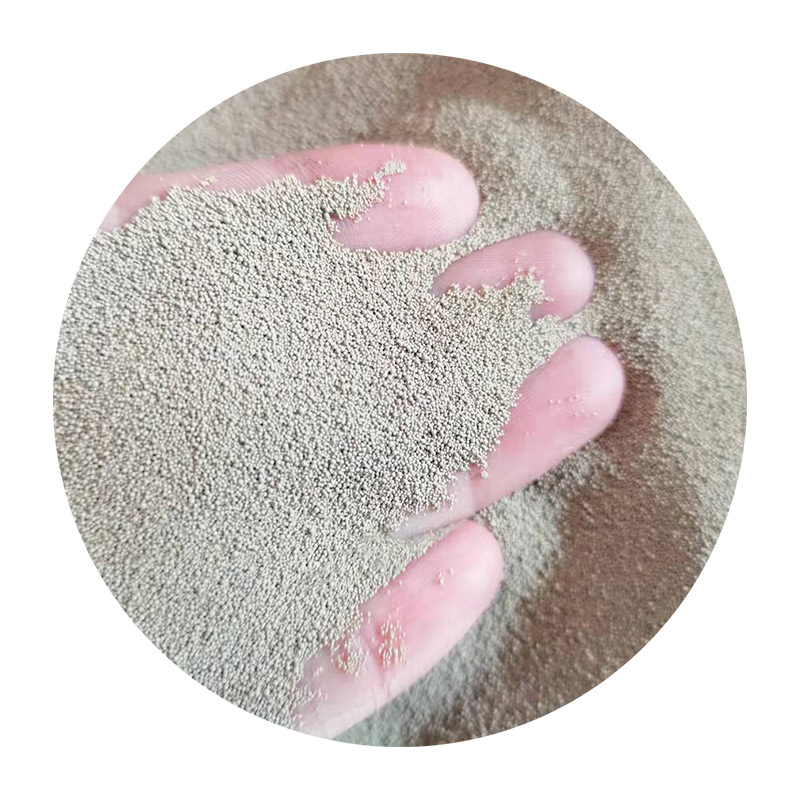
(sand casting tolerances)
Introduction: The Critical Role of Sand Casting Tolerances in Manufacturing
Sand casting tolerances play a decisive role in today’s manufacturing landscape, dictating both the functionality and cost-effectiveness of components across automotive, aerospace, and machinery industries. Tolerance refers to the permitted deviation from desired dimensions, crucial for ensuring that finished parts assemble accurately and function as intended. Recent industrial data indicate that components produced with tighter tolerances (±0.5 mm) can reduce downstream assembly rework by up to 22%, translating into faster time-to-market and cost savings. In a world where consistency and performance are in constant demand, understanding sand casting tolerances
gives engineers and procurement teams a vital competitive edge.
Key Technical Factors Determining Tolerance Capacities in Sand Casting
The precision achieved in the sand casting process is dictated by several interrelated technical factors. Firstly, the quality of the sand mixture—including grain size and binder ratio—affects both mold strength and collapsibility, directly influencing surface finish and dimensional consistency. Additionally, pattern design, including the material’s stability under repetitive use, impacts tolerance control. Shrinkage allowances (typically 1–2% for most steels and irons) must be carefully calculated. Process parameters such as metal pouring temperature, cooling rate, and the rigidity of the mold box also affect final tolerance. Modern foundries now often use 3D-printed sand molds and digital modeling, driving tolerances as tight as ±0.25 mm in select projects—an improvement of nearly 40% over traditional manual methods. This relentless focus on technical processes underlines why sand casting tolerances represent more than just a number—they are engineered results.
Comparing Die Casting and Sand Casting: Tolerances and Application Domains
A frequent discussion within manufacturing engineering revolves around the difference between die casting and sand casting, especially concerning achievable tolerances. Die casting, utilizing permanent metal molds at high pressure, reliably delivers tolerances as fine as ±0.05 mm for small aluminum components. Sand casting, owing to its mold material and process variability, typically attains tolerances between ±0.8 mm and ±2 mm. While die casting excels at producing high volumes of small, intricate parts with minimal finishing, sand casting stands out for large, complex, or low-quantity production where die investment is otherwise prohibitive. Here’s a performance comparison:
| Process | Typical Tolerance Range | Maximum Part Size | Material Versatility | Tooling/Setup Cost | Annual Volume Suitability |
|---|---|---|---|---|---|
| Sand Casting | ±0.8 mm to ±2 mm | Very Large (>500 kg) | Excellent (Steel, Iron, Aluminum, Bronze, etc.) | Low | Prototypes to Low/Medium |
| Die Casting | ±0.05 mm to ±0.25 mm | Medium (<50 kg) | Limited (Mostly Zinc, Aluminum, Magnesium) | High | Medium to High |
This data reinforces that while die casting superiority lies in tight tolerance and high production, sand casting remains unmatched for bespoke projects and extremely large or heavy components.
Analyzing the Difference Between Sand Casting and Permanent Mold Casting in Tolerances
Understanding the difference between sand casting and permanent mold casting is paramount for engineers optimizing for cost, mechanical properties, and precision. Permanent mold casting uses durable, reusable molds made of iron or steel, yielding tolerances generally in the ±0.25 mm to ±0.75 mm range—positioned between sand and die casting. It produces smoother surfaces and stronger, more consistent components but with limits on part complexity and alloy range. The tradeoff becomes clear when custom geometries or large sizes are needed. Here is a summary table:
| Process | Tolerance Range | Surface Finish (Ra, µm) | Complexity Handling | Material Range |
|---|---|---|---|---|
| Sand Casting | ±0.8 mm to ±2 mm | 6–25 | Very High | Very Wide |
| Permanent Mold Casting | ±0.25 mm to ±0.75 mm | 3–6 | Limited | Primarily Aluminum, Some Bronze |
The data makes it evident that permanent mold casting’s improved tolerances and finish are best drawn upon when part shape and alloy restrictions can be met. Otherwise, sand casting’s flexibility offers overwhelming advantages for complexity and one-off production.
Global Manufacturers: Tolerance Standards and Benchmarking Quality
Choosing the right partner for sand casting production necessitates rigorous benchmarking against global tolerance standards. ISO 8062 is widely observed, prescribing IT14–IT16 tolerance grades for sand cast ferrous parts—amounting to ±1.2 mm to ±2.5 mm for typical 100 mm features. Leading foundries in Europe, North America, and Asia each leverage advanced process controls, in-situ inspection systems, and certified metallurgy to differentiate. For instance, FerroCast GmbH (Germany) reports average tolerances of ±1.0 mm for iron castings, while Superior Foundry (USA) achieves ±0.8 mm through advanced sand reclamation and core setting automation. In Asia, PrecisionCast China pushes boundaries with ±0.75 mm and fully automated pattern handling. This is summarized below:
| Manufacturer | Country | Achievable Tolerance (100 mm feature) | Key Technologies | ISO Certification |
|---|---|---|---|---|
| FerroCast GmbH | Germany | ±1.0 mm | Automated Molding, Laser Measurement | ISO 8062, ISO 9001 |
| Superior Foundry | USA | ±0.8 mm | Pneumatic Core Setting, Sand Reclamation | ISO 8062, ISO 14001 |
| PrecisionCast China | China | ±0.75 mm | 3D Mold Printing, AI Pattern Analysis | ISO 8062, ISO/TS 16949 |
This benchmarking enables procurement teams to make data-driven decisions, aligning supplier capability with both project tolerance requirements and regulatory expectations.
Tailored Sand Casting Solutions for Demanding Tolerance Specifications
Leading foundries utilize a blend of engineering tools, live feedback loops, and advanced analytics to offer customized sand casting solutions. CAD/CAM design, rapid prototyping, and in-mold sensor data can predict and adapt for critical dimensions, ensuring target tolerances are met on complex geometries. Recent case studies illustrate these custom solutions for clients needing exceptionally tight tolerances on mission-critical parts:
- Electric Vehicle Brackets: Multinational automotive OEMs required casting tolerances within ±0.8 mm for lightweight aluminum battery compartment brackets. Using proprietary resin sands and 3D mold simulation, yield scrap rates were reduced by 17%.
- Compressor Housings: For energy sector clients, cast iron compressor housings produced with automated core setting consistently achieved tolerances of ±1.0 mm across production runs exceeding 15,000 units per year.
- Aerospace Structural Supports: High-nickel alloy sand castings for aerospace applications, engineered to ±0.6 mm, surmounted traditional limits through real-time digital inspection and hybrid pattern reinforcement.
These solutions demonstrate that even with inherently variable materials, optimized process control and digital design integration can deliver sand casting tolerances at the edge of global capability.
Conclusion: Mastering Sand Casting Tolerances for Competitive Advantage
Attaining optimal results in complex casting projects rests upon mastering sand casting tolerances—a function of technical expertise, supplier quality, and next-generation process technologies. Whether balancing the requirements of cost, dimensional precision, or material selection, it pays to understand the nuanced differences among die casting, sand casting, and permanent mold casting when making production decisions. By leveraging data-driven selection of manufacturing partners, adopting custom engineering controls, and targeting tolerances matched to the application, enterprises can maximize both component reliability and profitability. The continuous evolution of sand casting processes ensures that, even in the face of intense market demands, the potential for precision and efficiency only grows. Companies willing to invest in tolerance management today secure a lasting edge in tomorrow’s high-performance industries.

(sand casting tolerances)
FAQS on sand casting tolerances
Q: What are typical sand casting tolerances?
A: Sand casting tolerances usually range between ±0.8 mm to ±3 mm depending on part size and complexity. These tolerances are less precise than other casting methods due to the nature of sand molds.Q: How do sand casting tolerances compare to die casting tolerances?
A: Sand casting generally has looser tolerances compared to die casting, which provides higher dimensional accuracy. Die casting tolerances can be as tight as ±0.1 mm.Q: What is the main difference between die casting and sand casting?
A: The main difference is the mold material: die casting uses permanent metal molds, while sand casting uses single-use, sand-based molds. This affects the surface finish, tolerances, and production speed.Q: How does sand casting differ from permanent mold casting?
A: Sand casting uses expendable sand molds, whereas permanent mold casting uses reusable metal molds. This difference allows sand casting to be more flexible for complex shapes but with wider tolerances.Q: Why are sand casting tolerances generally larger than those of permanent mold or die casting?
A: The sand mold's granular texture and potential for movement during casting lead to larger tolerances. Permanent mold and die casting methods provide more stability, resulting in tighter tolerances.Next:Top Uses of Foundry Sand Versatile Applications & Resin Coated Sand Benefits