
Discover the latest insights, technology, and applications in the resin coated sand industry. This article unveils the full spectrum of resin sand, resin sand casting, furan resin sand casting, resin bonded sand casting, resin bound sand, and resin coated frac sand. We analyze technical parameters, industry benchmarks, production processes, real-world cases, and product comparisons—empowering you to select the optimal solution for your foundry or industrial needs.
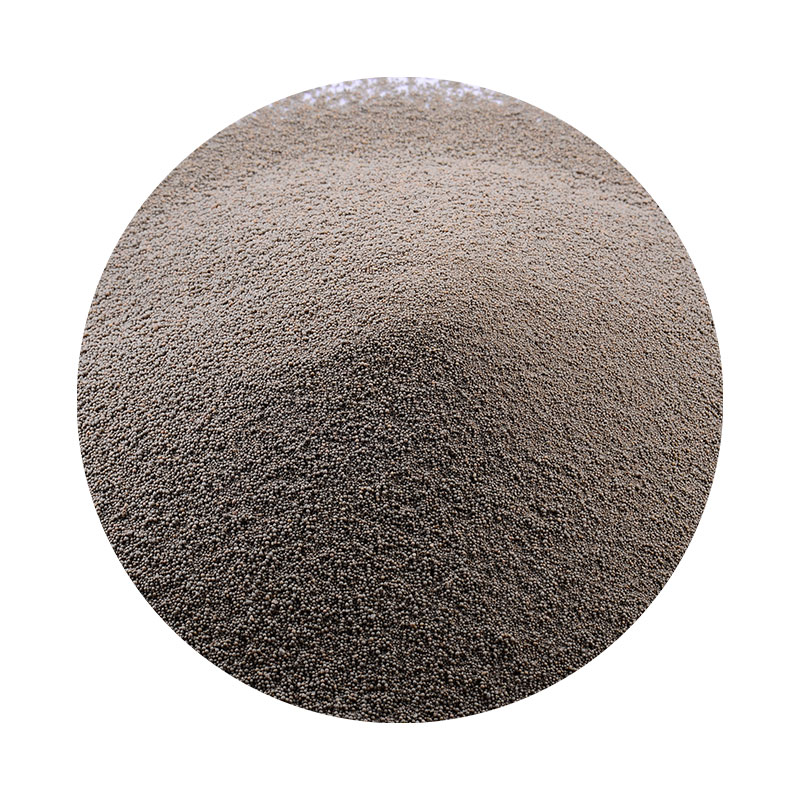
1. What is Resin Coated Sand? Core Concepts & Industry Evolution
Resin coated sand is a high-performance foundry material with a silica or ceramic sand core layered with a thermosetting resin. When exposed to heat, the resin cures, forming highly defined, robust molds and cores for casting. Variants include:
- Resin sand: General term for sand mixed with resin binders.
- Resin sand casting: Casting using resin-bonded sand molds or cores for superior precision.
- Furan resin sand casting: Utilizes furan resin for enhanced thermal stability, ideal for steel/iron foundries.
- Resin bonded sand casting: Broad category including phenolic, furan, or urethane resins for different casting specs.
- Resin bound sand: Often used for hard landscaping and paving solutions.
- Resin coated frac sand: Specifically optimized for the oil/gas industry, proppant in hydraulic fracturing.
Since 2017, the resin coated sand market has seen a CAGR of 4.8%[1], driven by demand from automotive, aerospace, energy, and petrochemical sectors, and significant advancements in sand quality, resin chemistries, and controlled coating processes.
2. Resin Coated Sand Industry Technical Parameters & Comparison
| Type | Base Material | Resin Type | Refractoriness (°C) | Typical Use | LOI (%) | Size (AFS/μm) | ISO/FDA/ANSI |
|---|---|---|---|---|---|---|---|
| Standard RCS | Silica Sand | Phenolic/Furan | 1400–1600 | Iron/steel casting cores | 1.5–2.1 | AFS 50–70 200–350μm |
ISO 23478, ANSI B94 |
| Resin Coated Ceramic Sand | Ceramic Spheres (Aluminosilicate) | Phenolic/Furan | 1600–1800 | Precision, heat-resistant casting | 1.1–1.8 | AFS 60–80 150–350μm |
ISO 9001, ISO 14001 |
| Furan Resin Sand | Silica Sand | Furan | 1450–1600 | Large casting molds/cores | 1.8–2.5 | AFS 55–75 | ISO 13503, API RP60 |
| Resin Coated Frac Sand | Round Quartz | Phenolic/Urethane | 1300–1500 | Hydraulic fracturing | 0.7–1.6 | 180–420μm | ISO 13503-5, API RP56 |
3. Resin Coated Ceramic Sand — Product Insight & Specifications
Product Name: Resin coated ceramic sand
Manufacturer: SINOCERAMSITE
Certifications: ISO 9001:2015, ISO 14001
Product URL: https://www.sinoceramsite.com/resin-coated-ceramic-sand.html
Main Technical Specifications (2024):
| Parameter | Ceramic RCS (SINOCERAMSITE) | Silica RCS |
|---|---|---|
| Average Particle Size (μm) | 200–350 | 180–420 |
| Refractoriness (°C) | 1600–1800 | 1400–1600 |
| Bulk Density (g/cm³) | 1.85–1.98 | 1.46–1.52 |
| LOI (Loss on Ignition, %) | 1.1–1.8 | 1.5–2.1 |
| Resin Content (%) | 2.0–2.3 | 2.2–2.7 |
| Compression Strength (MPa) | 2.2–3.5 | 1.9–2.8 |
| Thermal Expansion (×10⁻⁶/°C) | 0.14–0.18 | 0.22–0.32 |
| Acid Demand Value (mg/50g) | < 3.0 | 5–10 |
| Cycle Life (use #) | 4–6 | 2–3 |
| Industry Certification | ISO 23478, Qual. Cert. | API RP56 |
4. Resin Coated Sand Manufacturing Process Flow
The manufacture of resin coated sand is a multi-stage, precision-controlled process, ensuring high product uniformity, premium mechanical strength, and reliable performance for casting, proppant, and infrastructure markets.
Sand → Preheat → Resin
Coating → Curing → Cool
/Screen → Test → Pack
- Raw Sand Selection (Ceramic/Quartz): Assures critical size and sphericity.
- Preheating (100–150°C): Activates chemical surface for resin binding.
- Resin Application: Exact metering and mixing (phenolic/furan) ensure even layer thickness (15–70μm around grains).
- Curing: In kilns/ovens at 160–260°C for up to 1 hour (fast-curing for self-set or shell processes).
- Cooling and Sieving: Removes agglomerates; ensures tight particle distribution (ISO 23478 verification).
- Testing: Loss-on-ignition (LOI), compressive strength, flowability, thermal expansion per ISO/ANSI standards.
- Packing: 25kg/bag, 1MT/bulk, or customized packaging with anti-moisture lining.

5. Advantages of Resin Coated Sand vs Other Technologies
- High Precision: Fine AFS grading and uniform resin coat enables near-net shape casting, reduces machining needs.
- Excellent Refractoriness: Ceramic base withstands up to 1800°C, ideal for high-alloy steels, turbo components.
- Low Gas Defect Risk: Engineered binders for minimal volatiles = fewer porosity or blowhole issues.
- Boosted Productivity: Shell process enables quick cycle times, resin coated sand cores cure within 15–60s at 250°C.
- Repeat Use & Low Waste: Recycle rates up to 50% (ceramic), reduced dumping costs.
- Corrosion & Fouling Resistance: Key for water valves, pump bodies, and oil/gas proppants—extends part life by 2–4x vs green sand.
- Certified & Traceable: Full traceability, tested to ISO/API/ANSI standards, third-party validation available.
Where resin coated sand Excels vs Alternatives (Typical Cases)
| Criteria | Resin Coated Ceramic Sand | Traditional Silica Sand | Furan Resin Sand |
|---|---|---|---|
| Thermal Resistance | ★★★★★ 1600–1800°C | ★★★ 1300–1500°C | ★★★★ 1400–1600°C |
| Dimensional Accuracy | ±0.14 mm | ±0.25 mm | ±0.21 mm |
| Gas Generation | Low | Med | Low |
| Recycle Rate | 50–60% | 20–30% | 30–40% |
| Cost | $$ | $ | $–$$ |
| Industry Certs | ISO, ANSI | API, ISO | API |
6. Industry Applications & Real-World Cases
The adaptability and technical merit of resin coated sand make it the material of choice in numerous critical industries:
- Automotive: Cylinder heads, turbo housings, transmission cases—precision in shape, minimal air defect, high output lines.
(Ford, Volkswagen, Toyota leverage ceramic RCS for EV powertrains since 2021[2].) - Aerospace & Defense: Turbine blades, exhausts with tight tolerances; extreme temperature cycles.
- Oil & Gas: As resin coated frac sand: high sphericity/strength for deep-well proppant under API/IP standards.
- Metallurgy: High-manganese steel, stainless casting—crucial for low-veining and minimal penetration.
- Municipal & Water: Anti-corrosion pump/valve bodies—prolonged service due to inert ceramic shell.
Case Study: Customization for a Leading Petrochemical Valve OEM (2023)
Challenge: "Standard silica RCS cores could not withstand repeated temperature shocks at 1500°C; cores cracked, leading to leaks and scrap rates above 12%."
Solution: Resin coated ceramic sand replaced silica cores, tested to ISO 23478, improved cycle life 2.5×. Scrap rate dropped below 3%, downtime cut by 40%, casting yield up by 8.2%.
OEM Feedback: "RCCS enabled us to launch a corrosion-resistant valve platform, supporting 10-year service guarantees."
7. Major Global Resin Coated Sand Suppliers: Brand & Service Comparison
| Company | Product | Certifications | Global Supply Base | Customization |
|---|---|---|---|---|
| SINO Ceramsite | Ceramic RCS | ISO 9001, 14001 | Asia/Europe/Africa | Yes |
| Ha-Be | ShellSandR | ISO 9001, ISO 14001 | EU, India | Yes |
| ASK Chemicals | ASK RCS | ISO, REACH | Global | Partial |
| Carbo Ceramics | Proppant RCS | API, ISO | Americas | O&G only |
| OYAK | Silica/Frac RCS | ISO, API | EU, Mid-East | No |
8. Custom Solutions Tailored for Your Needs
Whether needing bulk resin coated sand (AFS 55–80, 20/40 to 70/140 US mesh), enhanced acid resistance, low-L.O.I. for stainless, or rapid-curing for high-volume shell lines—SINOCERAMSITE and global partners engineer formulas and logistics for each industry and part. Custom binders (phenolic, furan, urethane), particle size, and additives (anti-crush, anti-foaming) are available on request, guaranteed to meet ISO, ANSI, and FDA requirements with test coupons and data packs supplied for acceptance.
9. FAQ on Resin Coated Sand (Professional Terms Explained)
Q1: What distinguishes ceramic-base resin coated sand from quartz?
A: Ceramic RCS has superior sphericity, refractoriness (up to 1800°C), and lower thermal expansion. This reduces casting defects (veining, breakdowns), improves repeatability, and enables recycling. Quartz RCS is lower cost but maxes out at ~1500°C.
Q2: What are the standard AFS grain sizes used?
A: Typical AFS (American Foundry Society) grain fineness: 55–80. Precision castings use AFS 65–75 (200–300μm). For valves, impellers, 70/140 mesh is common.
Q3: Which resins are used for coating and why?
A: Most common: phenolic (high thermosetting, fast shell processing), furan (acid-catalyzed, low gas), urea-formaldehyde (cost-efficient, for dry blending). Each offers specific cure speed, strength, emissions, and chemical compatibility.
Q4: How is Loss on Ignition (LOI) measured and why is it critical?
A: LOI is a measure of resin and volatile content. High LOI can result in excessive gas or residues during pouring. Standard: 1.1–2.0% by weight (ISO 23478). Testing at 1000°C for 1hr is typical.
Q5: Which industry standards are vital for RCS?
A: ISO 23478 (foundry sand), ISO 9001 (QMS), ANSI B94 (dimensional), API RP56/60 (frac sands), FDA for food/water contact, and third party validation. Certificates/documentation are provided per batch shipment.
Q6: What is a core collapse strength and typical values for RCS?
A: It measures resistance to liquid metal pressure before core destruction. RCCS: 2.2–3.5 MPa (tested at 25°C/450°C). Essential for thin-walled/complex castings.
Q7: Can resin coated sand be recycled?
A: Yes, especially ceramic-based RCS: up to 50–60% reclaimed via attrition and thermal reclamation. Silica RCS recyclability is lower due to decrepitation and sand breakdown.
10. Delivery, Warranty & Customer Support
- ⏳ Standard lead time: 10–21 days from order (factory stock on AFS 65–80).
- 💼 Warranty: All resin coated sand supplied is guaranteed to meet mutually agreed specs, backed by batch test certificates and 1–3 year process warranty.
- 🛡 Support: 24/7 technical consulting (casting trials, troubleshooting), sample testing, logistics solutions (CIF/FOB/DDU).
- 🔗 Services: On-site foundry visits, process optimization, and end-use recommendations, plus user manuals and MSDS/CDS on request.
11. References & Further Reading
- Global Foundry Supply Chain 2024 Report, Foundry-Planet
- "Evaluation of high temperature performance of resin coated ceramic sand", Surface & Coatings Technology Journal (Elsevier)
- DOE Report: Innovative High-Temperature Materials for Foundry Applications
- AFS (American Foundry Society) - Guide to Modern Resin Sand Technology
- Shell Process & Frac Sand Guides at Hydrocarbon Engineering
Next:Different Types of Foundry Sand for Metal & Stainless Steel Casting