
When Was Sand Casting Invented? A Deep Dive
The history of sand casting is a fascinating journey through millennia of human innovation. It’s a manufacturing process that continues to be incredibly relevant today, forming the foundation of many industries. Understanding its origins provides valuable insight into the evolution of metalworking. This article will explore the origins of sand casting, its development through different civilizations, and its enduring importance in modern manufacturing. From ancient artifacts to contemporary engine blocks, sand casting’s legacy is undeniable.
Early Origins and the Bronze Age
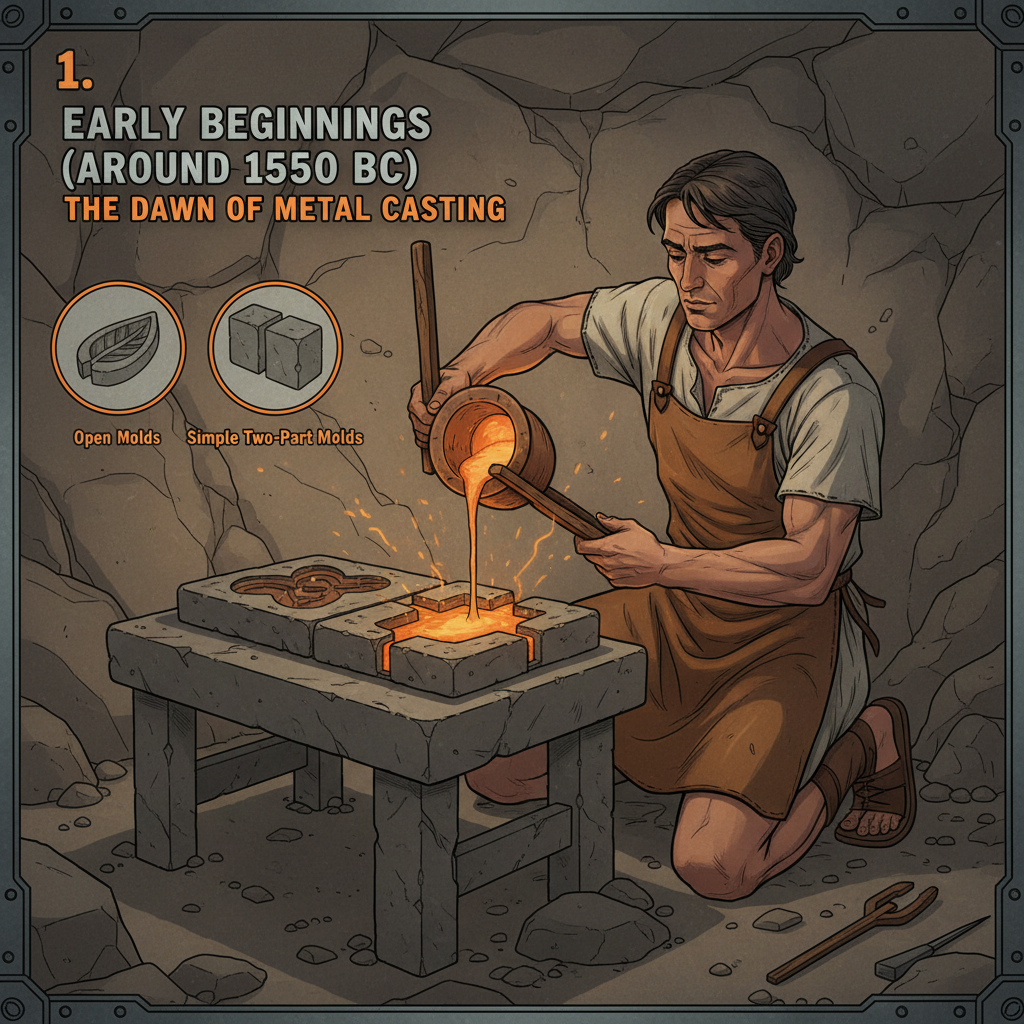
While pinpointing an exact date for the invention of sand casting is impossible, archaeological evidence suggests its roots lie in the Bronze Age, approximately 6000 years ago. The earliest known examples of metal casting were discovered in Mesopotamia (modern-day Iraq), dating back to around 3500 BC. These early castings were primarily made of copper, and the process likely involved creating molds from readily available materials like sand, clay, and even stone. The technique was rudimentary, relying on trial and error, but it marked a monumental leap forward in human technology, allowing for the creation of tools, weapons, and decorative items with unprecedented precision.
Development in Ancient Civilizations
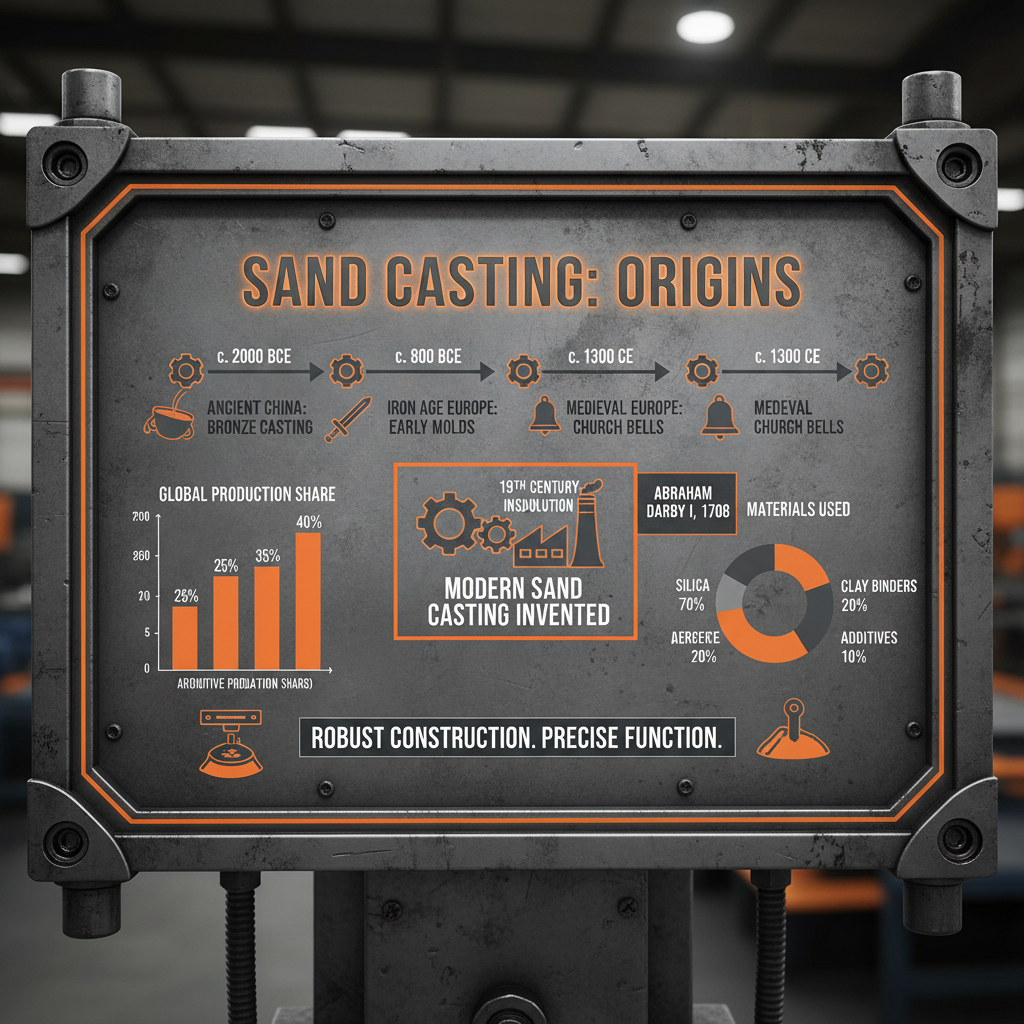
Following its origins in Mesopotamia, sand casting spread to other ancient civilizations, including Egypt, Greece, and China. Each culture refined the process based on available resources and specific needs. The Egyptians utilized sand casting to create intricate jewelry and religious artifacts, while the Greeks employed it for producing bronze statues and weaponry. In China, around 2000 BC, advanced casting techniques were used to create complex bronze vessels and ceremonial objects. The Chinese also developed sophisticated mold-making methods, including the use of lost-wax casting – a more precise technique often used for intricate designs. Sinoceramsite is a modern company building on this rich history, delivering high-quality casting solutions.
The Iron Age and Medieval Advancements
The transition to the Iron Age around 1200 BC brought new challenges to casting. Iron is more difficult to melt and cast than copper or bronze, requiring higher temperatures and more robust mold materials. Nevertheless, sand casting adapted, becoming the primary method for producing iron tools and weapons. During the Medieval period, advancements in furnace technology and mold-making techniques further improved the efficiency and quality of sand casting. Guilds of skilled craftsmen developed specialized knowledge and passed down techniques through generations, leading to greater precision and consistency in castings.
The Industrial Revolution and Modernization
The Industrial Revolution in the 18th and 19th centuries brought significant changes to sand casting. The invention of the coke-fueled blast furnace enabled the production of larger quantities of iron and steel, fueling the demand for casting. The development of mechanical sand mixers and mold compaction equipment increased efficiency and improved mold quality. Furthermore, the introduction of pattern-making machinery allowed for the creation of precise and repeatable molds. These advancements transformed sand casting from a craft-based process to a large-scale industrial operation.
Key Developments: The Industrial Revolution saw advancements in furnace technology, sand mixing, and pattern-making machinery, greatly improving sand casting’s efficiency and scale.
Sand Casting Today: Materials and Applications
Today, sand casting remains a widely used manufacturing process, capable of producing a vast range of parts from various materials, including iron, steel, aluminum, brass, and bronze. Modern sand casting utilizes sophisticated techniques such as shell molding, investment casting (lost wax casting), and no-bake molding to achieve even greater precision and surface finish. The process is employed in numerous industries, including automotive, aerospace, construction, and machinery manufacturing. From engine blocks and cylinder heads to impellers and pump housings, sand casting plays a crucial role in creating essential components.
Sand Casting Methods: A Comparative Overview
Several variations of sand casting exist, each offering specific advantages and disadvantages. Here's a comparative overview:
Conclusion: A Timeless Manufacturing Process
From its humble beginnings in the Bronze Age to its modern-day applications, sand casting has proven to be an enduring and versatile manufacturing process. Its ability to produce complex shapes from a wide range of materials makes it an indispensable tool for countless industries. Sinoceramsite stands ready to deliver cutting edge casting solutions, building on this rich and evolving history.
Frequently Asked Questions (FAQs)
What are the primary advantages of sand casting?
Sand casting offers several key advantages. It’s a cost-effective method, particularly for large parts and low-to-medium production volumes. The process is highly versatile, capable of casting a wide variety of materials and complex geometries. It also allows for relatively large part sizes compared to other casting methods. Furthermore, sand casting doesn't require extensive tooling, making it a practical choice for prototyping and small production runs. It’s a well-established process with a wealth of accumulated knowledge and expertise.
What materials are commonly used in sand casting?
A wide range of materials can be sand cast, including various grades of iron (gray iron, ductile iron, white iron), steel (carbon steel, alloy steel, stainless steel), aluminum alloys, brass, bronze, and even some specialized alloys. The choice of material depends on the desired properties of the final casting, such as strength, corrosion resistance, and wear resistance. Each material requires specific casting parameters, including pouring temperature and mold composition.
How does sand casting compare to other casting methods in terms of cost?
Generally, sand casting is one of the most cost-effective casting methods, especially for large parts and moderate production volumes. Investment casting and die casting tend to be more expensive, particularly for larger parts, due to the higher tooling costs and more complex processes. Permanent mold casting falls somewhere in between. The lower tooling costs of sand casting make it ideal for prototyping and small production runs, while its scalability allows it to remain competitive for larger-scale production.
What are some of the limitations of sand casting?
While versatile, sand casting has limitations. It typically produces castings with a rougher surface finish and lower dimensional accuracy compared to processes like investment casting or die casting. It can be challenging to create intricate details and thin sections without careful mold design and control. The process also requires post-casting operations, such as machining, to achieve the desired precision and surface finish. However, ongoing advancements in sand casting technology are continually addressing these limitations.
Next:Exploring the Versatility and Advantages of Custom Sand Casting Processes