
Ceramic Foundry Sand (aka Ceramsite): What’s Really Changing on the Floor
If you’ve poured iron or aluminum in the last five years, you’ve heard the chatter. Silica is out; engineered sands are in. To be honest, the switch isn’t just fashion. Many customers say the stability alone paid for itself. And yes, I’ve seen the data to back it up.
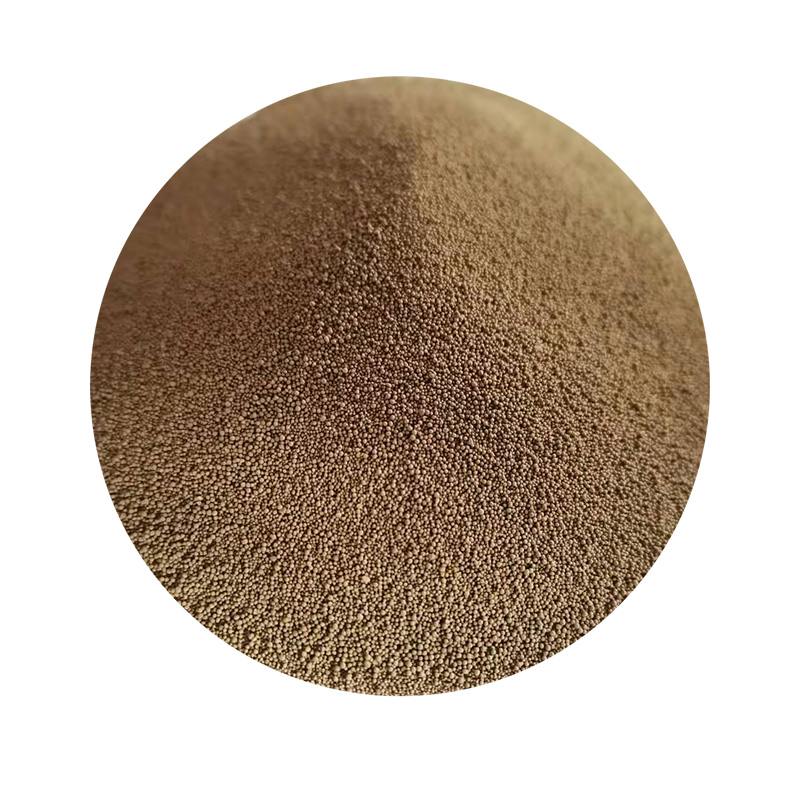
What it is (and why shops care)
This engineered sand—technically “Sintered Ceramic Sand for Foundry”—is mostly Al2O3 and SiO2. Compared with silica, it brings high refractoriness, tiny thermal expansion, consistent flowability, and a surprisingly high reclamation rate. Versus black ceramic sand, similar properties, but lower bulk density and ≈3× more reclaim cycles (real-world use may vary). People casually call it Ceramsite, cerabeads, ceramcast—take your pick.
Industry snapshot
- Silica exposure rules push foundries to low-dust media.
- Binder savings matter with resin prices where they are.
- Binder-jet 3D printing likes spherical media with tight GFN.
- Closed-loop reclamation is now a KPI, not a dream.
Typical specs for sintered Ceramsite
| Main chemistry | Al2O3 ≈ 65–75%; SiO2 ≈ 20–30% |
| Bulk density | 1.45–1.60 g/cm³ (black ceramic sand: 1.8–2.1 g/cm³) |
| Refractoriness (PCE) | ≥ 1800°C (tested per ASTM C24) |
| Linear thermal expansion | ≈ 0.12–0.18% at 1000°C (ASTM E228, dilatometry) |
| AFS GFN options | 45 / 55 / 65 / 75 and custom blends |
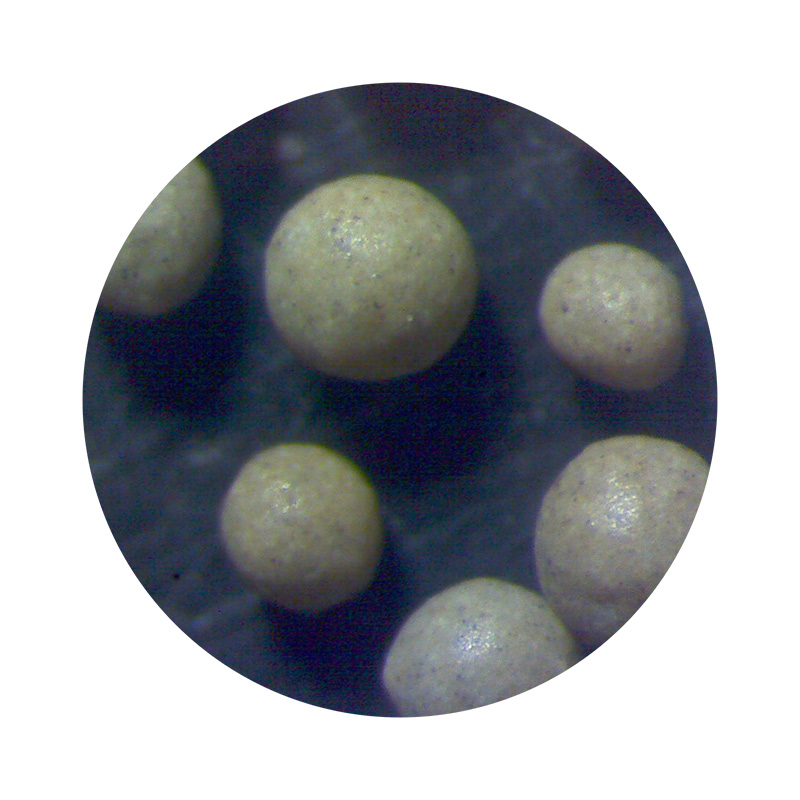
| Sphericity | High; good angular coefficient for flow/packing |
| Reclamation cycles | 10–30× (mechanical/thermal), process-dependent |
How it’s made (quick flow)
Materials: high-alumina bauxite + controlled silicates. Methods: pelletization (disc), drying, sintering in rotary kiln at ≈1400–1500°C, screening, magnetic separation, de-dusting. Testing: AFS 1106 (sieve/GFN), ASTM E11 (sieves), ASTM E228 (expansion), ASTM C24 (PCE), loss-on-ignition, and crush/attrition per AFS Mold & Core Test Handbook.
Applications and advantages
- Iron, steel, and nonferrous castings; resin-coated sands; no-bake; shell; 3D binder jet.
- Lower binder demand (often 10–25% less) and reduced coating passes.
- Better dimensional control; fewer veining/penetration defects; nicer surface finish.
Vendor and media comparison (field-notes)
| Medium | Bulk density | Thermal expansion | Reclaim cycles | Binder need |
|---|---|---|---|---|
| Sintered Ceramsite (this product) | 1.45–1.60 g/cm³ | Low | 10–30× | Low |
| Black ceramic sand | 1.8–2.1 g/cm³ | Low–mid | ≈3× less than above | Low–mid |
| Silica sand | 1.45–1.6 g/cm³ | High | 1–3× | High |
Note: Costs per mold vary with binder system, shakeout, and reclaim setup. Still, the yield bump is hard to ignore.
Customization and QA
Available GFN 45–75, custom blends for 3D printers, and tight PSD for thin-wall aluminum. ISO 9001:2015, REACH, and MSDS on file; routine lot tests logged against AFS and ASTM methods. Plant origin: No.669 of Xinmiao Sanlu, Xinqiao Town, Songjiang Dist, Shanghai.
Case notes (from the floor)
- Automotive brake disc line: switched to Ceramsite, resin dropped ≈18%, veining defects -60%, surface Ra improved from 12 to 8 μm.
- Pump housings (ductile iron): coating reduced to one pass; shakeout time cut by ≈20% thanks to lower crush/attrition.
- Aluminum gearbox shells (binder-jet): tighter GFN cut bleed-through and post-machining by a small but real margin.
Buying tips
Ask for a trial pallet with sieve traceability, expansion curve (E228), and reclaim abrasion data. In my experience, dialing GFN + binder simultaneously is the make-or-break moment. And don’t skip a coating review—often you can cut it back.
Service life and maintenance
With correct shakeout and thermal reclaim, you’ll see 10–30 reuse cycles. Overburning and tramp metal are the usual culprits when performance slips—magnetic separation and gentle attrition save the day.
Standards and certifications referenced
AFS 1106 (sieve/GFN), ASTM E11 (sieves), ASTM E228 (expansion), ASTM C24 (PCE), ISO 9001:2015. Test sheets available on request.
References:
- AFS Mold & Core Test Handbook, AFS 1106-S (Sieve Analysis of Molding Sand).
- ASTM E228 – Standard Test Method for Linear Thermal Expansion of Solid Materials.
- ASTM C24 – Standard Test Method for Pyrometric Cone Equivalent (Refractoriness) of Fireclay and High-Alumina Refractory Materials.
Next:Premium Casting Sand for Sale – Clean, Consistent, Ready