
Steel Sand Casting Process: A Comprehensive Guide
The steel sand casting process is a widely utilized manufacturing technique for producing complex metal parts. This method involves molding molten steel into desired shapes using sand molds. Known for its cost-effectiveness and versatility, it serves numerous industries, including automotive, construction, and machinery. This article delves into the intricacies of this process, exploring its steps, advantages, limitations, and quality control measures. Understanding the steel sand casting process is vital for engineers, designers, and anyone involved in metal fabrication.
The Steps Involved in Steel Sand Casting
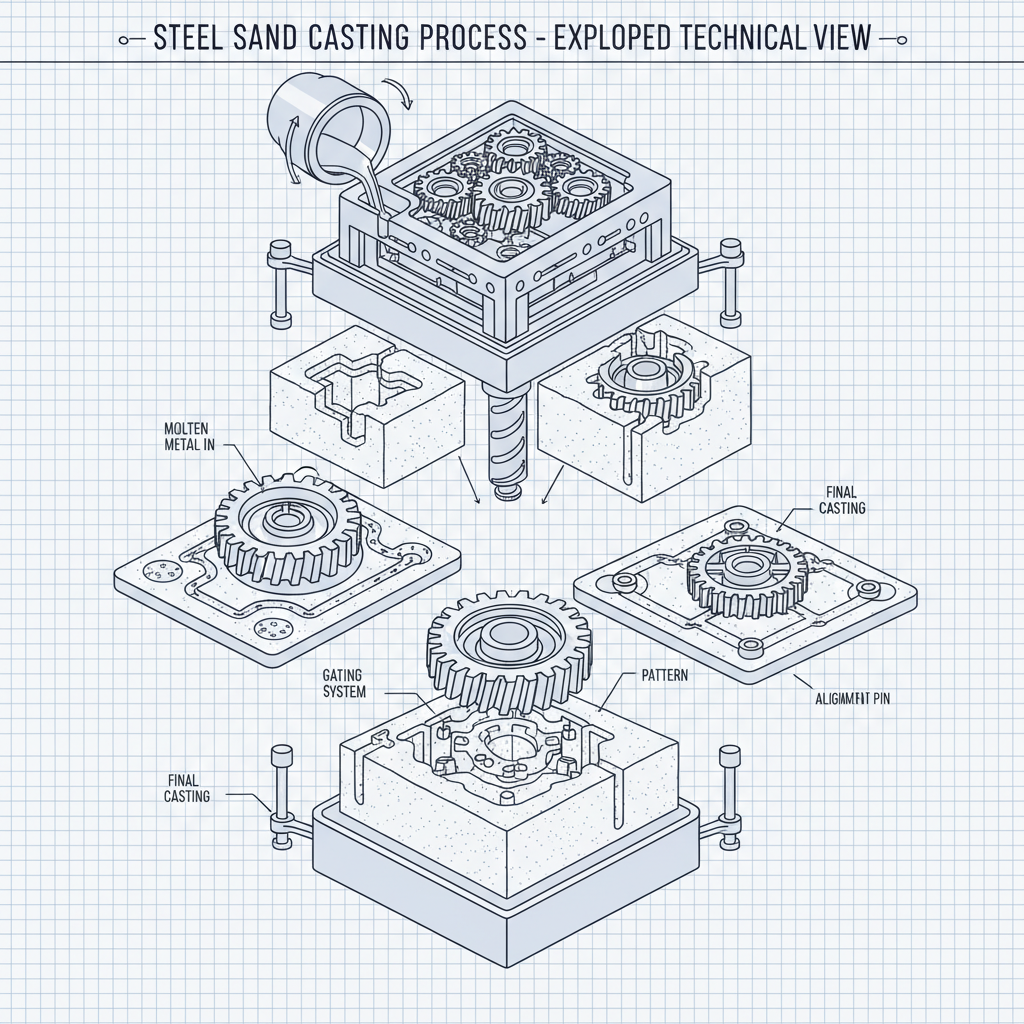
The steel sand casting process comprises several key stages, each requiring precision and expertise. It begins with pattern making, where a replica of the desired final product is created. This pattern is typically made of wood, metal, or plastic. Next is mold making, where the pattern is placed within a sand mixture containing a binder. The sand mold is then formed around the pattern. Once the mold is hardened, the pattern is removed, leaving a cavity in the shape of the desired part. The melting and pouring stage involves heating steel to a molten state and carefully pouring it into the sand mold. After the steel cools and solidifies, the mold is broken to reveal the casting. Finally, finishing operations like removing excess material, cleaning, and machining are performed to achieve the desired dimensions and surface finish.
Key Stages: Pattern making, mold making, melting & pouring, mold breaking, finishing operations.
Advantages of the Steel Sand Casting Process
The steel sand casting process offers several benefits making it a preferred choice for many applications. Firstly, it is cost-effective, especially for large production runs. Secondly, it provides design flexibility, allowing the creation of intricate shapes and complex geometries. Thirdly, it accommodates various steel alloys, offering a broad range of material options. Furthermore, it is suitable for both small and large castings, making it adaptable to diverse needs. Finally, the process allows for relatively quick turnaround times compared to some other casting methods.
Key Advantages:
• Cost-effective, especially for large runs
• Design flexibility for complex shapes
• Accommodates various steel alloys
• Suitable for small and large castings
Steel Sand Casting Process vs. Other Casting Methods
While the steel sand casting process is highly versatile, it's important to understand how it stacks up against other casting techniques. Compared to die casting, sand casting offers greater design flexibility and lower tooling costs but typically yields lower dimensional accuracy and surface finish. Investment casting delivers superior precision and surface quality but is more expensive and less suitable for large parts. Compared to shell molding, sand casting is generally less expensive but also produces castings with lower precision.
Limitations of the Steel Sand Casting Process
Despite its many advantages, the steel sand casting process has certain limitations. It generally produces castings with a rougher surface finish than methods like die casting or investment casting. The process can also be prone to porosity defects if not carefully controlled. Dimensional accuracy is moderate, requiring machining operations for precise tolerances. Additionally, the process is relatively labor-intensive compared to automated casting techniques. Proper mold design and control of the pouring process are crucial to minimizing these limitations.
Quality Control in Steel Sand Casting
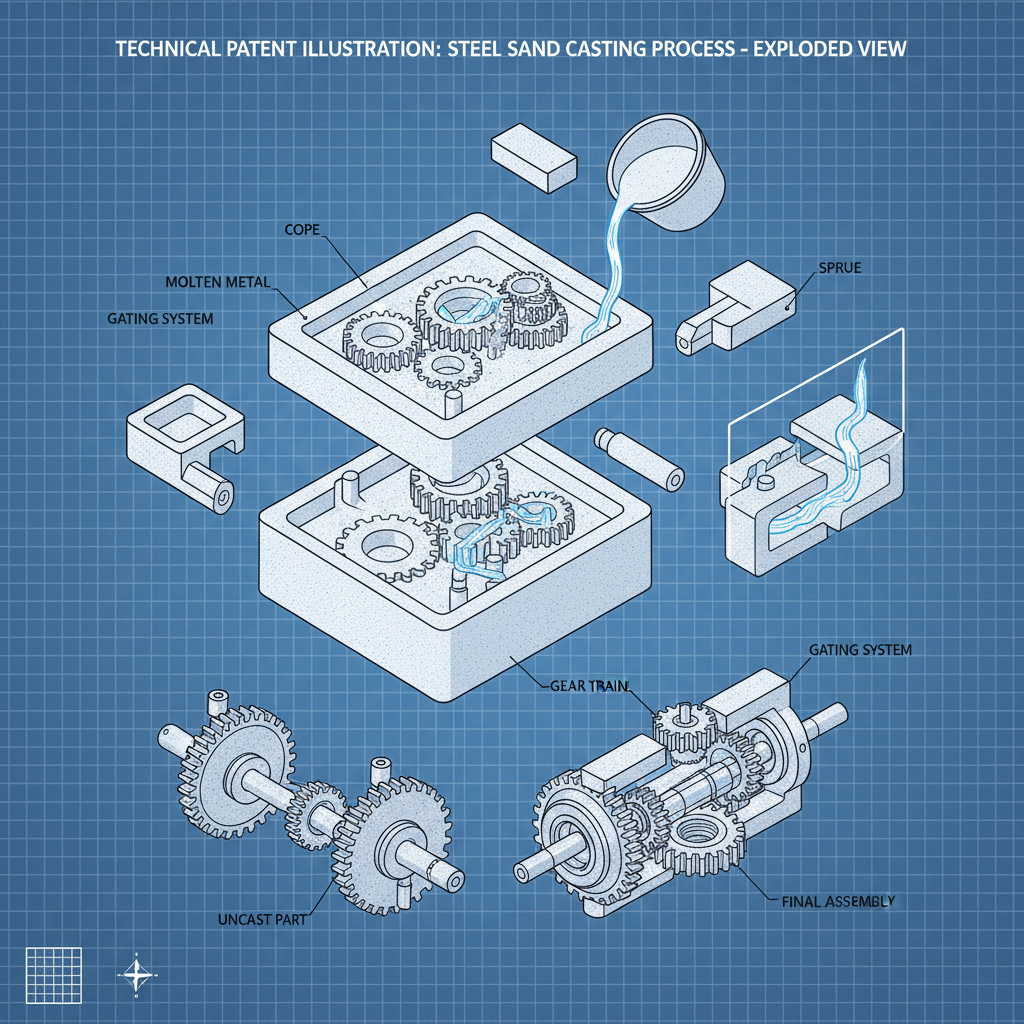
Maintaining quality is paramount in the steel sand casting process. Rigorous quality control measures are implemented at each stage, from raw material inspection to final product evaluation. These include visual inspection for surface defects, dimensional measurements to verify accuracy, radiographic testing to detect internal porosity, and mechanical testing to assess material properties. Sinoceramsite utilizes state-of-the-art inspection equipment and adheres to strict quality standards to ensure consistently high-quality castings.
Conclusion: A Versatile and Reliable Manufacturing Process
The steel sand casting process remains a vital manufacturing technique due to its cost-effectiveness, design flexibility, and ability to handle various steel alloys. While it has limitations, careful process control and rigorous quality assurance measures ensure the production of reliable and high-quality castings. Sinoceramsite is dedicated to providing superior steel sand castings tailored to your specific needs.
Frequently Asked Questions (FAQs)
What types of steel can be used in the sand casting process?
A wide variety of steel alloys can be used in sand casting, including carbon steel, alloy steel, stainless steel, and tool steel. The choice of alloy depends on the specific requirements of the application, such as strength, corrosion resistance, and temperature resistance. The melting and pouring process needs to be adjusted based on the properties of the chosen steel to ensure proper solidification and avoid defects. Different alloys have different melting points and solidification characteristics, requiring precise control of the temperature and cooling rate. Sinoceramsite has experience working with a diverse range of steel grades.
What is the typical lead time for a steel sand casting order?
The lead time for a steel sand casting order varies depending on several factors, including the complexity of the part, the quantity required, and the current production schedule. Generally, lead times range from 4 to 8 weeks. Creating the pattern and mold can take several weeks, depending on its intricacy. The melting and casting process itself typically takes a few days, followed by finishing operations and quality control. Sinoceramsite provides accurate lead time estimates based on your specific requirements.
How can I minimize porosity in sand castings?
Porosity can be minimized through several techniques. Ensuring proper mold venting allows gases to escape during pouring. Controlling the pouring temperature and rate is also crucial. Using high-quality sand with appropriate binder content helps to create a strong and permeable mold. Modifying the steel composition by adding deoxidizers can also reduce gas formation. Sinoceramsite employs advanced techniques to minimize porosity and ensure casting integrity.
Next:The Rise of Ceramic Sanding Discs in Modern Construction and Fabrication