
Foundry Sand Reuse: A Comprehensive Guide to Sustainable Practices
Foundry sand, a byproduct of metal casting, presents both a waste management challenge and a potential resource. Traditionally disposed of in landfills, growing environmental concerns and cost pressures are driving increased interest in foundry sand reuse. This article explores the benefits, applications, challenges, and best practices for successfully integrating reclaimed foundry sand into various industries, focusing on sustainable solutions. Understanding the properties of foundry sand and available processing technologies is crucial for maximizing its reuse potential and minimizing environmental impact.
The Environmental and Economic Benefits of Foundry Sand Reuse
The environmental benefits of reusing foundry sand are substantial. Landfill space is increasingly scarce and expensive, and diverting foundry sand reduces the volume of waste sent to these sites. This minimizes the environmental impact associated with landfilling, such as greenhouse gas emissions and leachate contamination. Economically, reusing foundry sand can lower material costs for businesses, reduce waste disposal fees, and potentially create new revenue streams. Sinoceramsite is dedicated to providing innovative solutions for foundry sand reclamation, aiding companies in realizing both environmental and economic gains.
Key Highlights: Reducing landfill waste, lowering material costs, minimizing environmental impact, and creating potential revenue streams through reclaimed materials.
Common Applications for Reclaimed Foundry Sand
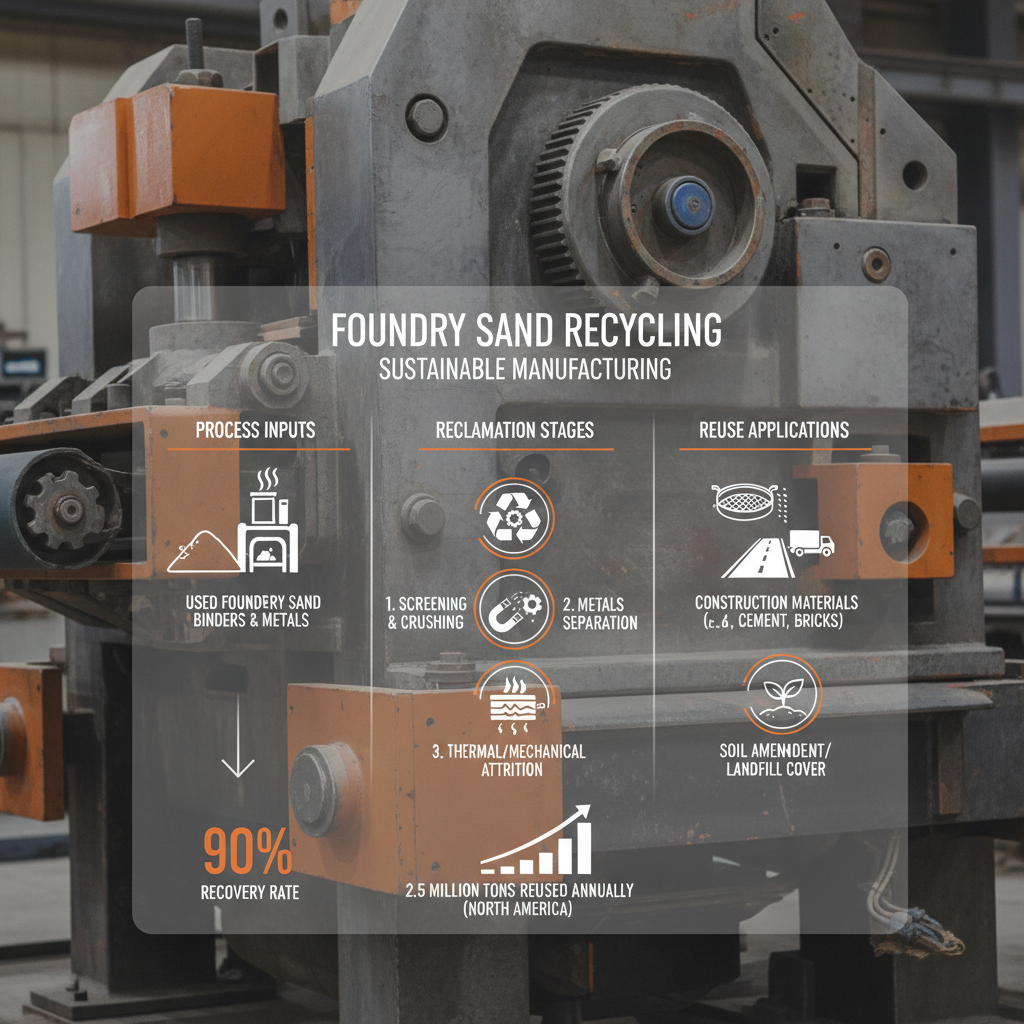
Reclaimed foundry sand possesses properties that make it suitable for a diverse range of applications. These include use in concrete production (as a partial cement replacement), asphalt mixtures, road base construction, golf course construction, and even as fill material. The specific application depends on the sand’s composition and the level of processing it has undergone. Thorough testing and quality control are essential to ensure the sand meets the required specifications for its intended use. Sinoceramsite’s sand reclamation process optimizes the material for various industrial needs.
Application Benefits:
• Reduced raw material consumption
• Lower project costs
• Sustainable construction practices
• Minimized environmental footprint
Foundry Sand Reuse vs. Virgin Sand: A Comparative Analysis
Comparing reclaimed foundry sand to virgin sand reveals significant differences. Virgin sand extraction often involves environmentally damaging mining operations. Reusing foundry sand circumvents these impacts. While virgin sand generally exhibits consistent characteristics, foundry sand composition can vary based on the metal casting process. However, proper reclamation processes can standardize the material, making it a reliable substitute in many applications. The following table highlights a comparison:
The Reclamation Process: Ensuring Quality and Consistency
Effective reclamation is essential for successfully utilizing foundry sand reuse. The process typically involves several stages: screening to remove oversized debris, magnetic separation to remove metallic particles, and potentially thermal treatment to eliminate organic binders. Quality control testing is performed throughout the process to ensure the reclaimed sand meets the required specifications. Sinoceramsite employs advanced reclamation technologies to deliver consistently high-quality reclaimed sand.
Challenges and Future Trends in Foundry Sand Reuse
Despite the benefits, challenges remain in widespread foundry sand reuse. These include logistical hurdles in transporting the sand, concerns about potential contaminants, and the need for standardized testing methods. Future trends point towards increased automation in reclamation processes, the development of new applications for reclaimed sand, and greater collaboration between foundries, reclamation facilities, and end-users. With continued innovation and adoption of best practices, foundry sand reuse will play an increasingly important role in sustainable materials management.
Conclusion: Embracing a Circular Economy with Foundry Sand Reuse
Embracing foundry sand reuse is a significant step towards a more circular economy. It reduces waste, conserves natural resources, and offers economic benefits. By partnering with innovative companies like Sinoceramsite, businesses can effectively integrate reclaimed foundry sand into their operations and contribute to a more sustainable future.
Frequently Asked Questions (FAQs)
What types of contaminants are typically found in foundry sand?
Foundry sand can contain various contaminants depending on the metal casting process. These include residual binders (like phenolic resins), metallic particles, and potentially trace amounts of other materials used in the process. Proper reclamation processes, such as magnetic separation and thermal treatment, are crucial for removing these contaminants and ensuring the reclaimed sand is safe for its intended application. The composition of the sand also depends on the type of metal being cast - iron, steel, aluminum, etc. Rigorous testing verifies the sand meets quality standards.
How does the particle size distribution of reclaimed foundry sand compare to virgin sand?
The particle size distribution of reclaimed foundry sand can differ from virgin sand due to the crushing and handling processes involved in casting. However, modern reclamation techniques can effectively control and adjust the particle size distribution to meet the specific requirements of various applications. Screening and classification are key components of the reclamation process, ensuring the reclaimed sand has a consistent and appropriate particle size range for its intended use.
What are the transportation considerations for utilizing reclaimed foundry sand?
Transportation costs can be a significant factor when utilizing reclaimed foundry sand, as it needs to be transported from the foundry to the reclamation facility and then to the end-user. Optimizing logistics and minimizing transportation distances are crucial for economic viability. Locating reclamation facilities closer to foundries and end-users can significantly reduce transportation costs and environmental impact. Furthermore, utilizing efficient transportation methods and consolidating shipments can help to further optimize the supply chain.
Is reclaimed foundry sand suitable for all concrete applications?
Reclaimed foundry sand is suitable for many, but not all, concrete applications. Its suitability depends on the specific concrete mix design and the intended use of the concrete. It can often be used as a partial replacement for fine aggregate, but it's crucial to conduct thorough testing to ensure it meets the required strength, durability, and workability specifications. Certain applications, such as high-strength concrete or concrete exposed to harsh environments, may require careful consideration and potentially a lower replacement percentage.
Next:The Enduring Strength and Versatility of Sand Cast Metal Components