
In the rapidly evolving world of additive manufacturing, 3D sand printing has emerged as a transformative technology, revolutionizing industries from aerospace to automotive by enabling complex, precision-cast components. At the forefront of this revolution stands Shenghuo New Material Technology Co., Ltd., a company with a legacy of innovation in ceramic materials. Since its founding in 2007, Shenghuo has grown from a specialized manufacturer of sintered ceramic sand to a pioneer in 3D sand printing, leveraging its expertise in high-performance materials to redefine what’s possible in additive manufacturing.
Based in Jinan New District, Handan City, Hebei Province, Shenghuo boasts a 150-acre facility, two state-of-the-art production lines, and an annual capacity of 200,000 tons—testaments to its scale and commitment to excellence. With 36 technical experts (over 20% of its workforce), 11 national invention patents, and certifications including ISO9001 and ISO14001, the company has solidified its position as China’s leading manufacturer of sintered ceramic sand. Today, Shenghuo is extending this leadership into 3D sand printing, developing advanced materials that enhance precision, efficiency, and sustainability in the process. This article explores Shenghuo’s journey in 3D sand printing, its innovations in wet sanding 3D prints, its expertise in sanding block 3D prints, and addresses key questions to highlight why it stands out as an industry innovator.
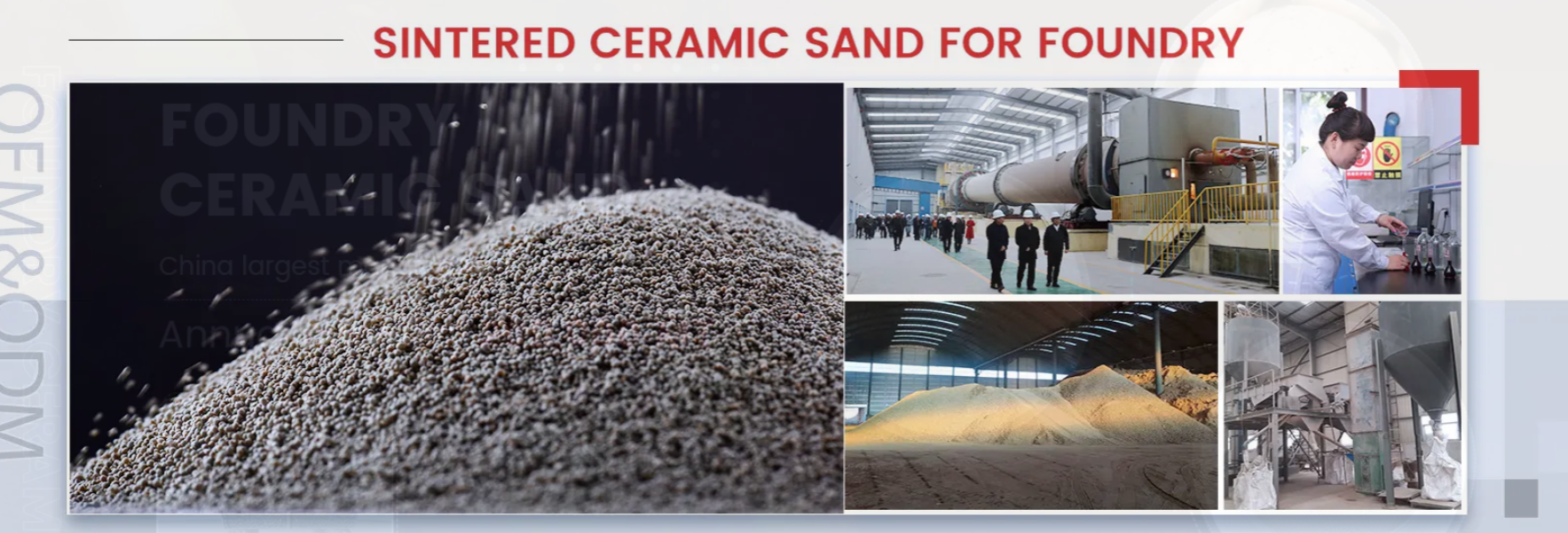
Shenghuo’s 3D Sand Printing Journey: Ceramic Sand as the Foundation
Shenghuo’s foray into 3D sand printing is a natural evolution of its core expertise in ceramic materials. For over a decade, the company has specialized in sintered ceramic sand—an eco-friendly alternative to traditional foundry sands like chromite and zircon sand—earning a reputation for quality and innovation. As 3D sand printing emerged as a game-changer in casting, Shenghuo recognized that its high-performance ceramic sand could address critical challenges in the technology: material consistency, thermal resistance, and post-processing efficiency.
The company’s R&D team, in collaboration with the College of New Materials Science and Engineering of Hebei University, set out to adapt its ceramic sand for 3D sand printing. Drawing on 15 independent intellectual property rights and a deep understanding of material science, they optimized the sand’s properties to meet the unique demands of additive manufacturing. Unlike conventional sands, Shenghuo’s ceramic sand for 3D sand printing offers exceptional spherical shape, precise particle size distribution (45μm - 2000μm), and high refractoriness (≥1800℃)—key traits that ensure smooth printing, detailed prototypes, and durable molds.
Shenghuo’s commitment to quality is evident in its rigorous testing processes, backed by a big data system that tracks every batch from raw material to finished product. This traceability, combined with ISO9001 certification, guarantees that its 3D sand printing materials meet consistent standards, a critical factor for manufacturers relying on precision. By integrating its legacy of green production (ISO14001 certified) with cutting-edge additive manufacturing, Shenghuo has not only expanded its product portfolio but also reinforced its mission to drive sustainability in the foundry industry.
|
Parameter |
Details |
Shenghuo’s Integration |
|
ප්රධාන රසායනික සංරචකය |
Al₂O₃≥53%, Fe₂O₃<4%, TiO₂<3%, SiO₂≤37% |
High Al₂O₃ content enhances thermal stability, critical for 3D sand printing molds exposed to high casting temperatures. |
|
Grain Shape & Angular Coefficient |
Spherical, ≤1.1 |
Spherical shape ensures uniform flow in 3D printers, reducing clogging and improving print precision; low angular coefficient minimizes friction. |
|
Particle Size & Refractoriness |
45μm - 2000μm, ≥1800℃ |
Precise particle sizes cater to detailed 3D prints, while high refractoriness withstands extreme casting heat without deformation. |
|
Thermal Expansion & L.O.I. |
4.5-6.5x10⁻⁶/k (RT-1200℃), <0.1% |
Low thermal expansion prevents warping in 3D printed molds; minimal loss on ignition ensures stability during sintering. |
Wet Sanding 3D Prints: Shenghuo’s Ceramic Sand Advantage
Wet sanding 3D prints is a critical post-processing step that ensures smooth surfaces, precise dimensions, and optimal finish—qualities that directly impact the performance of cast components. Shenghuo’s ceramic sand has emerged as a superior material for this process, thanks to its unique properties that address common challenges in wet sanding, such as uneven abrasion, material buildup, and surface damage.
The spherical grain shape of Shenghuo’s ceramic sand is a key asset in wet sanding 3D prints. Unlike irregularly shaped sands, which can create uneven scratches or leave behind debris, its spherical particles distribute pressure uniformly, resulting in a consistent, smooth surface. This is particularly important for 3D printed molds and prototypes, where surface quality directly affects the final cast part’s accuracy. Additionally, the sand’s low angular coefficient (≤1.1) reduces friction during wet sanding, minimizing heat buildup and preventing warping—an issue that plagues less refined materials.
Shenghuo’s ceramic sand also offers exceptional chemical stability, with a neutral pH (6.6-7.3) that makes it compatible with water-based wet sanding solutions. This stability prevents discoloration or chemical reactions that could compromise the 3D print’s integrity. Furthermore, its low acid consumption (<1 ml/50g) ensures that it maintains its structure during wet sanding, reducing wear and extending the sand’s lifespan—ultimately lowering production costs for manufacturers.
Backed by Shenghuo’s technical support team, clients can optimize their wet sanding 3D prints processes by selecting the ideal particle size (45μm - 2000μm) for their specific application. Whether refining a large cast steel mold or a delicate aluminum prototype, Shenghuo’s ceramic sand delivers consistent results, reinforcing the company’s reputation for customer-centric innovation.
Sanding Block 3D Print: Shenghuo’s Material Innovation
Sanding block 3D print technology has transformed how manufacturers approach surface finishing, enabling customized, precision tools tailored to specific components. Shenghuo’s ceramic sand plays a pivotal role in this innovation, serving as a high-performance abrasive material in 3D printed sanding blocks that offer superior durability, precision, and efficiency.
Traditional sanding blocks often rely on generic abrasives that may not match the unique contours of 3D printed parts. Sanding block 3D print solves this by allowing manufacturers to design blocks with custom shapes and abrasive densities, but the effectiveness of these tools hinges on the quality of the abrasive material. Shenghuo’s ceramic sand, with its high alumina content (Al₂O₃≥53%) and mullite-corundum mineral composition, provides the hardness and wear resistance needed for long-lasting sanding blocks.
In sanding block 3D print applications, Shenghuo’s ceramic sand offers several advantages: its spherical shape ensures even abrasion, preventing uneven wear on both the block and the part; its thermal resistance (refractoriness ≥1800℃) withstands friction-generated heat, maintaining performance during extended use; and its low thermal expansion ensures the block retains its shape, even with repeated use. These properties make 3D printed sanding blocks with Shenghuo’s ceramic sand ideal for finishing complex 3D printed components, from automotive parts to aerospace components.
Shenghuo’s ability to customize particle size (45μm - 2000μm) further enhances the versatility of sanding block 3D print tools. Clients can select finer particles for delicate surfaces or coarser grains for heavy-duty finishing, all while relying on the sand’s consistent quality. This customization, paired with Shenghuo’s prompt delivery and technical support, makes it a trusted partner for manufacturers looking to elevate their surface finishing processes.
3D Sand Printing Excellence: Shenghuo’s Technical Edge
Shenghuo’s leadership in 3D sand printing stems from its unique blend of material science expertise, production scale, and commitment to innovation. The company’s ceramic sand for 3D printing is not just a product but a result of years of research, collaboration, and a deep understanding of the foundry industry’s evolving needs.
A key technical advantage is Shenghuo’s vertically integrated production process. From raw material sourcing to final packaging, every step is controlled in-house, ensuring quality and consistency. This integration allows the company to maintain an annual capacity of 200,000 tons, ensuring stable supply even for large-scale 3D sand printing operations—a critical factor for manufacturers with tight production schedules. Additionally, Shenghuo’s big data system records customer-specific requirements, enabling tailored solutions that meet unique print parameters, from particle size to chemical composition.
Shenghuo’s collaboration with Hebei University’s College of New Materials Science and Engineering keeps it at the cutting edge of 3D sand printing innovation. This partnership drives ongoing research into enhancing material properties, such as improving flowability for faster printing or increasing refractoriness for high-temperature alloys. The result is a portfolio of 3D sand printing materials that not only meet current industry standards but also anticipate future needs, such as increased sustainability and higher precision.
The company’s commitment to green production (ISO14001 certified) also sets it apart in 3D sand printing. Unlike traditional sands that generate significant waste, Shenghuo’s ceramic sand is highly recyclable, reducing environmental impact and lowering costs for clients. This aligns with the global shift toward sustainable manufacturing, making Shenghuo a partner of choice for eco-conscious manufacturers.
3D Sand Printing FAQs: Shenghuo’s Expert Insights
Why choose Shenghuo for 3D sand printing?
Shenghuo’s 3D sand printing materials stand out for their exceptional quality, consistency, and technical support. As China’s leading ceramic sand manufacturer with 11 invention patents, we offer materials optimized for 3D printing—spherical grains for smooth flow, high refractoriness for durability, and customizable particle sizes. Our ISO9001-certified processes and big data traceability ensure reliability, while our 200,000-ton annual capacity guarantees stable supply. Partnering with us means accessing innovation backed by decades of material science expertise.
Benefits for wet sanding 3D prints?
Our ceramic sand enhances wet sanding 3D prints with its spherical shape, which ensures uniform abrasion and smooth surfaces. Its neutral pH and chemical stability prevent reactions with water-based solutions, while low angular coefficient reduces friction and heat buildup. These properties minimize surface damage, reduce sand wear, and deliver consistent results—saving time and improving finish quality for 3D printed parts.
Sanding block 3D print advantages?
Sanding block 3D print with our ceramic sand offers superior durability, thanks to high Al₂O₃ content and mullite-corundum composition. The sand’s thermal resistance prevents heat-induced wear, while its low thermal expansion keeps blocks dimensionally stable. Customizable particle sizes (45μm - 2000μm) enable tailored finishing, from delicate to heavy-duty applications, making these blocks versatile and cost-effective.
Custom 3D sand printing options?
Yes, Shenghuo offers extensive customization for 3D sand printing materials, including particle size (45μm - 2000μm), chemical composition tweaks, and packaging. Our big data system tracks your specific requirements, ensuring tailored solutions that match your printer parameters and application needs. Whether for fine-detail prototypes or large molds, we deliver materials optimized for your process.
How ensures quality in 3D sand printing?
Quality in our 3D sand printing materials is guaranteed through ISO9001 certification, rigorous in-house testing, and a big data traceability system. Every batch is inspected for chemical composition, particle size, and grain shape, with results logged for full transparency. Our R&D team continuously refines formulations, and collaboration with Hebei University ensures we meet the highest technical standards—giving you confidence in every order.
Shenghuo New Material Technology Co., Ltd. has redefined what’s possible in 3D sand printing by leveraging its legacy of excellence in ceramic materials. From its humble beginnings in 2007 to its current status as a leader in additive manufacturing materials, Shenghuo has remained true to its core values: quality, innovation, and sustainability.
By integrating its expertise in sintered ceramic sand with cutting-edge 3D sand printing technology, Shenghuo has developed solutions that address critical industry challenges—from precision printing to efficient post-processing with wet sanding 3D prints and sanding block 3D print tools. Its commitment to customization, technical support, and green production makes it more than a supplier; it’s a partner in driving manufacturing innovation.
As 3D sand printing continues to evolve, Shenghuo is poised to lead the way, with ongoing research, strategic collaborations, and a customer-centric approach. For manufacturers seeking to elevate their 3D sand printing capabilities, Shenghuo’s materials offer not just performance but a pathway to more sustainable, efficient, and precise production—shaping the future of additive manufacturing, one innovation at a time.
Post time:අගෝ. . 22, 2025 14:26
Next:Shenghuo: Leading Ceramic Foundry Sand Manufacturer China