
As foundries continue to modernize and streamline operations, 3d printing sand has emerged as a revolutionary solution that brings both innovation and efficiency to metal casting. Through high-precision layering and computer-controlled design, 3d printing for sand casting delivers complex geometries, faster lead times, and superior accuracy—all while reducing material waste and environmental impact. For manufacturers aiming to stay ahead, this technology is becoming essential.
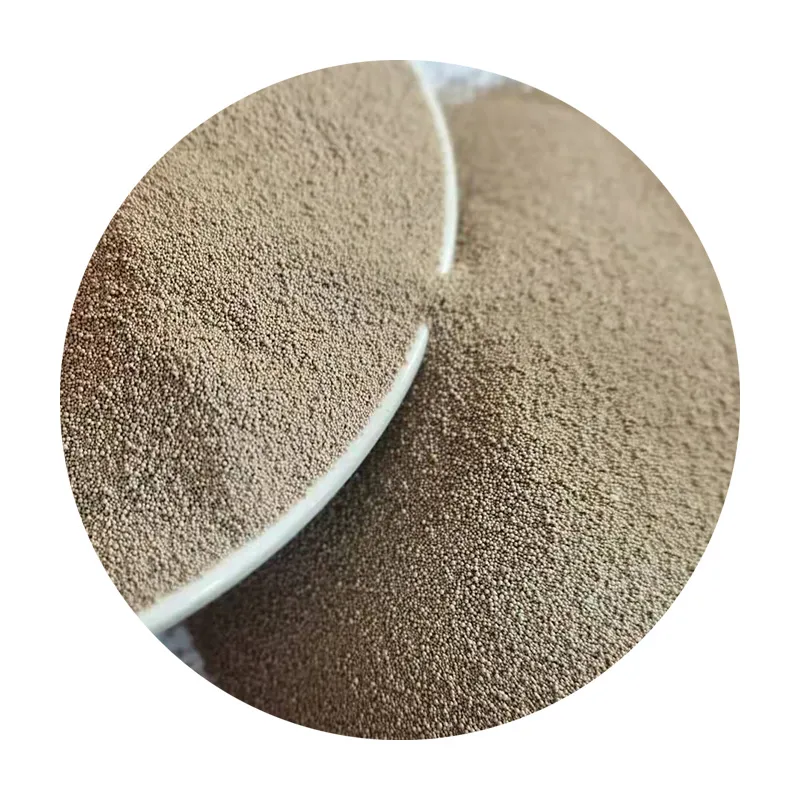
What is 3D Printing Sand and How Does it Work?
3d printing sand refers to specially formulated sand used in additive manufacturing systems to create molds and cores directly from digital files. Instead of traditional pattern-making, the process involves layering fine sand grains with a binder agent through a 3d sand printer. This method allows intricate, custom-designed components to be produced rapidly and without the need for tooling.
In 3d printing for sand casting, the sand used must meet strict quality standards for particle size, shape, and flowability. Uniform grains ensure smooth layering, while proper bonding strength guarantees structural integrity during the metal pour. The result is a mold or core that matches digital designs with extreme precision, enabling more complex shapes and internal channels that are difficult or impossible to achieve through conventional molding techniques.
Environmental Impact of 3D Printing Sand: Greener Foundry Practices
One of the most significant advantages of 3d printing sand is its potential to reduce environmental impact. Traditional sand molding techniques generate large amounts of waste, from excess sand to used patterns and tooling. With 3d printing for sand casting, molds are created directly from a digital model, eliminating the need for wood or metal patterns entirely.
Moreover, the precision of the printing process minimizes the use of binder and raw material, helping to reduce both energy consumption and emissions. Many users of 3d printing sand report up to 80% material reuse rates, depending on the binder system and sand type, making the process far more sustainable than conventional casting methods.
By significantly reducing physical inventory, pattern storage, and transport-related emissions, 3d printing sand also aligns with modern environmental regulations and sustainability goals, helping foundries transition toward greener manufacturing.
How 3D Printing Sand Improves Casting Accuracy and Quality
For industries demanding tight tolerances and flawless finishes, 3d printing for sand casting offers unmatched dimensional accuracy. Because molds are formed directly from a CAD file, the margin for error due to human handling or pattern warping is virtually eliminated. This leads to consistent wall thickness, tighter geometrical control, and reduced machining time post-casting.
3d printing sand also enables the inclusion of complex internal structures like cooling channels or lattice reinforcements without additional assembly. These advanced design features would typically require multiple parts or cores to achieve through traditional molding. As a result, casting designs can be optimized for performance while simplifying the overall production process.
Another major benefit is reduced lead time. While traditional core boxes may take weeks to fabricate, 3d printing sand can deliver finished molds or cores within a day—crucial for prototyping, urgent orders, or high-mix, low-volume production.
Investment Considerations: Understanding 3D Sand Printer Price
The initial concern for many foundries considering the switch is the 3d sand printer price. While the upfront investment can be significant—ranging from tens of thousands to several hundred thousand dollars—the long-term ROI is compelling. Cost savings come from lower labor input, minimized tooling requirements, and the ability to iterate designs rapidly without incurring new setup costs.
Furthermore, the consistent quality of 3d printing sand reduces casting rework, material waste, and downtime associated with mold failure. These savings quickly add up, especially for manufacturers producing short-run or custom components. As technology matures and adoption increases, the 3d sand printer price is also becoming more accessible, with compact, modular models available for small and mid-sized foundries.
Some 3d sand printer suppliers now offer rental, leasing, or joint venture models, allowing companies to adopt the technology without bearing the full capital cost up front. This opens the door for even more foundries to integrate 3d printing sand into their core-making and mold production workflows.
3D Printing Sand FAQs
What exactly is 3d printing sand made of?
3d printing sand typically consists of fine, uniformly sized silica or specialty sand combined with a compatible binder, designed specifically for additive manufacturing processes.
How does 3d printing for sand casting improve turnaround times?
By eliminating the need for tooling or core boxes, 3d printing for sand casting produces molds directly from digital files, significantly reducing lead times and allowing for rapid iteration.
Is 3d printing sand reusable?
Yes, many types of 3d printing sand can be reclaimed and reused multiple times, depending on the binder system, contributing to more sustainable foundry operations.
What is the typical 3d sand printer price?
The 3d sand printer price varies based on build volume and technology, with industrial systems starting around $100,000 and scaling up for high-volume, multi-material machines.
Can small foundries benefit from 3d printing for sand casting?
Absolutely. Smaller foundries can use outsourced services or lease options to access 3d printing sand technology, gaining flexibility without full capital investment.
Post time:Авг . 27, 2025 14:41Next:Lightweight Ceramsite: Superior Aggregate & Growing Media