If you run a foundry, you’ve probably heard shop-floor chatter about
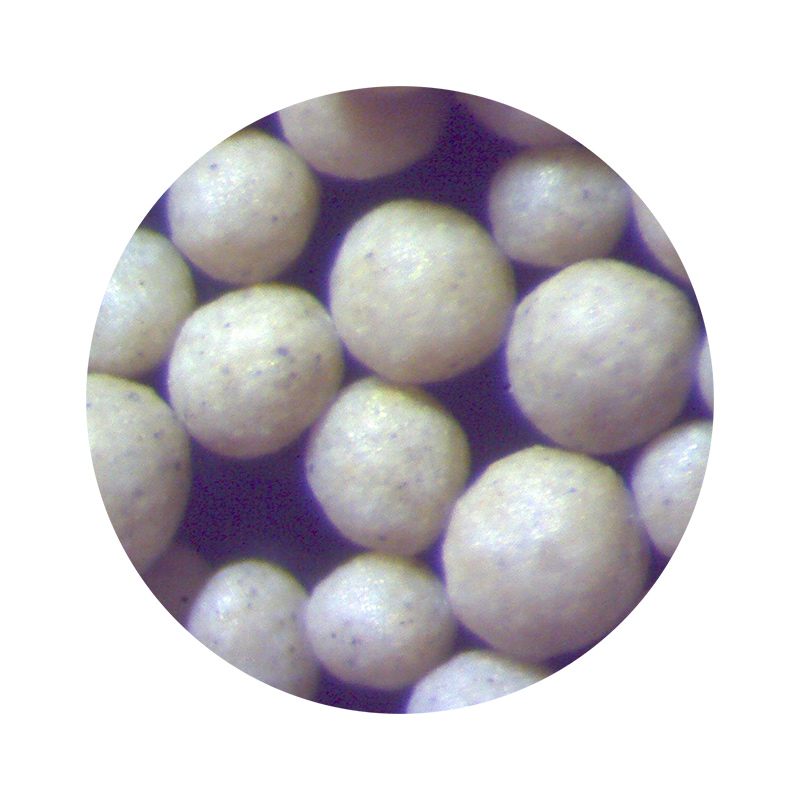
sintering sand that punches above its weight. To be honest, I was skeptical the first time a melt-shop manager told me he recycled the same media “dozens of times and still got mirror finishes.” Then I visited a line using Sintered ceramic sand made in China same with Cerabeads AFS 60, out of No.669 of Xinmiao Sanlu, Xinqiao Town, Songjiang Dist, Shanghai—and the castings didn’t lie.
Industry trend snapshot
- Shift from silica to engineered media to dodge the silica PEL headache and gain tighter dimensional control.
- Across aluminum, iron, and steel foundries, many customers say engineered
sintering sand cuts rework and shakeout time, especially on thin-walled or highly cored parts.
- Binder systems are diversifying—phenolic urethane cold box, furan, and even inorganic—so a stable, low-expansion media is becoming non-negotiable.
What it is and why it matters
- This Sintered Ceramic Sand (SCS) is a synthetic crystalline mullite media (AFS 60) equivalent by spec to Cerabeads for all pour temperatures and binder systems.
- It can be used for facing, cores, or full molding systems; actually, many shops start with facing and migrate to 100% replacement once they see the finish.
Technical process flow (how it’s made and qualified)
- Materials: refined alumino-silicate mixes engineered for mullite phase formation.
- Methods: controlled granulation, high-temperature sintering, precise classification (ASTM E11 sieves).
- QA/testing:
- Grain Fineness Number (AFS 1131) and distribution verification.
- Bulk density (AFS 1106), LOI, pH, and acid demand.
- Thermal expansion curve (dilatometry) and refractoriness checks.
- Service life: around 30–80 reclaim cycles in real-world lines, depending on binder, calcining, and tramp fines control; some shops report longer.
Product spec (AFS 60 class, typical values; real-world use may vary)
| Grain Fineness (AFS) |
60 ± 5 |
| Roundness (Krumbein) |
≈0.9–0.95 |
| Bulk Density |
1.9–2.1 g/cm³ |
| Thermal Expansion @1000°C |
≈0.15% |
| Refractoriness |
>1800°C |
| LOI |
|
| pH |
≈7–8 |
Application scenarios
- Aluminum permanent mold and sand castings: gear housings, EV motor end caps, compressor wheels—surface finish upgrades are obvious.
- Ductile and gray iron: manifolds, pump bodies, large cores with complex vents where low expansion reduces veining.
- Steel castings: high-heat pours where traditional sand struggles with burn-on.
- Binder systems: PUCB, PUNB, furan, and inorganic; 3D-printed cores benefit from smoother outgassing.
Real-world case notes
- Tier-1 aluminum foundry (auto): switching facing layer to
sintering sand cut surface defects by ≈38%, reduced fettling hours by ≈22%.
- Jobbing iron shop: 100% replacement yielded veining complaints down by ≈60% and allowed 50+ recycle loops with standard thermal reclaim.
Vendor comparison (AFS 60 media; indicative data)
| Attribute |
SCS (Shanghai) |
Imported Cerabeads |
Washed Silica |
| Thermal Expansion |
Very low |
Very low |
High |
| Recycle Loops |
≈30–80 |
≈30–80 |
≈3–10 |
| Silica PEL exposure |
Reduced burden |
Reduced burden |
High concern |
| Unit Cost |
Lower |
Higher |
Lowest |
| Total Cost/Part |
Often lowest |
Low |
Variable (rework risk) |
Customization and support
- Available cuts from AFS 40–120; special blends on request for cores vs. molds.
- Documentation: SDS, typical ISO 9001 quality documentation, and lot traceability available; some customers also ask for REACH/RoHS letters.
- Testing help: sieve curve tuning to your reclaim system; on-site trials with before/after roughness and knock-out force data.
A quick word on safety and compliance
- Using
sintering sand won’t eliminate dust controls, but it does help you sidestep the strict crystalline silica exposure profile. Housekeeping and capture remain essential, of course.
Final take
It seems that for many plants, the win is predictable: lower scrap, cleaner surfaces, calmer cores, and fewer surprises on hot pours. The surprising part is how fast the payback hits—because in a molding system, this media isn’t a consumable; it’s an investment.
References
[1] OSHA Respirable Crystalline Silica Standard for General Industry: https://www.osha.gov/silica-crystalline
[2] ASTM E11 – Standard Specification for Woven Wire Test Sieve Cloth: https://www.astm.org/e0011_e0011m-20.html
[3] AFS Mold & Core Test Handbook (selected procedures including AFS 1106, AFS 1131): https://www.afsinc.org
[4] ISO 9001:2015 Quality Management Systems — Requirements: https://www.iso.org/standard/62085.html
