
Sand Casting Procedure A Comprehensive Overview
Sand casting, one of the oldest and most versatile metal casting processes, has been widely employed in various industries due to its flexibility and effectiveness in producing intricate shapes. This method involves creating a mold from sand and using it to form metal objects. Understanding the sand casting procedure is essential for manufacturers and engineers. This article will outline the key steps involved in sand casting, the materials used, and the advantages and disadvantages of this process.
1. Preparation of the Pattern
The first step in the sand casting process is the preparation of the pattern, which is a replica of the final product. The pattern can be made from various materials, including wood, metal, or plastic, depending on the required precision and volume of production. Patterns can be classified into two main types solid patterns, which are single-piece replicas, and split patterns, which consist of multiple parts that come together to form a complete mold. The selected pattern should allow for easy removal from the sand mold while minimizing the risk of damage.
2. Creating the Mold
Once the pattern is ready, the next step is to create the mold. This process begins with packing sand around the pattern, typically a mixture of raw sand, clay, and water, which binds the sand particles together. The sand is poured into a flask that holds the pattern, and then it is compacted using mechanical or manual processes. After the sand is sufficiently compacted and retains the shape of the pattern, the flask is split open, and the pattern is carefully removed, leaving a cavity that will shape the molten metal.
3. Core Making (if required)
In cases where hollow sections or complex internal geometries are needed, cores must be created. Cores are additional sand structures placed in the mold cavity to form the desired internal features of the casting. Cores can also be made of various materials, including sand, metal, or ceramic, and are often held in place with pins or other devices to ensure accurate positioning during the pouring of metal.
With the mold and, if necessary, the core ready, the next step is pouring the molten metal into the mold cavity. The type of metal used depends on the final application and can include aluminum, iron, steel, or bronze. The molten metal is heated in a furnace until it reaches its liquid state, at which point it is carefully poured into the mold through a pouring basin and channel. Timely pouring is crucial, as the metal must be in a liquid state while filling the mold to prevent premature solidification.
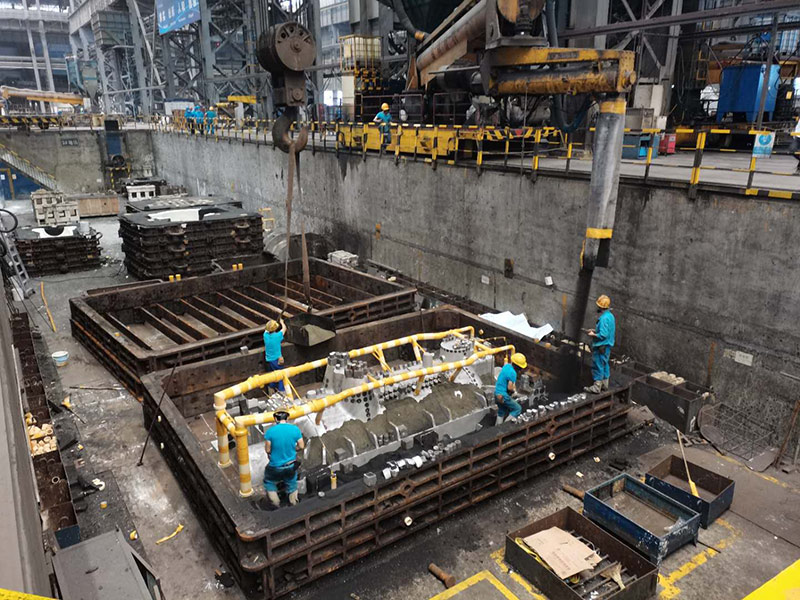
sand casting procedure
5. Cooling and Solidification
After the mold has been filled, the molten metal begins to cool and solidify. The cooling process can vary depending on the type of metal and the thickness of the casting. Proper cooling is essential to avoid defects such as shrinkage or cracking. Once the metal has fully solidified, the mold can be broken apart to reveal the casting.
6. Cleaning and Finishing
The final step in the sand casting procedure is cleaning the casting to remove any sand, scale, or impurities. This process often involves mechanical cleaning methods, such as shot blasting, or chemical treatments. After cleaning, additional finishing operations may be performed, including machining, grinding, or polishing, to achieve the desired surface finish and precise dimensions.
Advantages and Disadvantages of Sand Casting
Sand casting boasts several advantages, including its ability to produce complex shapes, the versatility of materials that can be used, and its relative cost-effectiveness for low to medium production volumes. It also requires less initial investment in tooling compared to other casting processes, making it accessible for smaller manufacturers.
However, sand casting does have its drawbacks. The surface finish of castings may not be as smooth as those produced by other methods, and the dimensional accuracy may require further machining. Additionally, the process can be slower than other casting methods, such as die casting, especially for large production runs where cycle times may become a critical factor.
Conclusion
The sand casting procedure is a vital process in the manufacturing industry, offering a blend of versatility and cost-efficiency. By understanding the steps involved in sand casting—from pattern preparation to cleaning and finishing—manufacturers can optimize their production processes and achieve high-quality metal castings. Despite its limitations, sand casting continues to be a popular choice for producing a wide range of components used in various applications. Whether you are a student, engineer, or manufacturer, knowing the ins and outs of sand casting is invaluable in today's production landscape.
Post time:Nov . 09, 2024 17:11
Next:Benefits of Choosing Sand Casting for Manufacturing Processes