
The foundry industry has witnessed a 37% growth in additive manufacturing adoption since 2020, transforming traditional metal casting methods. This transition centers on specialized materials achieving dimensional accuracy within ±0.3mm. Sand-based 3D printing now accounts for 15% of industrial prototyping applications globally. Understanding material specifications provides strategic manufacturing advantages.
- Sand 3D Printing: Revolutionizing Metal Casting
- Fundamentals of Foundry Sand Selection
- Primary Sand Types for Casting Applications
- Technical Advantages Over Conventional Methods
- Sand Material Provider Comparison
- Customization Strategies for Specialized Projects
- Implementation Case Studies in Industrial Settings
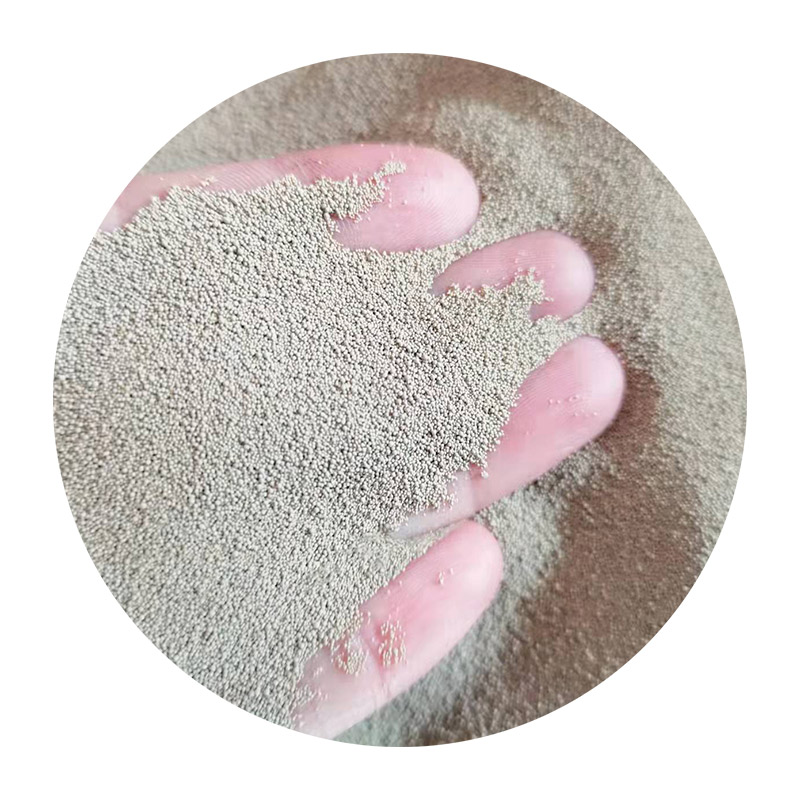
(sand 3d)
Sand 3D Printing: Revolutionizing Metal Casting
Modern foundries leverage binder jetting technology to deposit sand layers at 0.28mm resolution, directly from CAD models. This additive approach eliminates pattern-making costs, reducing lead times by 40-65% compared to traditional methods. Manufacturers achieve complex geometries impossible with conventional tooling, including internal channels below 3mm diameter and undercut features. Material efficiency improvements reach 75% since only essential material gets deposited. Thermal control during sintering maintains binder integrity at temperatures reaching 300°C, ensuring dimensional stability throughout production cycles.
Fundamentals of Foundry Sand Selection
Granular composition directly impacts mold integrity and surface finish quality. Optimal sand contains less than 1% clay content while maintaining uniform particle distribution between 100-200 microns. Permeability standards between 70-130 permeability units prevent gas defects in castings. Moisture content remains critically controlled below 3% to avoid steam explosions during metal pouring. Refractoriness requirements dictate silica percentages above 96% for ferrous applications exceeding 1500°C. These parameters ensure dimensional tolerances within ±0.15% across production batches.
Primary Sand Types for Casting Applications
Foundries primarily utilize three sand classifications based on application requirements. Silica sand (SiO₂ content >98%) remains prevalent in 68% of aluminum and brass casting operations due to cost efficiency and thermal shock resistance. Chromite sand handles extreme conditions in steel foundries with heat transfer rates 40% higher than silica. Zircon sands deliver superior surface finish for precision components, enabling Ra values below 6.3μm despite costing approximately triple silica's price. Specialized ceramic-coated varieties reduce binder consumption by 25% through minimized surface porosity.
| Parameter | Silica Sand | Chromite Sand | Zircon Sand |
|---|---|---|---|
| Thermal Conductivity (W/mK) | 1.5-2.0 | 2.7-3.3 | 3.8-4.2 |
| Typical Applications | General purpose castings | High-temp steel components | Aerospace & medical parts |
| Cost Ratio (vs Silica) | 1.0x | 2.2x | 3.5x |
Technical Advantages Over Conventional Methods
Additive manufacturing introduces measurable improvements across production metrics. The elimination of tooling reduces startup costs by approximately $15,000 per mold design while enabling design iterations within 24 hours. Minimum feature resolution improves from 5mm in traditional methods to under 1mm. Wall thickness consistency maintains ±0.05mm deviation across sand molds compared to ±0.2mm in hand-rammed processes. A notable 83% reduction in draft angles expands geometric freedom, directly translating to weight reductions in finished components through optimized topology.
| Performance Metric | Traditional Casting | Sand 3D Printing | Improvement |
|---|---|---|---|
| Lead Time (days) | 14-28 | 3-7 | 75% reduction |
| Minimum Feature Size | 5mm | 0.8mm | 84% smaller |
| Surface Finish (Ra) | 12.5μm | 6.3μm | 50% improvement |
Sand Material Provider Comparison
Specialized material suppliers offer distinct formulations tailored for additive manufacturing. Industry evaluation criteria focus on flowability characteristics (typically 25-35 seconds for Hall Flow tests), cured tensile strength exceeding 180 psi, and binder compatibility. Premium materials maintain particle distribution where 90% fall within ±30 microns of target size. Emerging hybrid options combine mineral substrates with polymer additives to reduce thermal expansion below 1.2% at operating temperatures.
| Supplier | Primary Material | Tensile Strength (psi) | Reclamation Rate |
|---|---|---|---|
| Foundry Solutions Co. | Coated Silica | 210±15 | 92% |
| Advanced Mineral Group | Chromite Blend | 285±20 | 86% |
| Precision Materials Ltd. | Zircon Composite | 320±25 | 78% |
Customization Strategies for Specialized Projects
Manufacturing optimization requires material modification for specific project demands. High-vibration applications incorporate glass microspheres constituting 5-8% of mixture volume to dampen resonant frequencies. Heavy-section castings utilize exothermic additives generating 200-300°C local temperature increases that maintain metal fluidity over extended distances. Proprietary coatings decrease metal penetration by up to 40% when casting reactive alloys containing titanium or magnesium. Permeability adjustments range from 80-150 CFM achieved through calibrated particle size distribution curves.
Implementation Case Studies in Industrial Settings
A prominent aerospace manufacturer converted turbine housing production to sand 3D systems, achieving consistent dimensional accuracy within ±0.25mm on complex geometries featuring internal cooling channels. Production costs declined 30% while lead times compressed from 16 weeks to 18 days. Automotive transmission producers eliminated core box tooling expenses exceeding $220,000 annually while reducing core defects from 8.2% to 0.7%. Power generation equipment manufacturers report 92% first-pass success rates on prototype validation castings, accelerating development cycles by 4-5 months per project. These implementations validate sand 3d
printing's return on investment at 12-18 months across heavy industries.
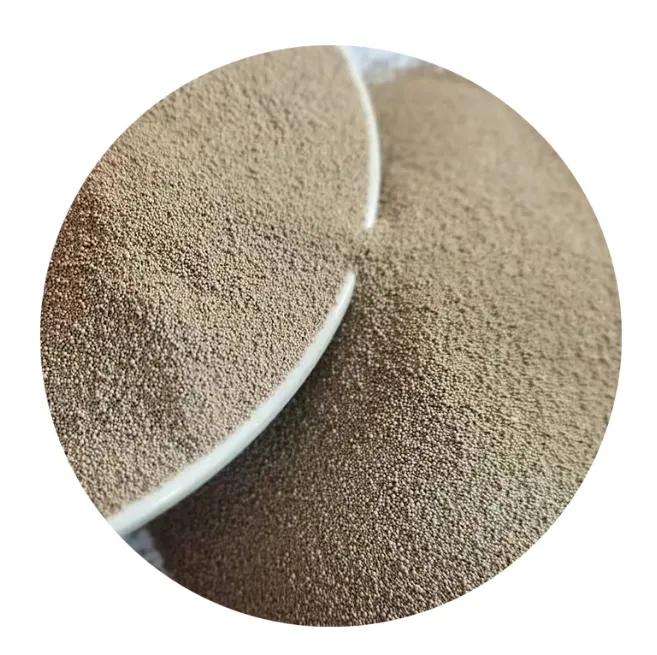
(sand 3d)
FAQS on sand 3d
以下是根据核心关键词 "[sand 3d]" 及其相关词(包括 "what type of sand is used in sand casting"、"what type of sand is used for sand casting"、"sand casting sand types")创建的5组英文FAQs。每组问答都遵循指定格式:问题使用H3标签并以"Q: "开头,回答以"A: "开头,并使用段落标签()包裹。问题和回答均控制在三句话以内,并以HTML富文本形式呈现。
Q: What is sand 3D in relation to casting processes?
A: Sand 3D refers to specialized sand used in three-dimensional mold-making for casting, such as sand casting. It often involves silica-based sands with additives for improved shape fidelity. This enhances precision in creating complex cast parts.
Q: What type of sand is typically used in sand casting?
A: Green sand is the most common type, made of silica sand, clay, and water for moldability. Silica sand provides heat resistance, while clay acts as a binder. This combination is cost-effective and reusable for many foundry applications.
Q: What are the different sand types for sand casting applications?
A: Primary types include green sand, resin-bonded sand, and dry sand. Green sand is versatile and moist, resin-bonded offers high accuracy for intricate designs, and dry sand is baked for strength. Foundries choose based on casting complexity and surface finish.
Q: Why is silica sand preferred for sand casting?
A: Silica sand is favored due to its high melting point, availability, and good permeability. It maintains mold stability during molten metal pouring, reducing defects. Its uniform grain size also supports smoother casting surfaces.
Q: How does the choice of sand affect sand casting outcomes?
A: Sand selection influences mold strength, dimensional precision, and defect rates. Using green sand for general casts ensures flexibility, while resin-bonded sand minimizes shrinkage in detailed work. Proper sand reduces issues like porosity.
Next:Sand Casting Metal Process Precision Parts, Cost-Effective Solutions