
A Practical Insider’s Take on Resin Coated Sand for Modern Foundries
I’ve walked more shop floors than I can count, and the pattern is familiar: casting defects eating margins, inconsistent knock-out, and way too much sand waste. That’s why resin coated ceramic sand from SHXK (origin: No.669 of Xinmiao Sanlu, Xinqiao Town, Songjiang Dist, Shanghai) keeps popping up in conversations. It combines the flow of a spherical media with the discipline of a high refractoriness backbone (>1800°C). Many customers say it “just behaves” under heat.
What it is, in plain words
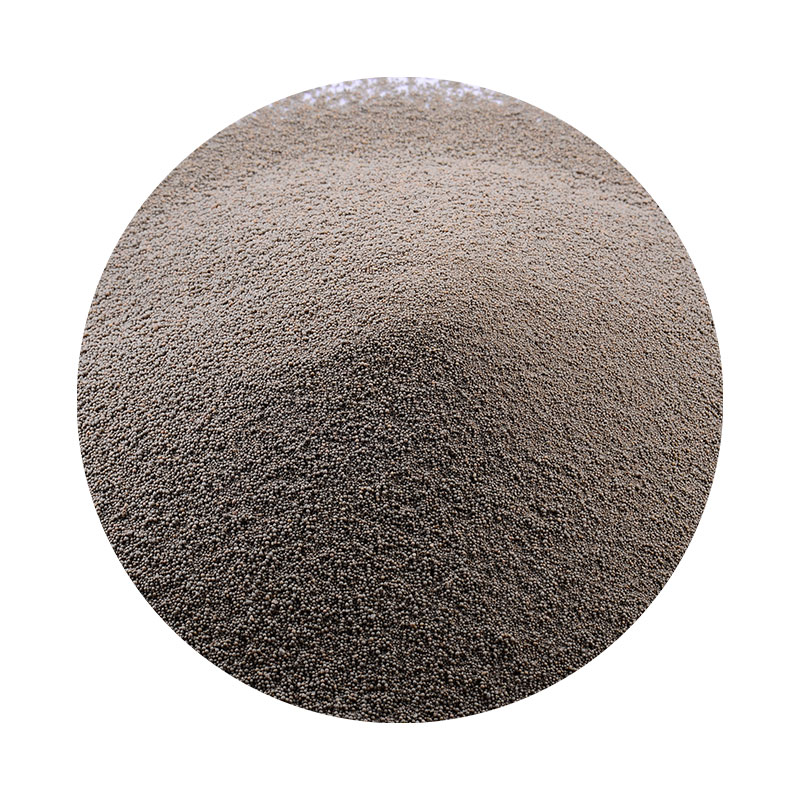
SHXK’s resin coated ceramic sand is a sintered, artificial spherical base sand with a thin phenolic or customized resin shell. Compared with silica, it’s less thirsty for binders, more stable at temperature, and—surprisingly—easier to reclaim. The small angular coefficient helps with packing density and reduces gas defects. In fact, shell molding and core-making teams notice more consistent dimensional control.
Process flow (how it’s made and why it matters)
Materials: sintered ceramic core sand, phenolic resin (hot-coat grade), release agents, and performance additives as required.
Method (hot-coating, typical):
- Preheat ceramic sand to target temperature for resin uptake.
- Metered resin addition with high-shear mixing for uniform film.
- Add hexamine or latent hardener (spec-dependent), then cooling.
- Screening, dust removal, and packaging with traceability.
Testing standards commonly referenced: AFS 1105/1131 (sieve and GFN), AFS 2210 (LOI), ASTM E831 (thermal expansion), ISO 1893 (refractoriness under load, analogous checks), plus in-house shell tensile per AFS methods. Service life: around 5–10 reclamation cycles in practice, depending on burn-on and reclaim rig—real-world use may vary.
Typical specifications
| Property | Typical Value | Test Method | Notes |
|---|---|---|---|
| Refractoriness | >1800°C | ISO 1893 (analog) | Stable shell/core at high pour temps |
| AFS GFN | 45–70 (customizable) | AFS 1105/1131 | Tighter PSD than silica |
| Thermal Expansion | ≈2.0–3.0×10^-6/°C @ 20–600°C | ASTM E831 | Helps curb veining |
| LOI | <0.3% | AFS 2210 | Lower gas evolution |
| Sphericity | High (visual index) | Microscopy | Good flow/packing |

Where it shines
Industries: automotive (blocks, heads, gearbox), pumps/valves, steel castings, non-ferrous precision, energy hardware. Application scenarios include thin-wall cores, low-vein surface finishes, and fast shell cycles. One mid-size East China foundry told me their scrap due to veining dropped by “about a third” after switching to Resin Coated Sand; to be honest, that’s in line with what I’ve seen elsewhere, given the lower expansion.
Vendor landscape (quick comparison)
| Vendor | Base Material | Refractoriness | Thermal Expansion | Binder Compat. | Notes |
|---|---|---|---|---|---|
| SHXK (Resin coated ceramic sand) | Sintered ceramic | >1800°C | Low (≈2–3×10^-6/°C) | Phenolic, furan (varies) | Reclaim 5–10 cycles |
| Typical Silica RCS | Quartz silica | ≈1600–1700°C | Higher (≈12–15×10^-6/°C) | Wide | More veining risk |
| Other Ceramic RCS | Ceramic blends | ≈1750–1850°C | Low–moderate | Phenolic | Specs vary by supplier |
Customization and QC
You can dial in GFN, resin loading, release agent type, and hardener package. Certifications typically include ISO 9001 and often ISO 14001; some batches for auto castings target IATF 16949 compliance. Batch COAs usually list GFN, LOI, moisture, shell tensile, and sieve curves. Honestly, ask for sample data—good vendors share it.
Field feedback
Customers report faster shakeout, fewer fins, and cleaner surfaces when switching to Resin Coated Sand. One aluminum foundry claimed mold gas defects dropped “noticeably” after a week of dialing-in bake temps and catalyst ratio. It seems that once operators trust the flow, cycle times tighten.
Final note
If you’re wrestling with thermal defects or inconsistent cores, a ceramic-based Resin Coated Sand is worth the trial. Start with a 50/50 blend, validate per AFS and ASTM methods, then ramp. Your reclaim team will thank you.
Authoritative citations
- AFS Mold & Core Test Handbook: AFS 1105/1131, AFS 2210, AFS 3300 series (American Foundry Society)
- ASTM E831 – Standard Test Method for Linear Thermal Expansion of Solid Materials
- ISO 1893 – Refractoriness under load tests for refractory products
- AFS Metalcasting Dictionary and Process Control Guides (American Foundry Society)
- IATF 16949, ISO 9001, ISO 14001 – Quality and Environmental Management Standards
Next:Casting Sand for Sale - Premium Grades, Bulk & Fast Shipping