
Introduction to Advanced Foundry Materials
In the rapidly evolving landscape of modern manufacturing, the demand for materials that enhance precision, efficiency, and sustainability in casting processes is paramount. Resin coated sand stands as a cornerstone in this advancement, offering superior performance in critical applications. This specialized foundry material, often referred to as resin sand, is engineered to meet the stringent requirements of high-quality metal casting, providing exceptional mold stability, surface finish, and dimensional accuracy.
Our focus herein is on advanced solutions like Resin Coated Ceramic Sand, a premium product designed to elevate casting standards across various industrial sectors. This comprehensive overview will delve into its technical intricacies, application benefits, and strategic implications for B2B decision-makers and engineering professionals.
Industry Trends and Market Outlook for Advanced Casting Sands
The global foundry industry is experiencing a paradigm shift towards greater automation, reduced environmental impact, and enhanced product quality. This shift is driving increased demand for high-performance foundry consumables such as resin coated sand. Key trends include:
- Sustainable Manufacturing: A growing emphasis on eco-friendly materials and processes, pushing for sands with lower emission profiles and better recyclability.
- Precision Casting: The aerospace, automotive, and defense sectors require castings with increasingly tighter tolerances and superior surface finishes, a domain where resin sand casting excels.
- Energy Efficiency: Foundries seek materials that reduce energy consumption during production and post-processing, contributing to lower operational costs.
- Advanced Alloys: The rise of complex and high-temperature alloys necessitates molds capable of withstanding extreme conditions, preventing defects like penetration and burn-on.
Projections indicate a steady growth in the advanced foundry materials market, with a CAGR driven by innovation in metal casting technologies and stricter quality control standards. This underscores the critical role of materials like Resin Coated Ceramic Sand in shaping the future of industrial production.
Understanding Resin Coated Sand: The Manufacturing Process
The production of high-quality resin coated sand is a sophisticated process involving precise control over material selection, mixing, and curing. This ensures the final product delivers consistent performance in demanding casting environments. The manufacturing process for our Resin Coated Ceramic Sand typically involves the following stages:
Process Flow Overview:
- Base Material Selection & Preparation: High-purity ceramic sand, known for its spherical shape, smooth surface, and low thermal expansion, is carefully selected. This base sand is thoroughly dried and screened to ensure uniform particle size distribution and remove impurities. This step is crucial for the final product's strength and consistency.
- Resin & Catalyst Blending: A precisely formulated phenolic or furan resin system, along with a suitable catalyst and release agent, is prepared. The choice of resin dictates many final properties, including hot strength and breakdown characteristics. For instance, in furan resin sand casting, furan resins offer excellent hot strength.
- Coating Process (Hot Coating or Cold Coating):
- Hot Coating: The preheated base sand is mixed with a liquid resin and catalyst in a high-speed mixer. The heat causes the resin to soften and uniformly coat each sand grain. A hexamethylenetetramine (HEXA) solution is often added to facilitate curing.
- Cold Coating: In this method, sand is coated at ambient temperatures, often using solvent-based resins or specialized binders. This is less common for pre-coated sands but is sometimes used for on-site mixing.
- Curing & Solidification: After coating, the sand is typically further heated (in hot coating) to initiate the cross-linking and polymerization of the resin, forming a solid, thin film around each grain. This process is carefully controlled to achieve optimal strength without premature hardening.
- Cooling & Sieving: The coated sand is then rapidly cooled to prevent over-curing and agglomeration. After cooling, it undergoes another sieving process to ensure particle size consistency and remove any lumps or fine dust, adhering to stringent standards like ISO 11910.
- Quality Control & Packaging: Each batch undergoes rigorous testing for properties such as tensile strength, melt point, flowability, and gas evolution. Only after passing these stringent quality checks, aligned with standards like ISO 9001, is the resin coated sand packaged and prepared for shipment.
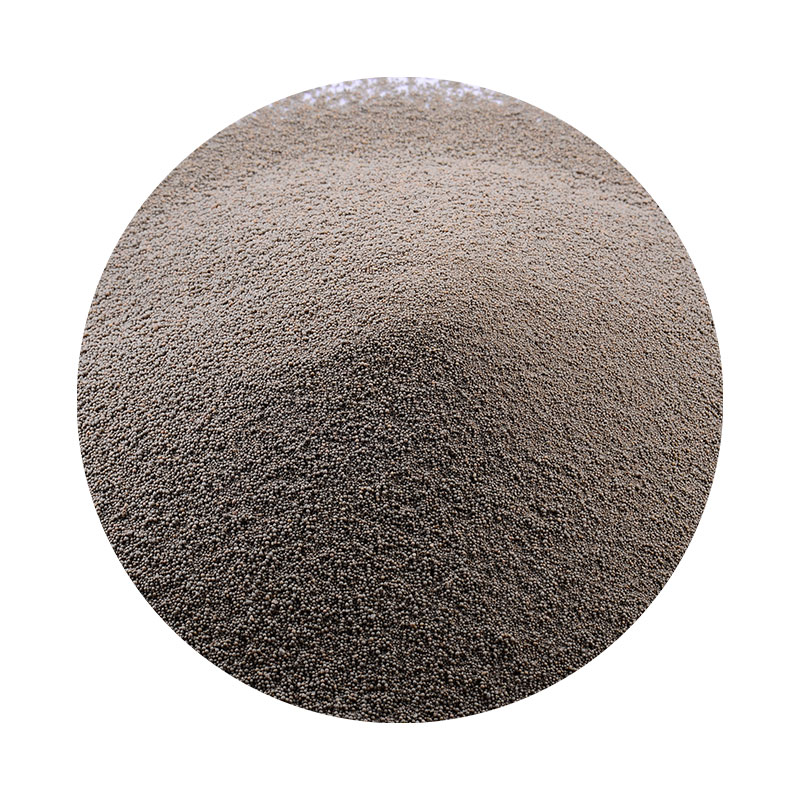
The materials used in our Resin Coated Ceramic Sand, particularly the high-purity ceramic base, contribute significantly to its superior performance characteristics, including excellent thermal stability and minimal defect rates in the final casting.
Technical Specifications and Performance Parameters
The efficacy of resin coated sand is defined by a range of critical technical parameters that directly impact casting quality and process efficiency. Our Resin Coated Ceramic Sand is engineered to surpass industry benchmarks, ensuring reliable and repeatable results.
Typical Product Specifications for Resin Coated Ceramic Sand
These specifications ensure that our resin coated sand offers exceptional mold rigidity, minimal casting defects, and excellent dimensional stability, leading to reduced post-processing and higher yield rates. Our products consistently meet or exceed relevant ISO and ANSI standards for foundry materials.
Core Technical Advantages and Operational Benefits
The strategic adoption of advanced resin coated sand technologies provides numerous advantages over traditional foundry sands, directly impacting operational efficiency, product quality, and cost-effectiveness.
- Superior Casting Surface Finish: The spherical nature and fine coating of the ceramic sand grains, particularly in Resin Coated Ceramic Sand, result in an exceptionally smooth mold surface. This translates to castings with minimal surface roughness, reducing the need for costly post-machining and grinding.
- Enhanced Dimensional Accuracy: The high strength and low thermal expansion of the resin-bonded shell provide excellent dimensional stability during pouring, minimizing warpage and distortion. This precision is critical for industries requiring tight tolerances, such as automotive and aerospace.
- Reduced Casting Defects:
- Anti-Penetration and Burn-on: The dense and durable resin layer prevents molten metal from penetrating the sand matrix, virtually eliminating burn-on defects.
- Minimized Gas Defects: Controlled gas evolution during pouring reduces the incidence of gas porosity and blowholes, leading to sounder castings.
- Improved Hot Tear Resistance: The uniform thermal breakdown of the resin allows for controlled core collapse, mitigating internal stresses that cause hot tears.
- Energy Saving: The rapid curing properties of resin bonded sand casting systems can lead to shorter cycle times and lower energy consumption in the core-making process. Furthermore, reduced cleaning and fettling operations on castings contribute to overall energy savings.
- Corrosion Resistance: While the sand itself does not directly offer corrosion resistance to the final cast part, the superior surface finish and structural integrity imparted by resin coated sand can enhance the longevity and performance of components in corrosive environments by reducing potential weak points or surface imperfections. The base ceramic sand also offers excellent chemical inertness.
- Extended Service Life for Molds: The robust nature of resin-bonded shells ensures they maintain their integrity even during prolonged contact with molten metal, leading to fewer mold failures and increased production uptime.
- Environmental Benefits: Modern resin systems are designed to minimize harmful emissions. Coupled with the inherent recyclability of certain sands, this contributes to more environmentally responsible foundry operations.
Diverse Application Scenarios and Target Industries
The versatility and superior performance of resin coated sand make it indispensable across a wide array of industrial applications requiring high-precision and durable metal components. Our Resin Coated Ceramic Sand is particularly well-suited for:
- Automotive Industry: Used extensively for casting engine blocks, cylinder heads, crankshafts, transmission cases, and brake components where lightweight, high-strength, and precise geometries are critical. The demand for complex, thin-walled castings benefits significantly from the dimensional stability of resin bonded sand casting.
- Aerospace Sector: For intricate components requiring exceptional surface finish and structural integrity, such as turbine blades, structural frames, and hydraulic parts. The reliability of the casting process is paramount in this high-stakes industry.
- Petrochemical and Oil & Gas: Casting of valves, pumps, impellers, and pipe fittings designed to withstand corrosive environments and high pressures. The smooth surface finish minimizes turbulence and wear in fluid handling systems. This often involves specialized alloys for which furan resin sand casting is preferred due to its robust hot strength.
- Metallurgy & Heavy Machinery: Production of heavy-duty components for mining equipment, agricultural machinery, and industrial presses. The strength of resin-bonded molds can handle the significant thermal shock and stress from large metal pours.
- Water Supply & Drainage Systems: Manufacturing of robust fittings, manhole covers, and various infrastructure components that require durability and resistance to environmental factors.
- Energy Sector: Components for power generation, including wind turbine parts, generator housings, and specialized components for nuclear and thermal power plants.
- General Engineering and Construction: Diverse range of cast parts for industrial equipment, tools, and structural applications where consistent quality is essential.

Beyond traditional casting, specialized variants like resin coated frac sand are used in the oil and gas industry for hydraulic fracturing, demonstrating the breadth of applications for resin-coated granular materials.
Customization Capabilities and Tailored Solutions
Recognizing that unique casting challenges require bespoke solutions, we offer extensive customization capabilities for our resin coated sand. Our engineering team collaborates closely with clients to develop tailored products that optimize their specific casting processes.
Customization options include:
- Resin Content Adjustment: Tailoring the percentage of resin to meet specific hot strength, shakeout, or gas evolution requirements for different alloys and section thicknesses.
- Particle Size Distribution (AFS GFN): Fine-tuning the grain fineness number to achieve desired surface finish or permeability characteristics.
- Specialized Resin Systems: Developing specific resin chemistries (e.g., modified phenolic or furan resins) to enhance properties like hot rigidity, anti-veining, or resistance to specific metal penetration.
- Additive Integration: Incorporating performance-enhancing additives to improve properties such as flowability, sand mix workability, or mold release.
- Binder Type Selection: Offering different binder types for specific applications, e.g., for resin bound sand in non-foundry applications where aggregation and bonding are key.
Our agile R&D processes and advanced laboratory facilities enable rapid prototyping and testing of customized resin sand formulations, ensuring optimal performance before full-scale production.
Vendor Comparison: Why Choose Sinoceramsite Resin Coated Ceramic Sand
While several manufacturers offer resin coated sand, differentiating factors in product quality, technical support, and commitment to innovation are crucial for long-term partnership. Sinoceramsite’s Resin Coated Ceramic Sand offers distinct advantages:
Comparative Analysis: Sinoceramsite vs. Standard Resin Coated Sand
Our commitment to using premium ceramic base materials, coupled with stringent quality control and extensive R&D, ensures that our products consistently outperform standard alternatives in demanding casting applications, providing a tangible return on investment for our clients.
Real-World Application Case Studies
Our partnerships with industry leaders demonstrate the tangible benefits of integrating Sinoceramsite resin coated sand into their casting operations.
Case Study 1: Automotive Engine Block Manufacturer
A leading automotive manufacturer faced persistent issues with surface finish defects and veining in their complex aluminum engine block castings using traditional silica resin sand. After transitioning to Sinoceramsite Resin Coated Ceramic Sand, they observed:
- A 30% reduction in surface roughness defects, significantly decreasing post-machining time.
- Elimination of veining defects due to the lower thermal expansion of ceramic sand.
- An overall 15% increase in casting yield due to fewer rejections, resulting in substantial cost savings.
Customer Feedback: "The consistency and superior performance of Sinoceramsite's ceramic sand have been a game-changer for our aluminum casting line. We've seen immediate improvements in quality and efficiency."
Case Study 2: Petrochemical Valve Component Producer
A specialized foundry producing stainless steel valves for the petrochemical industry struggled with metal penetration and refractory inclusions in their intricate core designs. By adopting a customized formulation of Sinoceramsite's Resin Coated Ceramic Sand, they achieved:
- A 40% reduction in metal penetration defects, thanks to the high refractoriness and spherical shape of the ceramic sand.
- Improved core stability at high pouring temperatures, leading to enhanced dimensional accuracy.
- A reduction in cleaning time by 20%, contributing to faster production cycles.
These case studies underscore our capability to deliver reliable, high-performance solutions that directly address complex foundry challenges, validating our expertise and the quality of our products.
Ensuring Trust: Certifications, Warranty & Support
At Sinoceramsite, trust is built on a foundation of quality, transparency, and unwavering customer support. Our commitment to excellence is reflected in our certifications, long-standing industry presence, and comprehensive client services.
Authoritative Certifications & Quality Assurance:
Our manufacturing facilities and products adhere to stringent international quality management standards. We are proud to hold:
- ISO 9001:2015 Certification: Demonstrating our commitment to quality management systems across all stages of production and delivery.
- Compliance with Industry Standards: Our products meet or exceed relevant ASTM and AFS standards for foundry sand performance.
- Years of Service: With over two decades of experience in advanced material science, Sinoceramsite has established itself as a reliable partner to numerous global enterprises.
Lead Time & Fulfillment:
We understand the critical nature of supply chain reliability. Our streamlined production and logistics ensure efficient order fulfillment:
- Standard Lead Time: Typically 2-4 weeks for standard product formulations, subject to order volume.
- Expedited Shipping: Available upon request for urgent requirements.
- Global Distribution: Robust network ensuring timely delivery to international clients.
Warranty & After-Sales Support:
We stand by the quality of our Resin Coated Ceramic Sand with comprehensive support:
- Product Warranty: All products are warranted to meet published specifications and be free from material defects for a period of 12 months from the date of purchase.
- Technical Support: Our dedicated team of foundry experts provides ongoing technical assistance, troubleshooting, and optimization advice.
- Customer Training: On-site or remote training sessions are available to ensure optimal utilization of our resin coated sand products.
Frequently Asked Questions (FAQ):
Q1: What is the shelf life of your Resin Coated Ceramic Sand?
A1: Under proper storage conditions (cool, dry, sealed bags), our resin coated sand typically has a shelf life of 6-12 months.
Q2: Can your resin coated sand be recycled?
A2: Yes, while direct re-coating is complex, the base ceramic sand can often be reclaimed through thermal or mechanical processes, reducing waste.
Q3: How does your product compare to Zircon sand in performance?
A3: While Zircon sand offers high refractoriness, our Resin Coated Ceramic Sand provides comparable thermal stability with superior flowability and a more consistent, spherical grain shape, often at a more competitive cost point and with lower density for easier handling.
Conclusion
The selection of foundry materials is a critical determinant of casting quality, efficiency, and overall profitability. Sinoceramsite's Resin Coated Ceramic Sand represents the pinnacle of advanced foundry technology, offering unparalleled performance, precision, and reliability. By leveraging superior materials, meticulous manufacturing processes, and dedicated technical support, we empower our clients to achieve optimal results, reduce operational costs, and meet the ever-increasing demands for high-quality metal components. Partner with us to elevate your casting capabilities and secure a competitive edge in the global manufacturing landscape.
References
- ASM International. (2018). ASM Handbook, Volume 15: Casting. ASM International.
- American Foundry Society (AFS). (2015). The Principles of Metalcasting. AFS Publications.
- International Organization for Standardization (ISO). (Various). ISO 9001: Quality Management Systems - Requirements. ISO.
- Campbell, J. (2015). Complete Casting Handbook: Metal Casting Processes, Metallurgy, Techniques and Design. Butterworth-Heinemann.
- ASTM International. (Various). ASTM Standards on Foundry Sands. ASTM International.
Next:Sand Castles 2014 Casts: Precision Metal Sand Casting Services