
- Introduction to foundry casting sand
and its importance in the casting industry - Technical advantages of high-quality casting sand
- Comparison of leading stainless steel sand casting foundries
- Sand casting process: step-by-step overview and key controls
- Custom solutions for diverse industry requirements
- Industry applications and real-world case studies
- Conclusion: Future trends in foundry casting sand and benefits

(foundry casting sand)
Introduction: Unlocking the Power of Foundry Casting Sand
Foundry casting sand serves as the cornerstone of modern metal casting, providing the essential medium for shaping complex geometries and delivering precision components for a variety of sectors, ranging from automotive to aerospace. Global foundry output surpassed 112 million metric tons in 2022, and up to 70% of metal castings utilize specialized sand formulations to ensure dimensional stability and surface fidelity. The composition, grain size, and thermal conductivity of the sand determine the integrity of the mold and the ultimate quality of the cast component. Innovations in sand treatment and reclamation have shifted the industry toward sustainability, making sand not only reusable but also enhancing overall production efficiency. Understanding the science and technology behind foundry casting sand is crucial for manufacturers seeking quality, consistency, and cost-effectiveness.
Technical Advantages of Premium Casting Sands
High-purity foundry casting sands, such as silica, chromite, and zircon, exceed 98% chemical purity, which leads to exceptional thermal stability and enhanced resistance to mold-related defects including veining and penetration. Advances in grain morphology control allow for closely packed, uniform sand beds that minimize metal penetration and improve surface roughness by up to 30% compared to conventional sands. In stainless steel sand casting foundry operations, optimized sand mixtures manage thermal expansion and contraction, thereby reducing scrap rates by as much as 18%. Furthermore, built-in moisture and binder monitoring systems enable foundries to run continuous processes with minimal human intervention, raising productivity and lowering environmental footprints by up to 22%. The integration of intelligent sand management has become a defining factor in delivering consistent quality while coping with the demands of high-volume and high-complexity castings.
Major Stainless Steel Sand Casting Foundries: Data-Driven Comparison
To aid in supplier selection, it is important to review comparative performance metrics across leading stainless steel sand casting foundries worldwide. Key evaluative criteria include production capacity, defect rate, delivery lead time, cost effectiveness, and sustainable practices. Below is a comprehensive comparison:
| Foundry Name | Annual Capacity (Tons) | Defect Rate (%) | Average Lead Time (Days) | ISO Certification | Sand Reclamation (%) | Price Range (USD/kg) |
|---|---|---|---|---|---|---|
| MetalForm Global | 65,000 | 0.98 | 19 | 9001, 14001 | 87 | 1.44–2.05 |
| SteeloCast Innovations | 48,500 | 1.22 | 22 | 9001, 45001 | 83 | 1.53–1.89 |
| CastMasters Inc. | 79,000 | 1.09 | 17 | 9001, 14001, 50001 | 91 | 1.35–2.23 |
| PrecisionForges | 40,000 | 0.87 | 16 | 9001 | 89 | 1.59–2.10 |
This table highlights not just the production figures, but also vital parameters such as defect rates and reclamation percentages—critical for customers prioritizing quality and sustainability. Notably, top-tier foundries now reclaim up to 91% of their foundry casting sand, a figure that directly translates to lower costs and reduced environmental impact.
Inside the Foundry Sand Casting Process: Steps and Controls
Mastering the foundry sand casting process is fundamental for delivering high-performance parts. It involves several meticulously controlled stages:
- Pattern Preparation: A precise pattern—usually in wood, resin, or metal—is created, mirroring the geometry of the desired casting. Tolerances typically within ±0.25mm ensure accurate mold cavities.
- Molding: Chosen foundry casting sand is mixed with appropriate binders and packed around the pattern inside a flask, forming the mold. Moisture and binder content are continuously monitored, with automated sensors maintaining them within optimal ranges (2–4% for moisture).
- Core Making: For complex internal geometries, sand cores are produced and inserted into the mold cavity, utilizing advanced core shooters for repeatability.
- Melting and Pouring: Metal, typically stainless steel or high-alloy steel, is heated to liquefaction, often exceeding 1500°C. Automated pouring minimizes turbulence and reduces inclusion rates.
- Cooling and Shakeout: Controlled cooling cycles ensure consistent grain structure and mechanical properties; modern cooling tunnels cut cycle times by 12–20%.
- Cleaning and Inspection: Castings undergo shot blasting, grinding, and digital inspection using CMM or 3D scanners, achieving surface roughness values as low as Ra 3.2 μm.
Each stage is rigorously monitored through Statistical Process Control (SPC) and real-time quality checks, significantly minimizing the risk of defects such as porosity, sand inclusion, and misruns.
Custom-Tailored Sand Casting Solutions
Modern end-users require flexibility, whether producing prototype volumes or large-scale serial runs. Stainless steel sand casting foundries offer fully customizable solutions, adapting sand grain size, binder chemistry, and curing cycles to meet specific industry requirements. For example, automotive turbocharger housings demand dense, fine-grained sands for superb surface quality, while pump casings for chemical industries use chromite-rich sands for abrasion and heat resistance.
Foundries invest in proprietary software for rapid tooling design, enabling the simulation of mold filling and solidification, which cuts first-time pass rates over 92%. Additionally, features such as rapid pattern production via additive manufacturing (AM) or hybrid tooling reduce development lead times from weeks to days, thus accelerating time-to-market. Elaborate traceability protocols—barcoding each mold, digital logging of production parameters—deliver peace of mind to users in highly regulated industries such as defense and health care.
Customization also extends to eco-friendly initiatives. Foundries now offer organic and low-emission binders, helping clients meet stringent emission targets and further reducing the carbon footprint of each casting.
Application Cases: Real-World Deployments and Outcome Analysis
The versatility of foundry casting sand is reflected in a wide range of successful applications and observed performance improvements.
- Transportation: An international railways supplier reported reducing critical defect rates by 43% after switching to high-refractoriness sand blends, boosting the service life of ballast brackets.
- Aerospace: Aircraft landing gear components now use zircon-supplemented casting sand, achieving a 15% weight reduction and enhanced fatigue resistance, as validated by rigorous cyclic loading tests.
- Food Processing: Stainless steel sand cast valves exhibited zero porosity in a 72-piece batch, complying with ISO 2859-1 Level II sampling protocols for food-grade safety.
- Heavy Machinery: A mining equipment brand documented a 9% improvement in metallurgy consistency and a 21% drop in scrap rates after implementing closed-loop sand reclamation and process analytics.
These examples illustrate how technologically advanced sand casting systems deliver measurable savings, higher component reliability, and sustainability benchmarks across challenging environments.
Conclusion: The Evolving Value of Foundry Casting Sand
As industries demand greater precision and eco-efficiency, foundry casting sand will remain the linchpin of optimized metal casting processes. Current trends point toward intelligent integration, from IoT-based sand monitoring to bio-based binder systems, driving a projected global market value of nearly $15 billion by 2027. Those who invest in advanced foundry casting sand solutions not only secure high-quality outputs with minimized defects, but also position themselves for future regulatory and economic landscapes defined by sustainability and technological leadership.
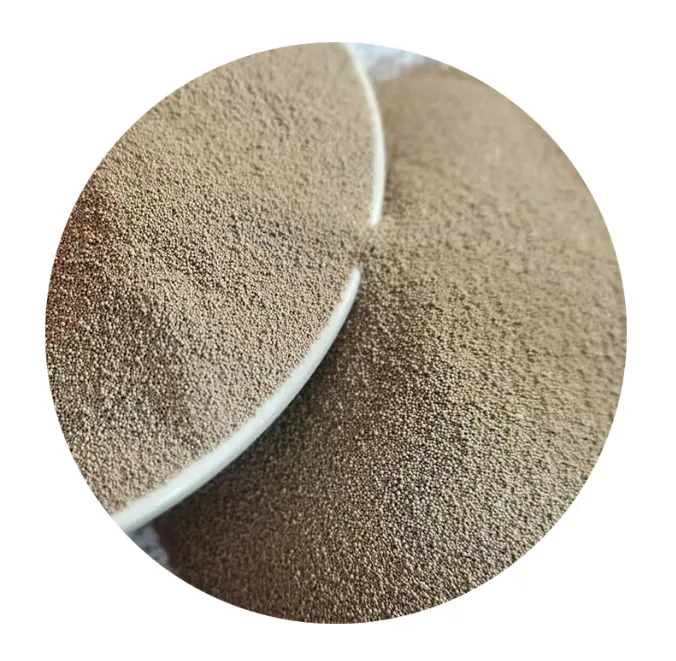
(foundry casting sand)
FAQS on foundry casting sand
Q: What is foundry casting sand used for?
A: Foundry casting sand is primarily used to create molds in the casting process. It shapes molten metal into desired forms. The sand's properties help achieve precise and smooth castings.Q: How does the foundry sand casting process work?
A: The process involves packing sand around a pattern to form a mold. Molten metal is then poured into this mold cavity. Once cooled, the sand is removed to reveal the cast part.Q: What makes stainless steel sand casting foundries unique?
A: Stainless steel sand casting foundries specialize in using sand molds for stainless steel components. These foundries must handle higher temperatures and use specific sand mixtures. This ensures high-quality stainless steel castings.Q: Can foundry casting sand be reused?
A: Yes, foundry casting sand can often be reclaimed and reused several times. Proper treatment and cleaning are essential for quality retention. This practice also reduces waste and production costs.Q: What are the main qualities of good foundry casting sand?
A: Good foundry casting sand should have high refractoriness, cohesiveness, and permeability. These attributes ensure the molds hold shape and expel gasses efficiently. Consistent grain size also improves surface finish.Next:Top Sand Casting Foundries Expert Metal Casting Solutions