
Imagine waiting months for a custom part—and paying a premium. In traditional metal manufacturing, delayed projects and costly molds are a common pain. According to the 2023 Global Manufacturing Research Institute, 46% of manufacturers cited "long prototyping time" as a major challenge. Delays aren't just frustrating—they cost you money. It’s time for a better solution. Enter 3D sand casting—the game changer for speed, versatility, and cost savings in complex parts manufacturing.
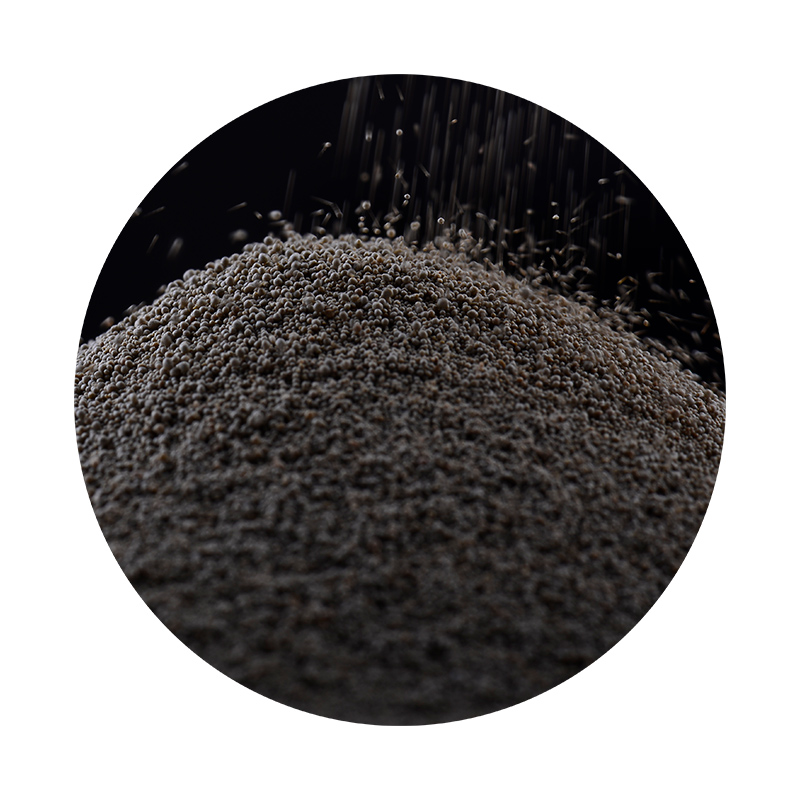
(3d sand casting)
What Sets 3D Sand Casting Apart? Technical Advantages You Can't Ignore
3D sand casting harnesses modern technology to propel traditional sand casting into the digital era. But what does this mean for you? Let's dive in.
- Faster prototype-to-production turnaround—sometimes in just 2-3 days.
- No need for expensive hard tooling, saving up to 70% on startup costs.
- Complex geometries, undercuts, and cavities made with ease.
- Efficient use of resources—good for your budget and the planet.
With 3D sand casting, designs are translated directly to sand molds using high-precision printers. This direct-from-digital method means quick iterations, less waste, and no waiting for traditional tooling.
| Feature | 3D Sand Casting | Traditional Sand Casting | Die Casting |
|---|---|---|---|
| Tooling Cost | Low/None | Moderate | High |
| Production Speed | Fast | Medium | Very Fast (after setup) |
| Complexity | Very High | Moderate | Limited |
| Batch Suitability | Low to Medium | Low to High | High |
Still wondering about the difference between sand casting and die casting? Here's your answer: 3D sand casting kills the waiting game, crushes complexity, and saves serious dollars, especially for prototypes and low-volume runs. Die casting is great for massive production, but it can't touch the flexibility or speed of 3D sand casted designs.
How Do Manufacturers Stack Up? The Power of Smart Partnering
Not all manufacturers are created equal. When you're choosing your 3D sand casting supplier, look for real technology leadership and proven results.
The world's top 3D sand casting manufacturers invest heavily in printer tech, material science, and process control. Why does this matter? Because it guarantees tighter tolerances, better finishes, and fewer headaches for you. Inferior shops cut corners. That means more scrap, delays, or even rejections. Your project deserves better.
Check credentials. Do they provide data sheets and consistent sampling? Is there full digital traceability? Can they show you their quality systems and case studies?
Here’s what you should expect from a top-tier partner:
- Full-cycle engineering support
- ISO 9001 certified or similar
- Flexible capacity for prototyping and small batches
- Rapid project quoting & transparent pricing
- On-time global delivery
Choosing the right manufacturer is the key to maximizing 3D sand casting's benefits. Don't settle for less.
Customized Solutions: Why 3D Sand Casting Creates Your Competitive Edge
Cookie-cutter solutions won't cut it in 2024. The beauty of 3D sand casting? Every mold is digitally tailored. You dream it. We produce it—no need for mass-market compromises.
Are you worried about the difference between sand casting and permanent mold casting? Let’s clarify. Permanent molds require expensive molds suited for repeated production, limiting flexibility for custom or small-batch parts. In contrast, 3D sand casting enables full design freedom with near-zero startup costs.
Just send your CAD file. Rapid changes? No problem. Want alternate alloys? We've got you. Complex cooling channels, logos, weight reduction lattices, integral cores—all are fair game.
| Parameter | Typical Value |
|---|---|
| Max Build Volume | 1,800 x 1,000 x 700 mm |
| Layer Thickness | 100-300 μm |
| Tolerance | ±0.25 mm |
| Alloys Supported | Aluminum, Iron, Steel, Brass, Bronze |
| Surface Finish (As Cast) | Ra 20-40 μm |
You can scale production up or down, adapt fast, and always stay ahead of your competition.
Real-World Wins: Application Case Studies
Don't take our word for it. Let’s give you real-world evidence.
- Automotive Prototype: An American automotive supplier needed a complex intake manifold fast. The old way? Twelve weeks. With 3D sand casting—parts delivered in 7 days. Cost cut by half.
- Aerospace Innovation: Major aerospace OEM needed conformal-cooling turbine blades. Traditional methods couldn’t deliver geometric complexity. 3D sand casting produced test-ready blades—flawless after first pour.
- Industrial Machinery: Custom, low-volume pump housings for a mid-west factory arrived 10X faster—no pattern costs, no delays, no hassle.
From automotive and aerospace to energy and robotics, 3D sand casting proves itself under pressure. Imagine what it can do for your next big idea.
Conclusion: Ready for Tomorrow? It's Time to Embrace 3D Sand Casting
Why keep waiting? Why keep paying more? Whether you need a single prototype or a small production batch, 3D sand casting brings your ideas to life—fast, affordable, and precisely.
Let SkyForge Manufacturing unlock your growth. As a global leader in digital foundry solutions, we blend deep metallurgy expertise with the world’s most advanced 3D sand printing technology. Our engineers partner with you from design to delivery—proactively anticipating your needs.
Our promise? Relentless quality. Rapid quotes. On-time delivery. No gimmicks—just results that empower your business to win.
Tap into the future of casting. Request a quote today and transform your manufacturing power!
Professional FAQs: 3D Sand Casting Unlocked
Q1: What is 3D sand casting and how does it work?
3D sand casting uses high-resolution 3D printers to create sand molds directly from digital files. This eliminates the need for physical patterns or hard tooling. It enables rapid, flexible, and cost-effective production of metal parts.
Q2: What is the difference between sand casting and die casting?
Sand casting uses sand-based molds, suitable for prototypes or short runs, while die casting uses hard metal molds for high-volume production. 3D sand casting excels in fast turnaround, lower initial cost, and complex geometries, while die casting excels at repeatability and tight tolerances for mass-produced items.
Q3: What’s the difference between die casting and sand casting in terms of alloys?
Die casting typically uses zinc, aluminum, or magnesium alloys due to mold requirements. Sand casting, including 3D processes, handles a broader range: aluminum, iron, bronze, brass, and more. So if you need flexibility—sand casting works.
Q4: What is the difference between sand casting and permanent mold casting?
Permanent mold casting requires reusable metal molds, great for medium-to-high volume runs. Sand casting molds (and 3D printed variations) are single-use but allow for high design freedom, cost savings, and rapid project launch.
Q5: What are typical tolerances for 3D sand casting?
Tolerances as close as ±0.25 mm are standard in 3D sand casting, often superior to regular sand casting due to precise digital printing and reduced human error.
Q6: Can extremely complex shapes be made with 3D sand casting?
Absolutely! 3D sand casting is the top choice for intricate shapes, internal channels, and features that are impossible with conventional pattern-making methods.
Q7: Who should choose 3D sand casting over die casting?
If you need fast prototypes, low/medium batch runs, multiple design changes, or complex features, 3D sand casting is your best bet. For mass production with tight margins, die casting might serve better.

(3d sand casting)
FAQS on 3d sand casting
Q: What is 3D sand casting?
A: 3D sand casting is a manufacturing process that uses 3D-printed molds or patterns to form sand molds for metal casting. This method allows for complex geometries, rapid prototyping, and reduced tooling time. It's widely used in automotive, aerospace, and industrial applications.Q: What is the difference between sand casting and die casting?
A: Sand casting uses sand molds that are destroyed after each use, while die casting uses reusable metal molds. Die casting is ideal for high-volume production with tight tolerances, while sand casting is more flexible for complex and larger parts. Sand casting generally has a lower upfront tooling cost.Q: How does 3D sand casting differ from traditional sand casting?
A: 3D sand casting utilizes 3D printing technology to create sand molds or patterns directly from digital files, skipping conventional pattern-making steps. This enables faster iterations and more intricate designs. Traditional sand casting relies on manually made or machined patterns.Q: What is the difference between sand casting and permanent mold casting?
A: Sand casting uses expendable sand molds, while permanent mold casting employs durable metal molds for multiple casting cycles. Permanent mold casting offers better surface finish and dimensional accuracy. Sand casting is more suitable for shorter production runs or larger components.Q: Is sand casting or die casting better for complex shapes?
A: Sand casting, especially with 3D printing, accommodates more complex and larger geometries compared to die casting. Die casting is limited by the intricacy of the metal mold and is better for smaller, highly detailed, high-volume parts. The best choice depends on design, volume, and material.Next:High Quality Sand Casting Cast Iron Solutions Precision & Durability