
Traditional aluminum casting methods often struggle with complex geometries, long lead times, and high tooling costs. Enter 3D printed sand casting—a game-changer that combines precision and flexibility. By leveraging sand 3D printing, manufacturers can now produce intricate ceramic sand cores and molds directly from digital designs, bypassing the need for physical patterns. This innovation is particularly transformative for aluminum alloy components used in aerospace, automotive, and energy sectors. The process involves layering ultra-fine sand particles bonded with a resin, creating structures with tolerances as tight as ±0.3 mm. Unlike conventional methods, 3D printing sand allows for internal channels, undercuts, and lightweight lattice designs previously deemed impossible. For industries prioritizing rapid prototyping and mass customization, this technology slashes production cycles from weeks to days while reducing material waste by up to 40%.
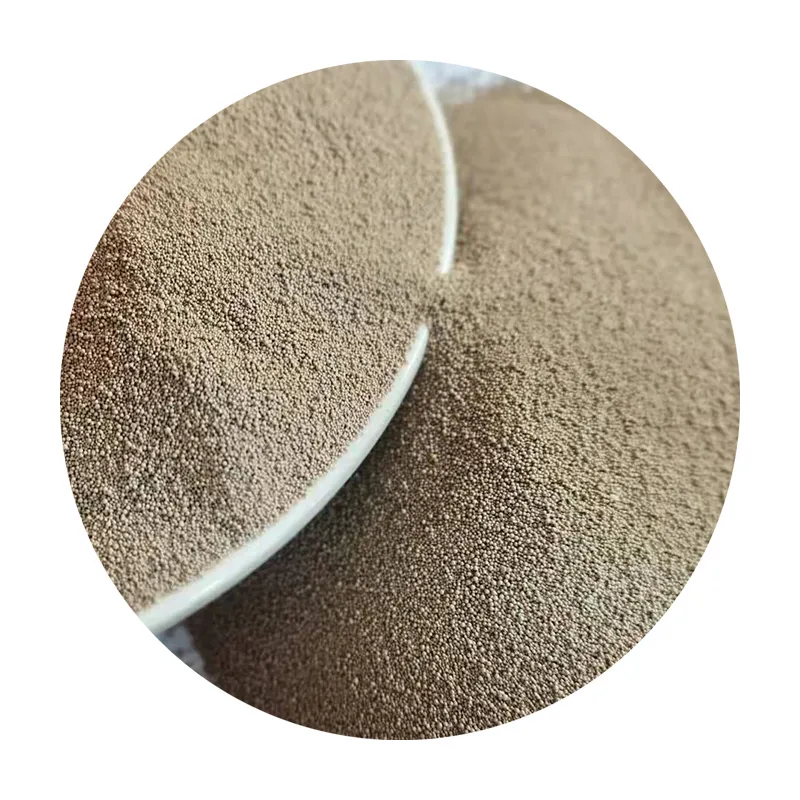
Why Sand 3D Print Technology Outperforms Traditional Casting
The superiority of sand 3D print systems lies in their ability to merge speed with complexity. Traditional sand casting requires manual mold assembly, which introduces human error and limits design freedom. In contrast, 3D printed sanding automates mold creation, ensuring consistency across batches. For aluminum alloys, which demand precise cooling rates to achieve optimal mechanical properties, 3D printing sand enables embedded cooling channels within molds. This results in fewer defects like porosity or warping. A notable case study involves a European automaker that reduced engine block rejection rates by 60% after adopting 3D printed ceramic sand cores. Additionally, the technology supports hybrid molds—combining 3D-printed sections with traditional elements—to balance cost and performance for large-scale production.
Design Freedom and Sustainability in Sand 3D Printing
One of the most compelling advantages of sand 3D printing is its role in sustainable manufacturing. The ceramic sand used is 100% reusable; after casting, the sand can be thermally reclaimed and reprinted up to 10 times without quality loss. This circularity aligns with global ESG goals, reducing landfill dependency. Furthermore, 3D printed sand casting empowers engineers to optimize part designs for weight reduction. For instance, aerospace companies utilize topology-optimized aluminum brackets made via 3D printing sand, achieving 25% weight savings without compromising strength. The technology also democratizes innovation—startups and SMEs can now afford low-volume production runs, bypassing the prohibitive costs of steel tooling.
Overcoming Industry Challenges with 3D Printed Ceramic Sand Cores
Aluminum alloy casting faces persistent hurdles, including thermal stress and gas entrapment. 3D printed ceramic sand cores address these issues through tailored permeability and heat dissipation. The ceramic material’s high refractoriness (withstanding temperatures over 1,500°C) ensures stability during aluminum’s high-pouring phases. In turbine blade production, for example, 3D printing sand enables cores with graded porosity—dense at stress points and porous elsewhere—to control solidification patterns. Moreover, digital inventory models eliminate the need for physical core storage, reducing warehousing costs. A Chinese manufacturer recently reported a 30% reduction in energy consumption by switching to on-demand 3D printed sand casting, highlighting the technology’s operational efficiency.
FAQs: Aluminum Casting with 3D Printed Ceramic Sand Cores
Is 3D printed sand casting cost-effective for small batches?
Yes! Sand 3D printing eliminates tooling expenses, making it ideal for prototypes and limited runs. Costs per part remain stable regardless of quantity, unlike traditional methods.
How durable are ceramic sand cores during casting?
Extremely durable. These cores withstand aluminum’s melting point (~660°C) and thermal shocks, ensuring dimensional accuracy even in high-pressure casting.
Can 3D printed molds handle intricate designs?
Absolutely. 3D printing sand achieves features as fine as 0.5 mm, perfect for aerospace vanes or automotive intake manifolds with internal channels.
What industries benefit most from this technology?
Aerospace, automotive, renewable energy, and luxury goods sectors leverage 3D printed ceramic sand cores for lightweight, high-performance aluminum components.
Is the process environmentally friendly?
Yes. Reusable sand and reduced waste make 3D printed sand casting a leader in sustainable manufacturing, cutting CO2 emissions by up to 35% compared to conventional methods.
Unlock Next-Gen Aluminum Casting Today
Embrace the future of manufacturing with our advanced 3D printed ceramic sand cores. Designed for precision, sustainability, and scalability, our solutions empower industries to innovate faster and greener. Visit our website to explore our portfolio and request a sample. Transform your production line—where complexity meets possibility.
Next:Precision Sand Casting Metal | Custom Steel & Iron Foundry