
The foundry industry is in constant pursuit of materials that offer high thermal stability, low expansion, and consistent casting quality. Among the emerging alternatives to traditional materials, ceramsite foundry sand has rapidly become a game changer. Its superior properties and cost-effectiveness make it the go-to choice for modern foundries, especially in applications requiring high-performance mold materials such as sand casting stainless steel.
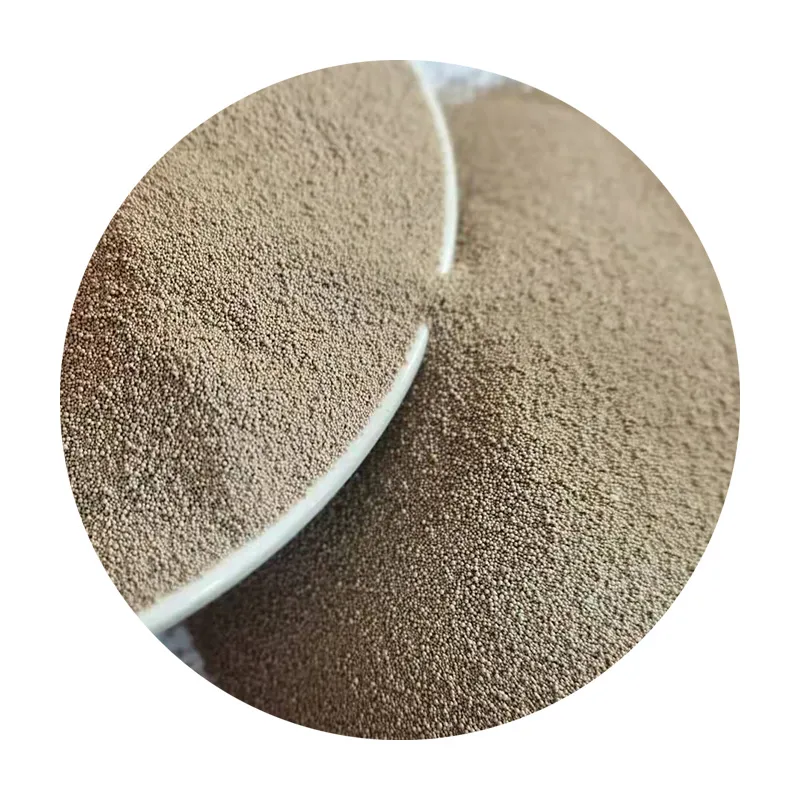
A Superior Substitute: Why Ceramsite Foundry Sand Outperforms Chromite Sand
Traditionally, chromite sand has been preferred for steel casting due to its high refractoriness and thermal conductivity. However, ceramsite foundry sand has proven to be an ideal replacement, offering similar—if not better—performance at a lower cost. With a refractoriness exceeding 1700°C, ceramsite foundry sand resists deformation and breakdown under extreme temperatures, ensuring smooth mold removal and excellent surface finish.
Another advantage lies in its spherical grain structure, which significantly reduces binder consumption. Unlike angular chromite particles that demand more resin, ceramsite foundry sand requires less bonding agent while delivering better flowability in molds. This leads to cleaner castings with minimal defects. Moreover, ceramsite’s density is lower than chromite, reducing the overall weight of the mold and lowering transportation costs without compromising performance.
What truly sets ceramsite foundry sand apart is its environmental friendliness. Free from heavy metals and naturally occurring radioactive elements, it is safer to handle and easier to reclaim, making it a sustainable choice for eco-conscious foundries.
Real-World Use: How Ceramsite Foundry Sand Is Applied in Steel Casting
In today’s advanced foundry operations, ceramsite foundry sand is used in a variety of critical components including engine blocks, pump housings, valve bodies, and especially for sand casting stainless steel. Stainless steel requires high-temperature tolerance and precise molding characteristics—two areas where ceramsite excels.
The low thermal expansion of ceramsite foundry sand ensures dimensional stability throughout the casting process. Even in large and complex molds, the risk of expansion-induced defects is significantly reduced. This quality is crucial in sand casting stainless steel, where accuracy and integrity are non-negotiable.
Additionally, ceramsite’s exceptional collapsibility improves casting yield. It breaks away easily after solidification, minimizing the time and effort needed for post-casting cleaning. This directly reduces labor costs and cycle times, resulting in increased productivity for manufacturers.
Several foundries that once relied heavily on chromite or silica-based materials have already transitioned to ceramsite foundry sand due to its consistency, surface smoothness, and superior hot strength. Whether it’s high-volume automotive casting or precision stainless steel components, ceramsite delivers unmatched reliability.
Ceramsite Foundry Sand: High Refractoriness and Low Expansion for Demanding Jobs
What makes ceramsite foundry sand such an outstanding material is its core physical properties. High refractoriness allows it to withstand intense heat without degrading, even under direct contact with molten metal. Unlike traditional sand for metal casting, which may crack or deform at elevated temperatures, ceramsite retains its shape and integrity.
This becomes especially important in casting applications requiring exact tolerances. The low thermal expansion of ceramsite foundry sand prevents warping and shrinkage, maintaining precise dimensions from start to finish. Foundries benefit from fewer rejects, improved casting precision, and lower production costs.
The combination of these features also reduces veining and penetration defects—common problems associated with different types of foundry sand. Ceramsite creates smoother surfaces that require less finishing work, making it ideal for highly detailed or aesthetically sensitive castings.
Comparing the Options: Ceramsite vs. Different Types of Foundry Sand
In the spectrum of different types of foundry sand, ceramsite stands out due to its balanced performance and economic value. While silica sand is abundant and cheap, it lacks the refractoriness needed for steel and alloy casting. Chromite is heat-resistant but costly and heavy. Resin-coated sand offers good finish but comes with higher environmental and health concerns.
Ceramsite foundry sand, on the other hand, strikes the perfect balance. It is lightweight, chemically stable, and offers consistent performance across a wide temperature range. Foundries looking for an efficient, clean, and cost-effective sand for metal casting are increasingly opting for ceramsite as their primary molding material.
Its versatility also means it can be used in various casting methods including green sand, no-bake, and shell molding. This makes it not only suitable for sand casting stainless steel, but also for casting aluminum, copper alloys, and high-strength iron components.
Ceramsite Foundry Sand FAQs
Why is ceramsite foundry sand a better choice than chromite sand?
It offers high refractoriness, low thermal expansion, lower density, and better recyclability, making it a cost-effective and environmentally friendly alternative.
What are the main uses of ceramsite foundry sand in foundries?
It’s widely used for sand casting stainless steel, automotive parts, and intricate industrial components requiring thermal stability and dimensional precision.
How does ceramsite foundry sand perform under high heat?
It has excellent heat resistance (above 1700°C), maintains shape under pressure, and resists thermal deformation better than most different types of foundry sand.
Can ceramsite foundry sand be reused?
Yes, it has a high reclamation rate and retains performance properties over multiple casting cycles, reducing operational costs and waste.
Is ceramsite foundry sand suitable for all types of metal casting?
Yes, especially for sand for metal casting where precision and heat resistance are critical, including stainless steel, cast iron, and non-ferrous alloys.
Post time:aŭg . 27, 2025 14:47Next:Ceramic Foundry Sand: Revolutionizing High-Performance Casting