
Steps in Sand Casting: A Comprehensive Guide
Sand casting is a versatile and cost-effective metal casting process widely used across various industries. From producing intricate engine components to large structural parts, sand casting offers a unique balance of affordability and design flexibility. This article will outline the key steps in sand casting, providing a clear understanding of the process for engineers, manufacturers, and anyone interested in metal fabrication. Understanding these steps will allow you to optimize the process and ensure high-quality castings. We’ll cover everything from patternmaking to finishing, detailing the critical aspects of each stage.
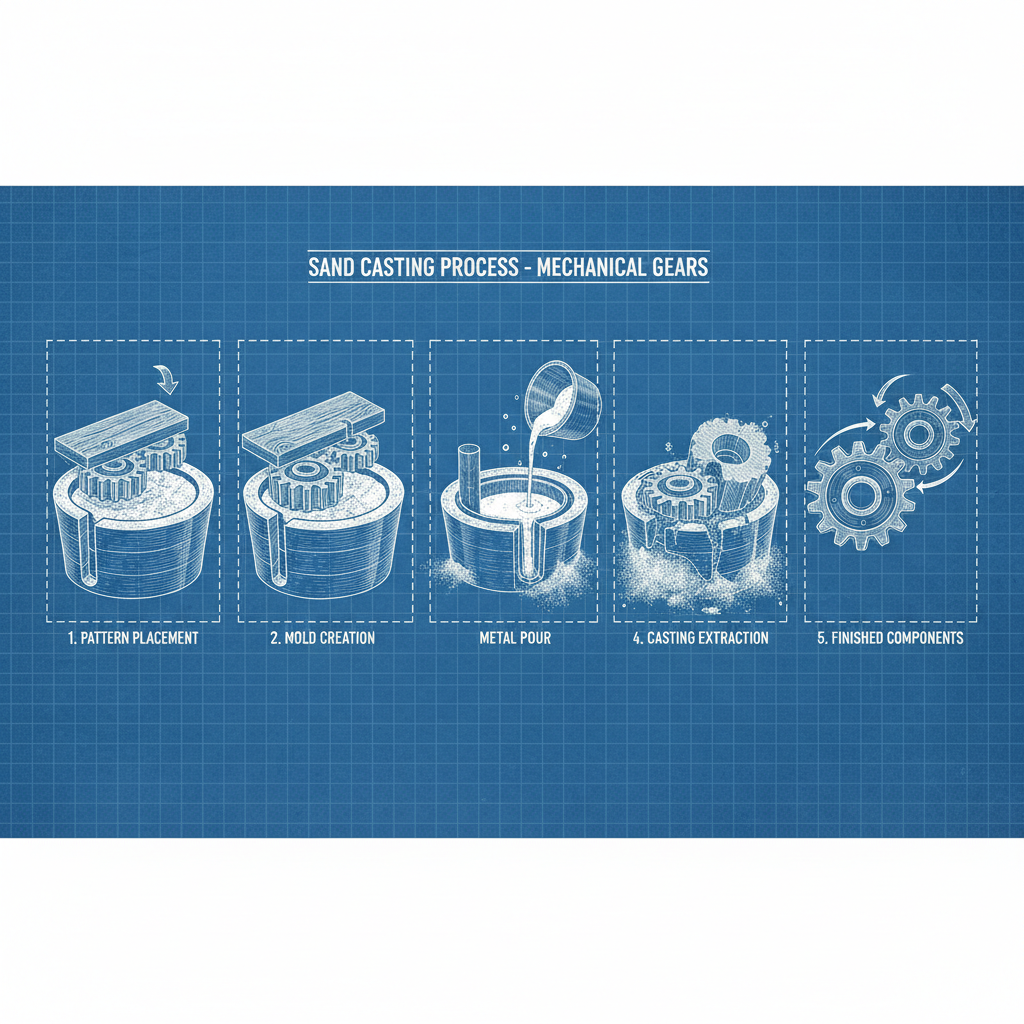
1. Patternmaking: The Foundation of the Casting
The first step in sand casting is creating a pattern, which is a replica of the desired final product. This pattern is used to form the cavity in the sand mold. Patterns are typically made from wood, metal, plastic, or foam. It's crucial the pattern accurately reflects the final part’s dimensions, including any allowances for shrinkage that occurs during metal solidification. Different pattern types exist, including solid patterns, split patterns, and cope and drag patterns, depending on the complexity of the casting. Accurate patternmaking is fundamental to the entire process, as any errors will directly impact the quality of the final casting. Sino Ceramics offers precision tooling for efficient pattern creation.
2. Mold Making: Shaping the Sand
Once the pattern is complete, the mold is created. This involves packing sand around the pattern within a flask (a framing box). The sand is typically mixed with a binder, such as clay, to provide strength and cohesiveness. The flask is typically split into two parts: the cope (top half) and the drag (bottom half). After packing the sand tightly, the pattern is carefully removed, leaving a cavity that defines the shape of the casting. Runners and risers are also created at this stage – runners are channels that deliver molten metal to the mold cavity, while risers act as reservoirs to compensate for shrinkage during solidification. Proper sand compaction and the accurate creation of runners and risers are critical for achieving a sound casting.
Key Considerations for Mold Making: Sand type (green sand, chemically bonded sand), binder selection, sand compaction force, accurate runner and riser design.
3. Core Making: Creating Internal Cavities
For castings with internal cavities or complex shapes, cores are necessary. These are essentially separate sand shapes that are placed inside the mold cavity before it is closed. Cores are created using similar sand mixtures as the mold, but often with different binders for increased strength and collapsibility. After the casting solidifies, the cores are broken up and removed, leaving behind the desired internal features. Core making requires precision and careful handling to prevent damage during placement and removal. The material and design of the core play a crucial role in the quality of the internal features.
4. Melting and Pouring: Introducing the Molten Metal
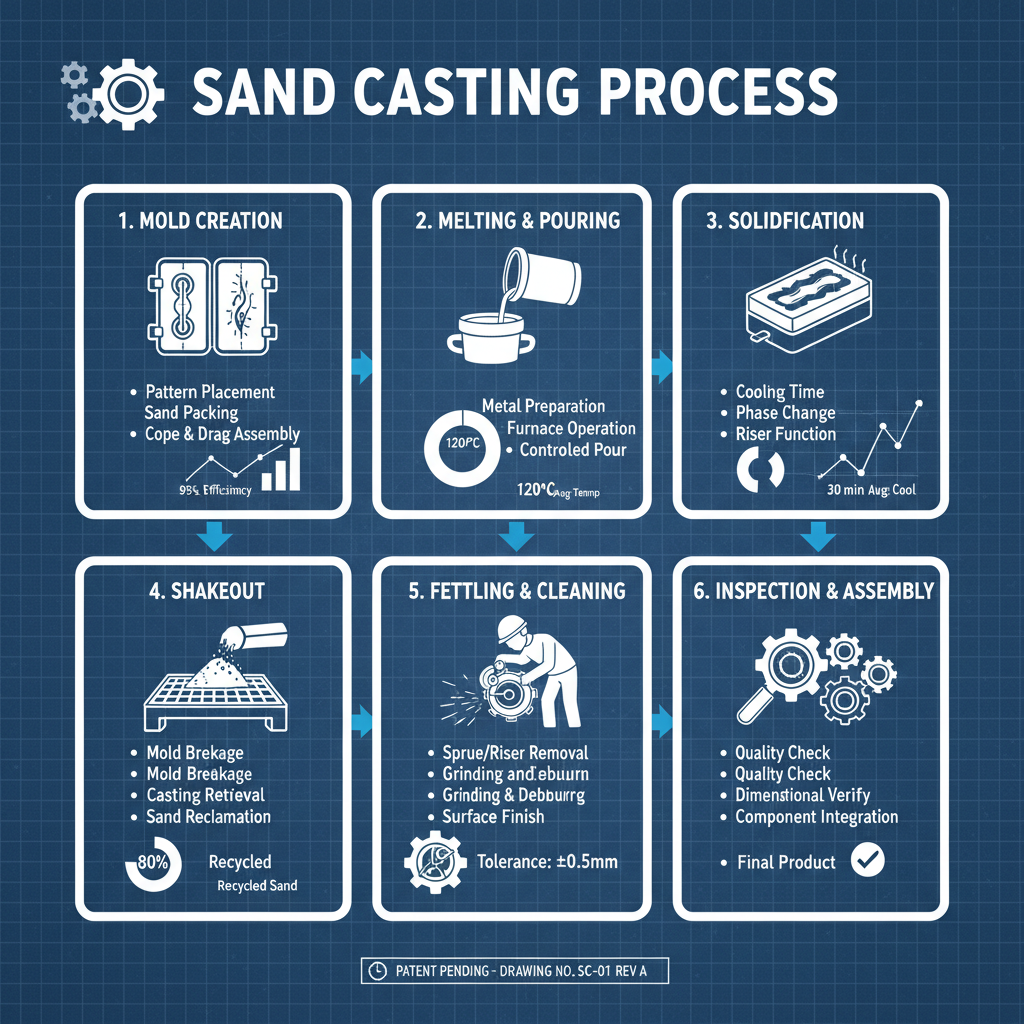
This step involves melting the metal to be cast in a furnace. The type of furnace used depends on the metal’s melting point and desired purity. Common furnace types include cupola furnaces, electric arc furnaces, and induction furnaces. Once molten, the metal is carefully poured into the mold cavity through the runners. Pouring speed and temperature are critical parameters that affect the quality of the casting. Too slow a pour can lead to incomplete filling, while too fast a pour can cause turbulence and gas entrapment. Proper pouring techniques and temperature control are essential for a sound casting.
5. Cooling and Solidification: The Transformation
After pouring, the molten metal cools and solidifies within the mold cavity. The cooling rate affects the microstructure and mechanical properties of the casting. Controlled cooling can minimize shrinkage and prevent defects. This process can take minutes to hours, depending on the size and type of metal. Once the metal has completely solidified, the mold is broken open, and the casting is carefully removed.
Sand Casting Process Comparison:
6. Finishing and Inspection: Ensuring Quality
The final step involves removing any remaining sand, cores, and excess metal (like runners and risers) from the casting. This is often done through shot blasting, grinding, or machining. The casting is then inspected for defects such as cracks, porosity, and dimensional inaccuracies. Non-destructive testing methods like radiography and ultrasonic testing may be used to identify internal flaws. Surface finishing operations, such as painting or coating, may also be applied to enhance corrosion resistance and improve the appearance of the casting. Sino Ceramics provides high-quality finishing solutions for superior castings.
Conclusion: Mastering the Art of Sand Casting
Understanding the steps in sand casting is essential for producing high-quality, cost-effective metal parts. From careful patternmaking to meticulous finishing, each stage plays a vital role in the success of the process. By implementing best practices and utilizing advanced technologies, manufacturers can optimize their sand casting operations and meet the demands of a wide range of industries.
Frequently Asked Questions (FAQs)
What are the advantages of sand casting?
Sand casting offers several benefits, including its versatility in terms of metal types and part sizes, its relatively low tooling costs compared to other casting methods, and its ability to produce complex geometries. It's also well-suited for both small-batch production and large-scale manufacturing. However, it generally results in a rougher surface finish and lower dimensional accuracy compared to processes like investment casting or die casting. The material used to make the mold is also reusable reducing cost.
What metals can be sand cast?
A wide range of metals can be sand cast, including aluminum, iron (gray iron, ductile iron, white iron), steel (carbon steel, stainless steel), brass, bronze, and even some alloys of magnesium and titanium. The specific metal choice depends on the application requirements, considering factors like strength, corrosion resistance, and cost. Certain metals may require specialized sand mixtures or pouring techniques.
What are common defects in sand castings and how can they be prevented?
Common defects include gas porosity (caused by trapped gases), shrinkage cavities (resulting from insufficient metal supply during solidification), and sand inclusions (sand particles embedded in the casting). These can be prevented through careful mold design, proper venting, adequate riser placement, and controlling pouring temperature and speed. Utilizing high-quality sand and binders also contributes to defect reduction. Regular inspection and process control are essential.
How does the sand type affect the casting process?
The type of sand used significantly impacts the casting process. Green sand (sand mixed with clay and water) is the most common and cost-effective option, but chemically bonded sands (using resins or other binders) offer improved strength, dimensional accuracy, and surface finish. The sand's grain size, shape, and permeability influence mold strength, gas permeability, and ease of knockout. Selecting the appropriate sand type is crucial for achieving the desired casting quality.
Next:Exploring Diverse Types of Sand Casting Process for Modern Manufacturing