
In the world of precision casting, especially in the automotive industry, ceramic foundry sand has become a game-changing material. Engineered to perform under high temperatures and deliver near-flawless casting finishes, it has surpassed conventional foundry sand in consistency, reusability, and strength. As demand grows for materials that improve both casting quality and process efficiency, ceramic foundry sand stands out as the premium choice for demanding applications such as turbocharger components.
Industrial Production Process of Ceramic Foundry Sand
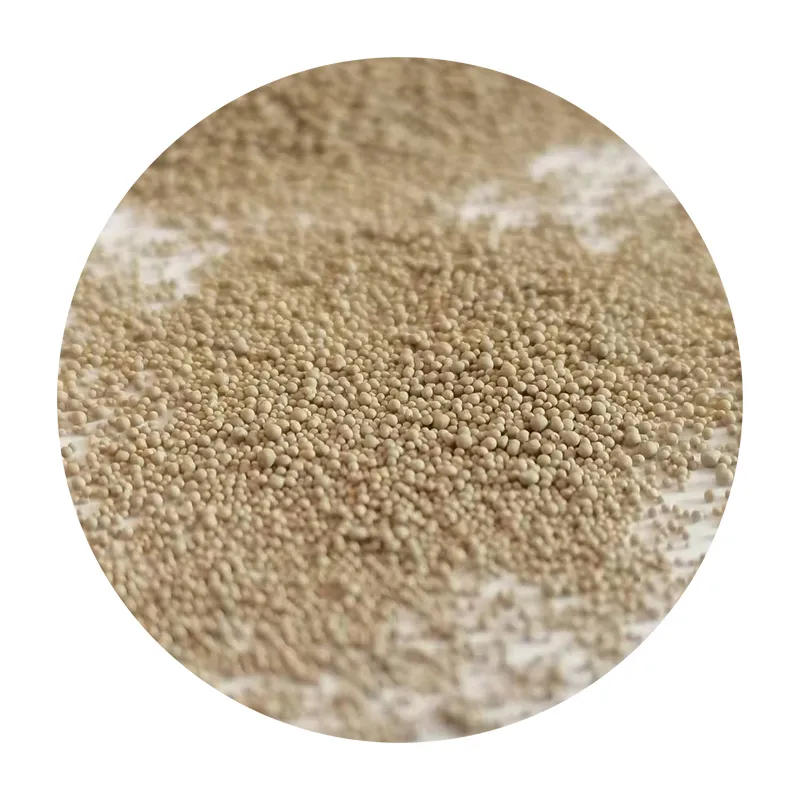
Unlike traditional silica-based foundry sand, ceramic foundry sand is produced through a complex yet highly controlled industrial process. The core raw material is calcined bauxite, known for its high alumina content. This material is melted in an electric arc furnace at temperatures exceeding 1800°C. After the molten bauxite is rapidly cooled using a water-quenching or air-cooling method, it solidifies into spherical particles with exceptional hardness and thermal stability.
These particles are then screened and graded into various mesh sizes, depending on casting requirements. The spherical shape of ceramic foundry sand ensures better flowability in mold and core production, reducing gas defects and improving compaction. Because of its dense structure and low thermal expansion, the material resists fusion and offers outstanding dimensional accuracy in castings.
As foundry sand suppliers scale up production technologies, high-output lines are now capable of supplying consistently uniform batches that meet ISO and automotive-grade standards, making this product accessible across the globe.
Ceramic Foundry Sand:Application in Automotive Turbocharger Casting
The casting of automotive turbochargers demands unparalleled dimensional precision, resistance to high-temperature deformation, and minimal surface defects. Ceramic foundry sand excels in this environment. Turbocharger components, especially turbine housings, must endure rapid temperature shifts and extreme mechanical stress. The unique thermal and mechanical properties of ceramic foundry sand make it ideal for achieving the intricate geometry and thin-walled sections these parts require.
Due to its low thermal conductivity and near-zero silica content, ceramic foundry sand significantly reduces the risk of veining and expansion defects—common issues with traditional foundry sand. Additionally, the sand’s high refractoriness allows it to withstand the elevated metal pouring temperatures typical of stainless steel and nickel-based alloys used in turbocharger manufacturing.
OEMs and tier-one suppliers in the automotive industry now rely heavily on ceramic foundry sand to ensure superior casting outcomes, reduced scrap rates, and consistent product performance.
Ceramic Foundry Sand:Impact of Sintering Temperature on Strength and Reusability
One of the most critical variables in determining the mechanical performance of ceramic foundry sand is the sintering temperature during its production. At lower sintering temperatures, the sand particles may exhibit porosity, leading to decreased compressive strength and lower abrasion resistance. However, when sintered at optimum temperatures—typically between 1500°C and 1800°C—the resulting ceramic foundry sand achieves excellent grain strength, wear resistance, and thermal shock stability.
This increased durability directly contributes to the sand’s reusability. While traditional foundry sand may degrade after 3–5 uses, ceramic foundry sand can be reused over 10 times in many foundry operations without significant loss of performance. This not only enhances casting consistency but also significantly reduces long-term material costs and environmental impact.
For foundry sand suppliers, mastering the sintering temperature control is essential to delivering products that exceed industry expectations for performance and durability.
Competitive Advantage and Market Trends in Foundry Sand Price
When evaluating the foundry sand price, it's important to consider both short-term purchase costs and long-term usage benefits. Although ceramic foundry sand has a higher upfront cost than silica sand, its superior performance, extended lifespan, and reduced need for defect-related rework provide significant cost savings over time.
Advanced users have noted a decrease in overall sand consumption by up to 60% after switching to ceramic foundry sand, thanks to its durability and low binder requirement. Moreover, because the sand generates less dust and reduces waste, it contributes to a safer, cleaner working environment—further lowering indirect costs.
As global foundries modernize, many are shifting to value-based procurement models, where the foundry sand price is assessed in terms of performance-to-cost ratio. In this context, ceramic foundry sand delivers unbeatable ROI.
Market trends also show that top-tier foundry sand suppliers are increasingly offering customized grain sizes and blending services to cater to specific alloy or mold designs, which further enhances the value of the investment.
Ceramic Foundry Sand FAQs
What makes ceramic foundry sand different from traditional foundry sand?
Ceramic foundry sand is produced from high-purity bauxite and offers better thermal stability, lower thermal expansion, and improved durability compared to traditional foundry sand.
How does ceramic foundry sand perform in casting turbocharger parts?
Its low thermal conductivity and high refractoriness prevent casting defects, making it ideal for complex and high-temperature turbocharger castings.
Does sintering temperature affect the strength of ceramic foundry sand?
Yes, higher sintering temperatures result in stronger, denser sand particles with improved wear resistance and longer service life.
Are there affordable options given the foundry sand price of ceramic types?
While the initial foundry sand price is higher, its extended reusability and lower defect rates provide cost-effective performance over time.
Where can I find reliable foundry sand suppliers of ceramic sand?
Reputable foundry sand suppliers offer high-grade ceramic foundry sand with customizable specs and technical support tailored to your casting needs.
Post time:авг. . 27, 2025 14:44Next:3D Printing Sand: A New Era of Precision and Sustainability in Casting